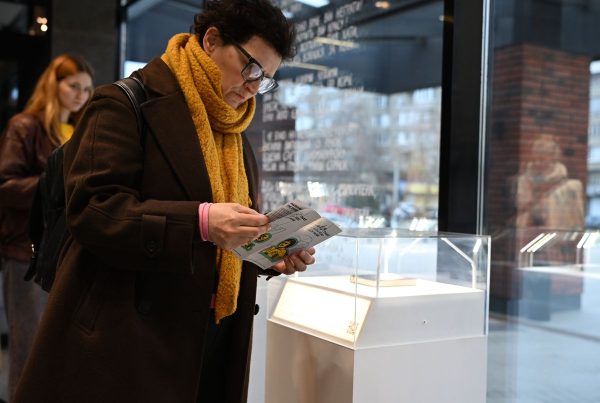
War Childhood Museum preserves hundreds of testimonies and objects from people whose childhood was marked by the siege of Sarajevo.
Here are a few of them:
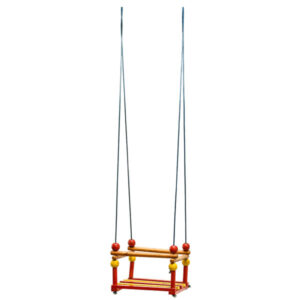
The Safest Hiding Place in Besieged Sarajevo
I was my maternal grandfather’s, Grandpa Ismet’s, first granddaughter. Just before the war started, my grandfather built a swing by hand for me to play with at our cottage in Lepenica. My grandfather died, and the war started shortly thereafter. I never had a chance to play with my swing in Lepenica.
My swing remained in the moldy basement where I spent the first years of my life instead of being surrounded by nature’s beauty. There were always a lot of us in that small basement, sometimes as many as 30 people. My mom was unable to dedicate all of her time to me or to watch over me at all times, so she tied a little bell to the swing to know whether I was in it or not.
I have held onto this swing for all of these years so that my child could grow up with it as well. Two years ago I offered it to my little cousins Lamija and Asja, explaining that it was my greatest treasure, so that they could swing and play. They told me that it was disgusting and boring, that it was too plain, that it did not make sounds or light up. That was when I realized just how far from plain it was, that it was in fact special. That was when I realized what it had come to represent: a reminder of my grandfather who passed away too soon; safety, in my mother’s eyes; my home, leisure, and an escape from the daily realities of war. I no longer hope to pass this swing with its little bell on to my child. I hope that my child will have a carefree childhood, filled with playdates at the park. I do not plan to tire my child with stories from the war. Instead I will bring my child to the War Childhood Museum to show her this swing filled with dreams, fantasies, and hopes—the safest hiding place in besieged Sarajevo.
Naida, born 1989
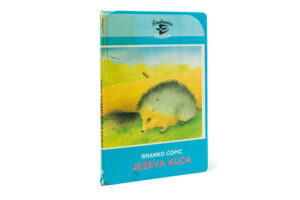
Hedgehog’s Home
There are still some people in this world who haven’t read ‘Hedgehog’s Home.’ If you find yourself in a city under siege, and you are old enough to read at least most letters of the alphabet, I would recommend this book as a good starting point. It’s true that in order to read a book you need a candle, or another, better source of light. It’s important to be safe, for example, in the lobby of a building. There is no doubt that there will be words that you won’t understand, which is why it’s always good to have a sister around. She knows better. You will probably find some pages missing from the book, because pages always end up missing in books that end up in many hands. And in times of war, books pass from one set of hands to the next much faster than if there was no war. I don’t know why. Maybe because people don’t like to waste candles during the war.
Nedim, born 1989
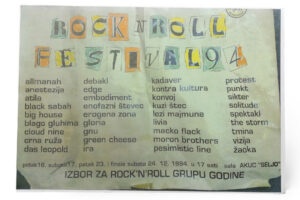
Poster for the Rock and Roll Festival ’94
In 1994, at the height of the war, in a besieged city, a rock and roll festival was organized. Around forty Sarajevan bands participated. I was a member of one of the bands, called “Spektakl”. It was my life’s occupation in those horrid times. It is a paradox that in this city, twenty years later, in a time of peace, we have so few bands.
Jasmir, born 1977
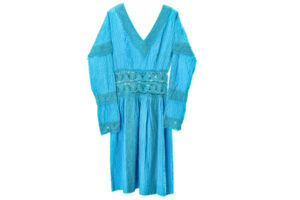
Dress of Spite
I found this dress in an abandoned Sarajevo apartment in 1993. Its bright color flirted with the forbidden, considering that we, as citizens of besieged Sarajevo, were constant targets for the snipers who hid in the surrounding hills. And as people, fending for their own lives, dressed in subtle, pastel tones, I wore this light, bright blue dress. It was a symbol of defiance and my will to live.
Emina, born 1976
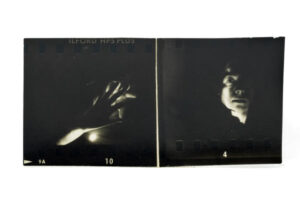
Shadow Play
Our time in the besieged city, marked by prolonged power outages and no water, was spent playing the simple games we knew from before the war. It was important to avoid spending time outside, so we would mostly hang out in each other’s apartments or basements.
This photograph was made in a dark space with the help of a flashlight. We used some old film rolls we had left over for the interplay of light and shadow on our faces. The resulting photograph was a testament to our creative work.
Mirela, born 1975
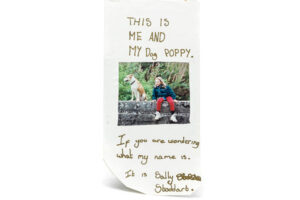
Letters for First Graders
During the Siege of Sarajevo, we had our classes in improvized basement classrooms. When we were in first grade, on one occasion, we received humanitarian aid care packages that contained toys and letters from our peers from other countries.
I kept mine to this day because they reminded me of the wonderful feeling of knowing that, even in the most difficult times, there was someone out there thinking about us.
Alma, born 1988
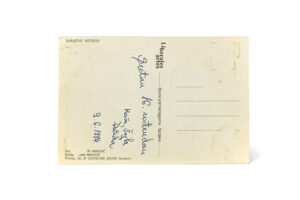
Birthday Card
I was born on the 9th of June. I celebrated all of my birthdays before the war with my family and friends. There were presents, and the blowing out of candles on the birthday cake. As soon as the war started, we couldn’t celebrate birthdays that way anymore.
I received this birthday card from my classmates, Maša, Šejla, and Dalida. I celebrated my 16th birthday in the basement that year. I was sad and melancholy, but this card helped me feel better. I kept it as a memento of my friends and of life in besieged Sarajevo.
Belma, born 1978
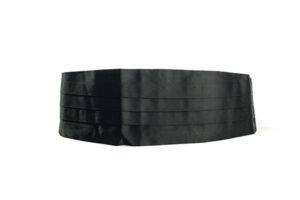
Wartime Dancing
Although it was wartime, we made an effort to have regular fun activities. Today it fascinates me that I went to dance practices during the war. Sarajevo is under siege, and I’m preparing for a dance competition!
The name of that dance school was “Step by Step”. Classes were held in Sloga, a five-minute walk from my home. Sloga was well-hidden and we had our practices and rehearsals there. Parents came to the performances to see all that we had learned.
Dancing required accessories, and which accessories depended on which category we were in. I was supposed to have a waist sash, but where would I find one? Someone made it, it was either my mom or my aunt – I had a real waist sash! I even had a ribbon of sorts. I looked like a real dancer! My partner wore a real dress, just as one should for a Latin American dance. We were kids, but it was all so serious!
And the war outside? It didn’t matter. I remember that what I wished the most was for the war to be over. I was scared it would never end, that war would always be our reality. Today I’m glad that at least we danced.
Anis, born 1983