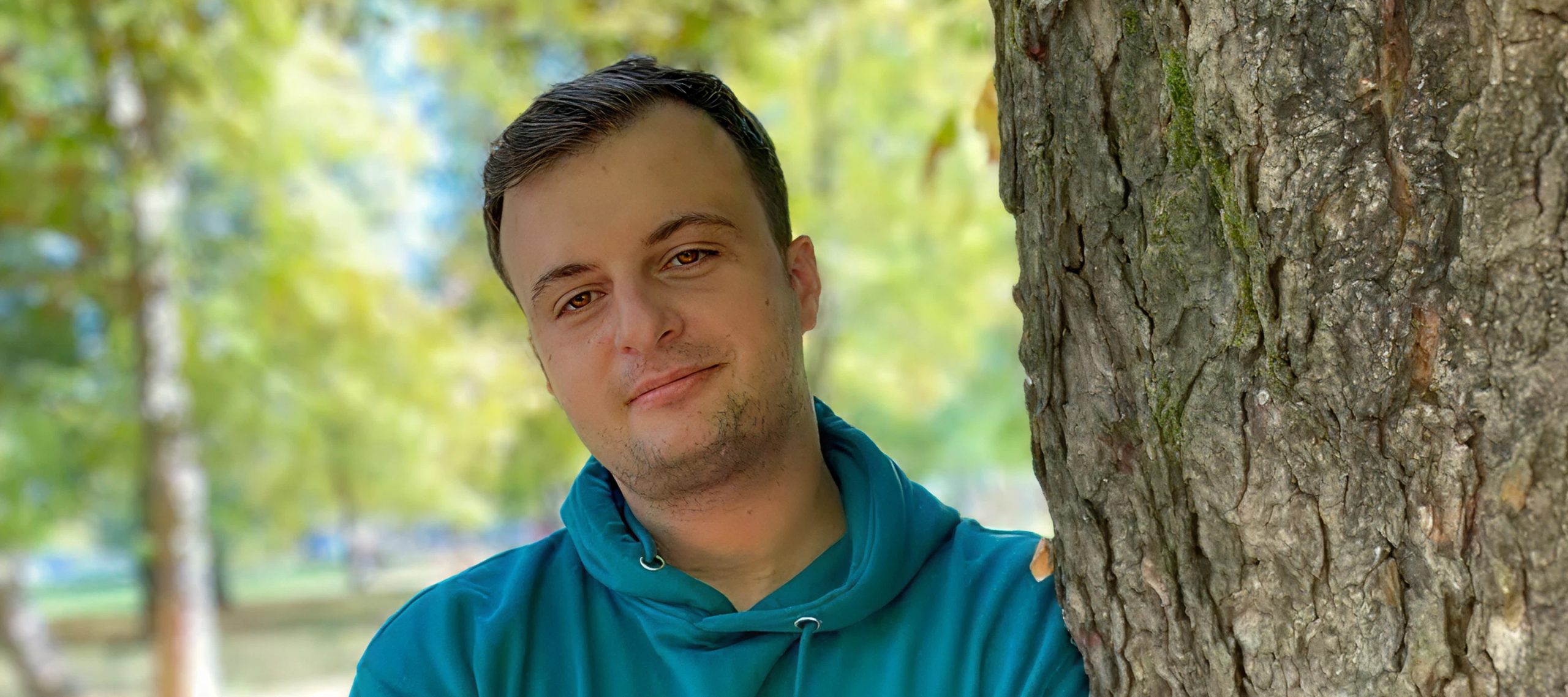
Alongside the team at the War Childhood Museum that continuously works on educational programs, the Museum also collaborates with external educators whose knowledge and experience further strengthen our work with young people. One of them is Nikola Kandić, who comes from the youth work sector and has been collaborating with the War Childhood Museum for the past two years. Below, read his reflections on working with youth and his experience within our programs.
When you work with young people in workshops, what is most important to you in the process you go through together? What do you most often notice in their reactions?
What matters most to me is that they feel safe and seen—without that, there is no real learning or genuine exchange. Only when they feel that no one will judge them for what they say or don’t say can they relax and honestly engage in the process. I always emphasize that they don’t have to know everything, that we’re not competing in information, but building understanding together.
What I notice most often is that personal stories—stories from the Museum—affect them the most. The moment they realize that behind concepts like “war,” “history,” or “trauma” there are real people who were their peers, something shifts. They become more curious and open, and they begin to ask questions that go deeper than mere facts. I can see stereotypes they inherited—rather than chose—starting to break down. These are the moments when they begin building their first small bridges toward empathy—both toward themselves and toward others.
What do workshops like these mean to you in a post-conflict society such as Bosnia and Herzegovina? What is their most important contribution?
In a society that still carries many unspoken burdens and where the past is often discussed in fragmented or decontextualized ways, these workshops become small but important pressure valves. They create a space where young people can speak without fear of making a mistake, saying the “wrong thing,” or being labeled for something they inherited but did not choose.
For me, the greatest contribution of these workshops is the creation of a generation that understands the weight of the past but does not carry it as a burden. Through engaging with other people’s stories, young people learn that they are not prisoners of the narratives they were born into—that they have the right to their own understanding, their own emotions, and their own choices. These are young people who learn to build relationships, not boundaries. In a society like ours, that is a huge step forward, because it opens space for dialogue driven not by fear, but by curiosity and humanity.
What do you consider key when working with young people on themes of peace, empathy, and understanding? What would you say to others working in the field of peace education?
It is crucial that adults do not pretend to have all the answers. Young people sense that very quickly. They are not looking for perfect lecturers—they are looking for authentic people who are not afraid to say “I don’t know” or “this is difficult for me too.” When we show them that we are learning alongside them, that’s when the deepest moments of trust emerge.
What they need is space to be uncertain, to ask questions, to get lost and then find their way, to listen to others, and to examine themselves without pressure. These are processes that require time and patience, but they are invaluable.
To my colleagues, I would say: do not underestimate the power of authenticity and genuine presence. Young people learn most from examples, not from presentations. If we show them what dialogue looks like, they will naturally adopt it. If we give them permission to question, they will pass that permission on to others. And that, to me, is the essence of peace education—creating a chain of people who understand that empathy is a skill, and peace is a choice learned and practiced every day.