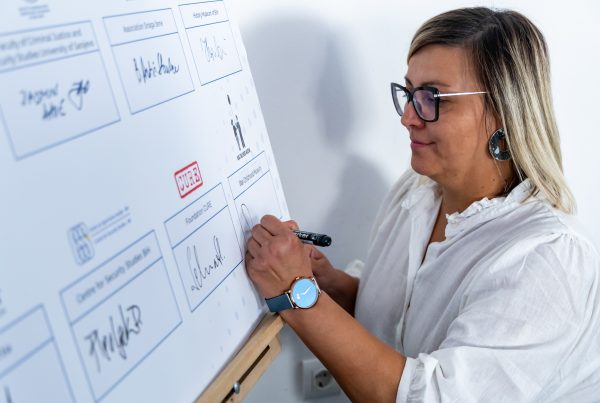
This year, the War Childhood Museum signed a long-term Memorandum of Cooperation with the Professional Center for Addiction Prevention, enabling mentor-volunteer pairs involved in the Older Brother, Older Sister program to visit the Museum free of charge.
The Visit as a Special Experience
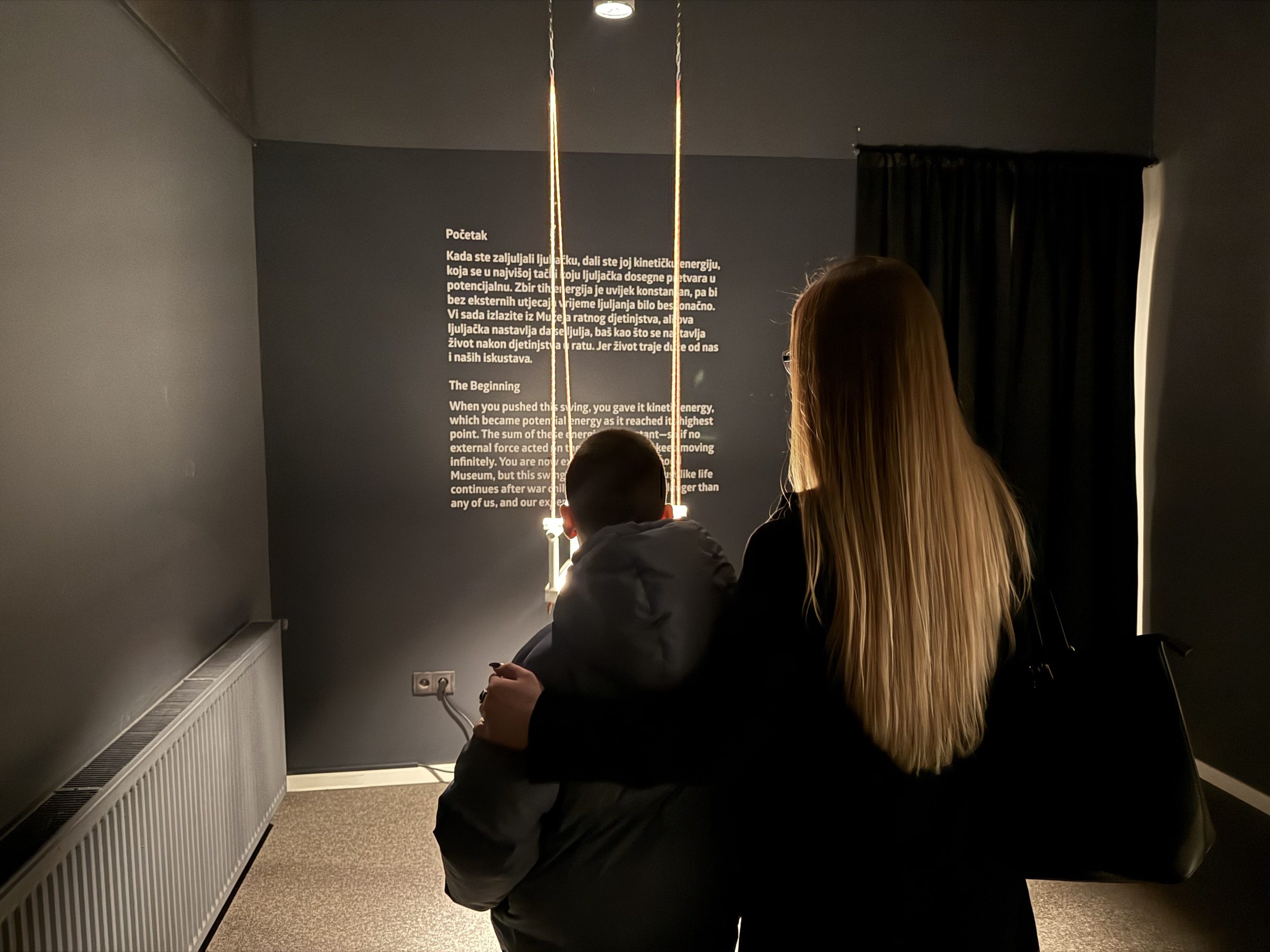
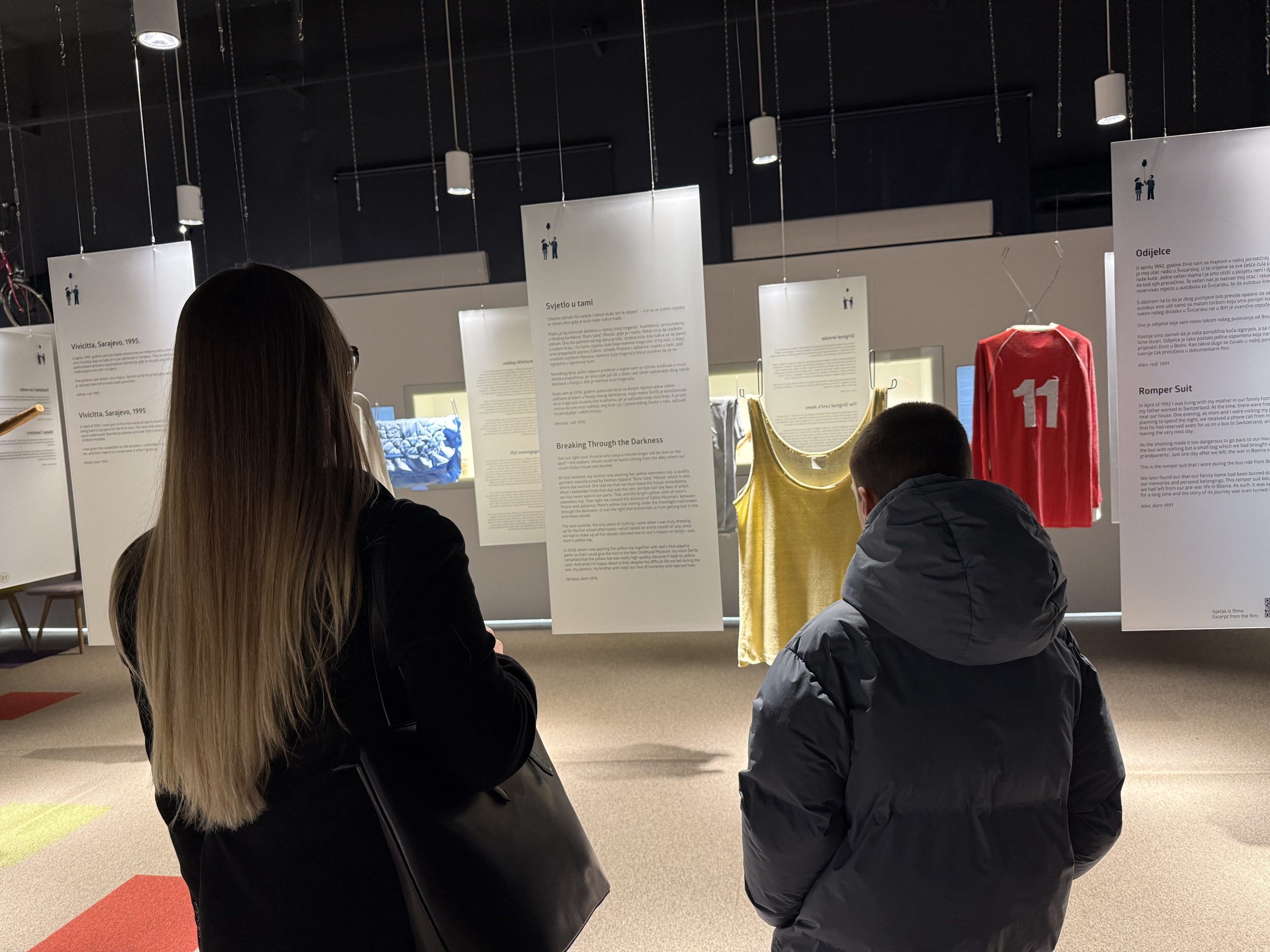
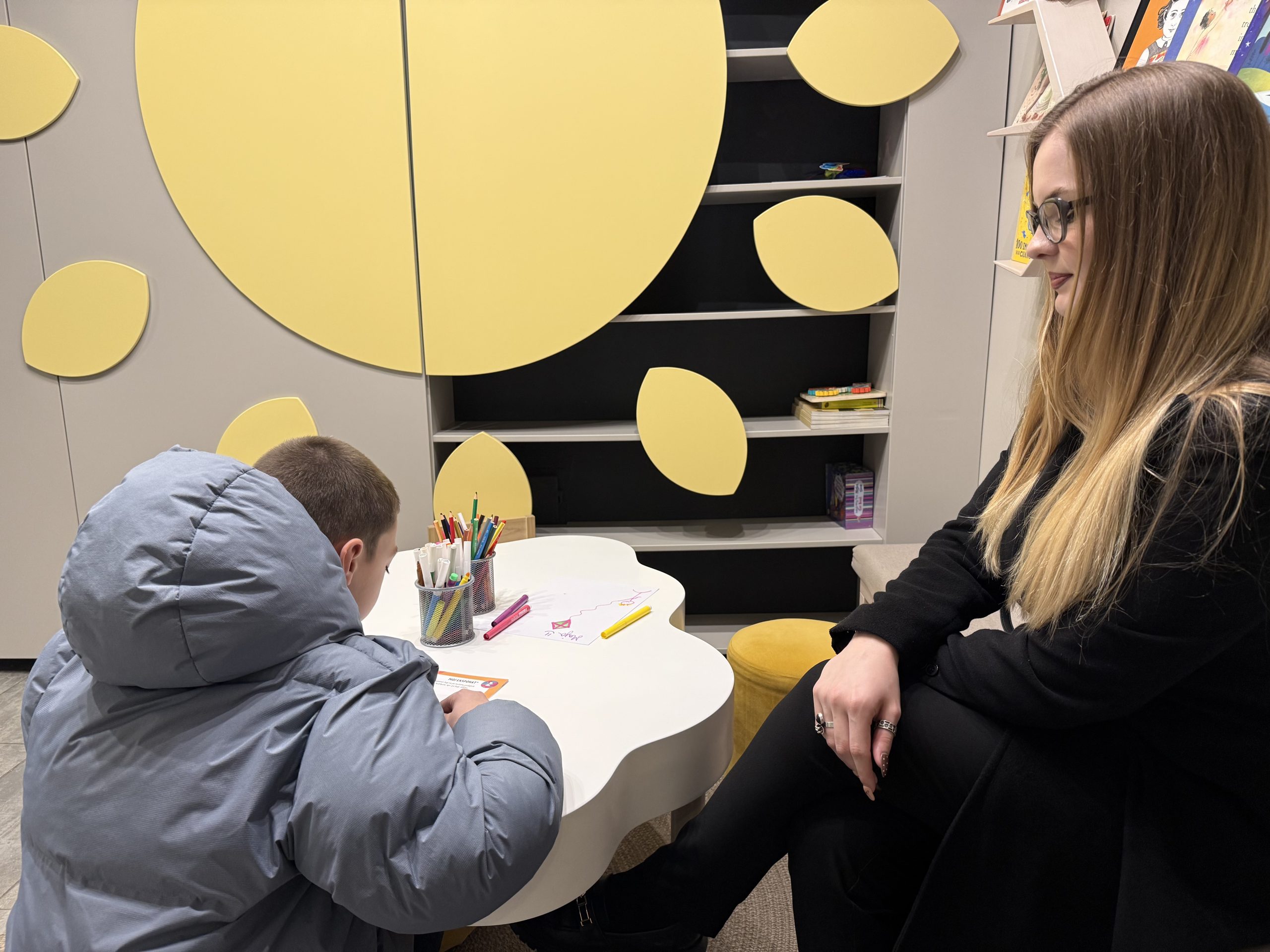
This week, we welcomed program volunteer Dženeta Zembo and her younger brother D., who shared their experience with us. Dženeta explains that a group visit within the program had already been organized earlier, but D. was unable to attend at the time.
“I’m glad I managed to bring him this time, because he was really interested and felt bad that he couldn’t come earlier,” says Dženeta.
“This time we had the chance to come just the two of us, which was especially valuable because we had more space and time for each other,” she adds.
Interactive Spaces
D. says he actively took part in the entire museum experience — writing messages, exploring the exhibition — and that the interactive space was particularly memorable for him, where he could listen to different sounds that often mark childhood.
“The most interesting thing for me was listening to the sounds from the sports hall,” says D.
Dženeta adds that during group visits as well, the interactive part is especially engaging for children.
“It sparks their curiosity, and then they find it easier to focus on the rest of the exhibition,” she explains.
The Museum as a Space for Strengthening Relationships
Speaking about the importance of visits like these, Dženeta emphasizes that they play an important role in strengthening their relationship.
“Collaborations like this are extremely important because they allow my younger brother and me to grow closer outside of our everyday obligations. Many of these topics would probably never come up in our conversations if they weren’t sparked by visits to museums and similar institutions. After that, we continue to explore, talk, and get to know each other better, which is how we build our relationship,” she says.
The Importance of Cross-Sector Collaboration
Mirela Geko, coordinator of the Older Brother, Older Sister program, emphasizes that this partnership demonstrates the importance of cross-sector collaboration in the field of prevention and support for children and young people, as well as the potential of cultural institutions to take on an active and socially responsible role.
“This collaboration clearly shows how cultural institutions can contribute to the prevention of risky behaviors and the strengthening of protective factors among children. In addition to the professional dimension and the support itself, it is also important that free entry to the Museum allows mentors and mentees — our volunteers and children — to enjoy everything the Museum offers without worrying about whether they have enough pocket money for a visit,” says Geko.
The Museum remains open to all mentor-volunteer pairs who wish to visit, explore, and spend meaningful time together.