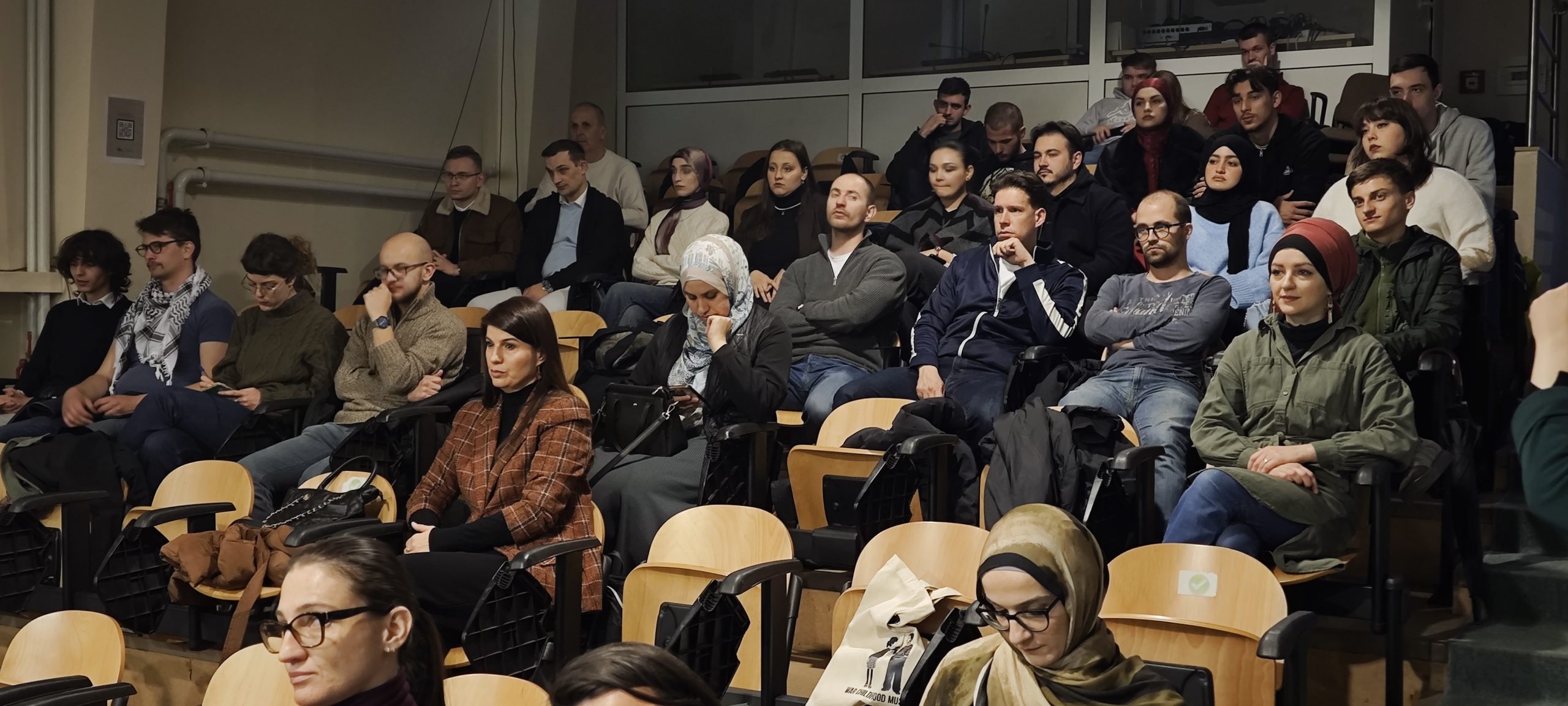
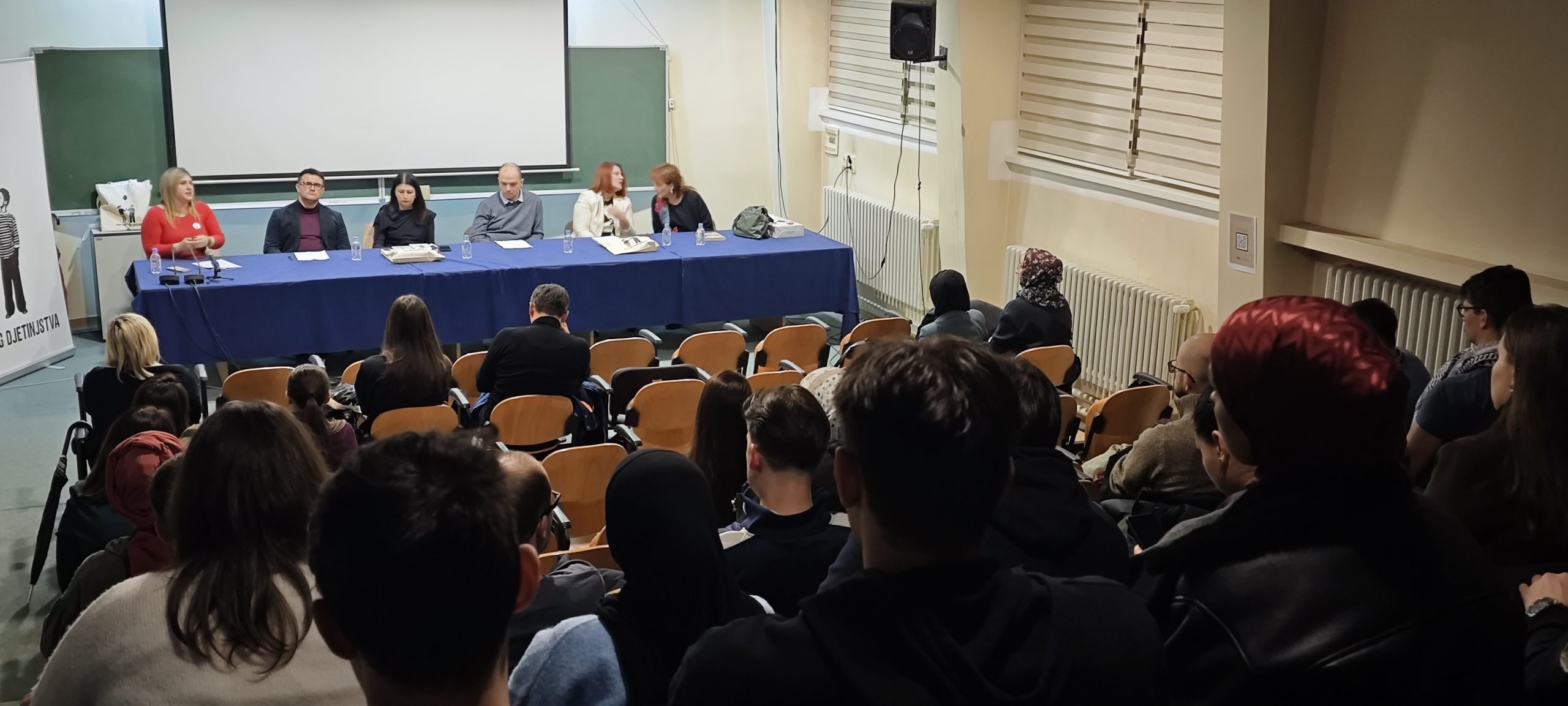
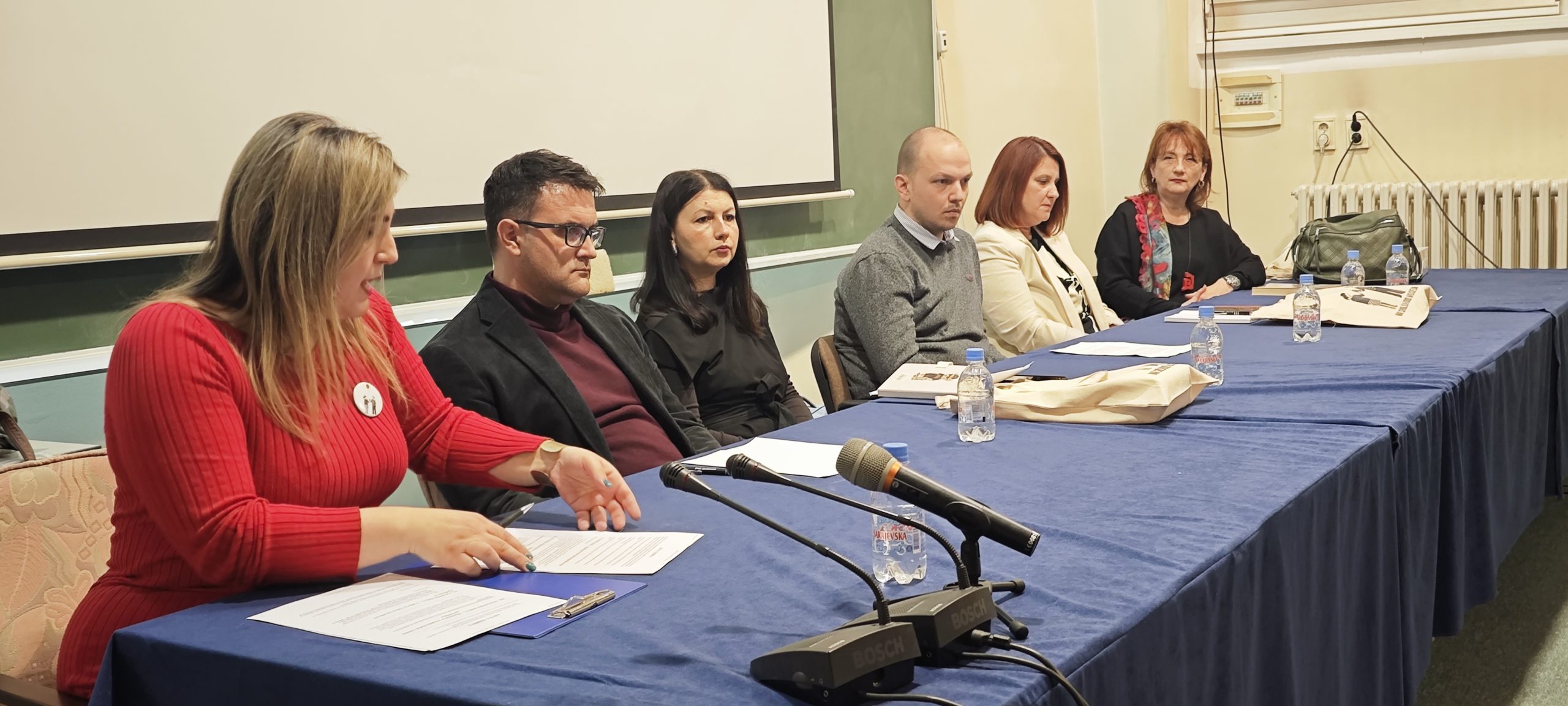
On Friday, March 27, 2026, the War Childhood Museum and the Center for Historical Research (CEHIS) organized the public panel “Childhood in Wartime – The Case of Bosnia and Herzegovina,” during which the recipients of the 2026 “Lejla Hairlahović-Hušić” Scholarship were also announced.
The panel brought together historians and researchers working on different periods of Bosnia and Herzegovina’s history, opening discussion on how war shapes children’s experiences, as well as how historiography approaches the study of childhood. The discussion featured Dr. Sonja Dujmović, Dr. Amila Kasumović, Dr. Amir Duranović, Dr. Melisa Forić Plasto, and Amer Maslo, MA.
The public panel was initiated and supported by last year’s scholarship recipient, Amer Maslo, and the announcement of this year’s scholarship recipients was included as part of the program.
Scholarship Recipients
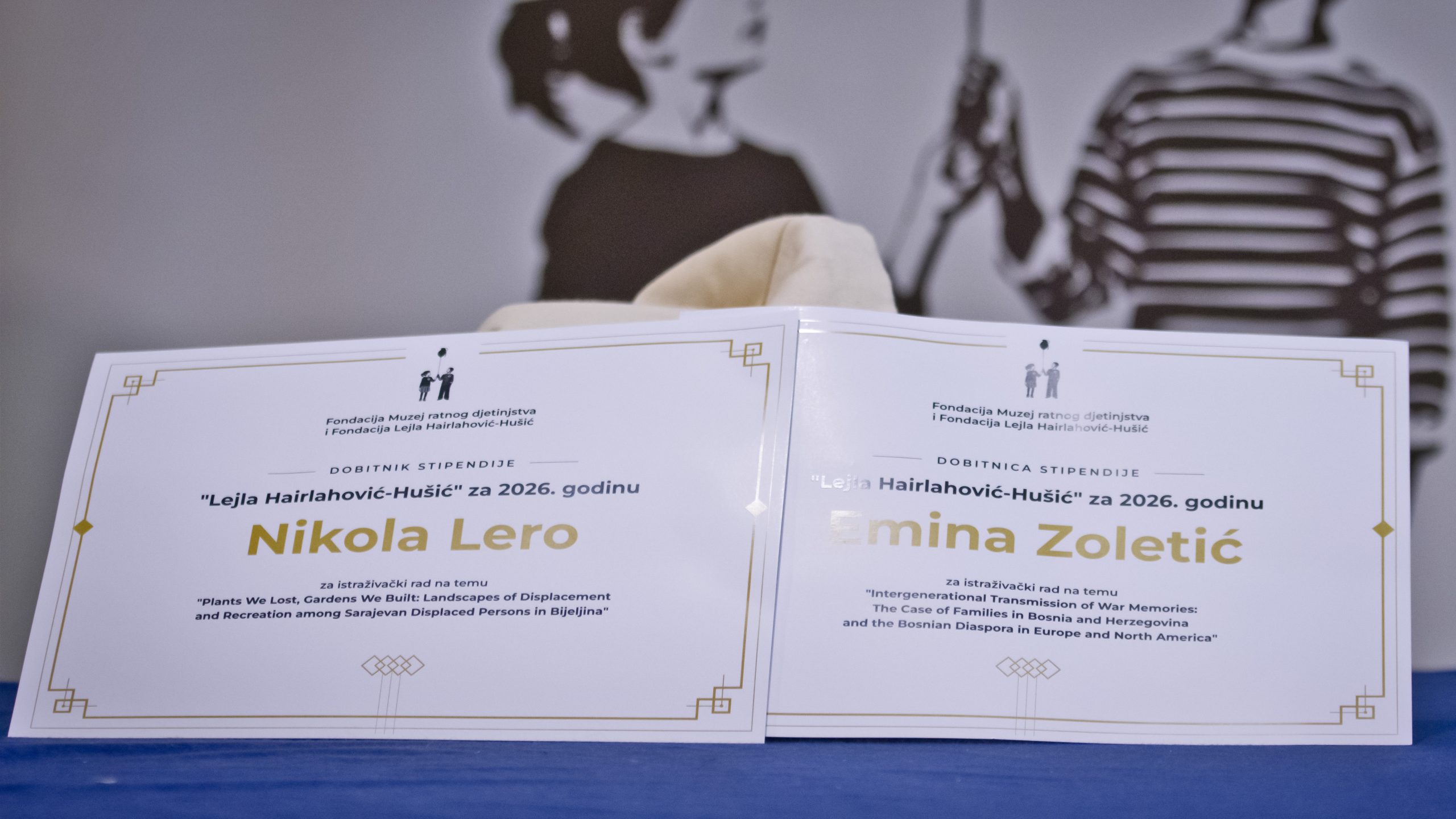
Given that the two highest-ranked projects received nearly identical scores, the decision was made to award the scholarship to two recipients this year.
The first recipient is Emina Zoletić, a PhD candidate at the University of Warsaw (Poland). Her research, “Intergenerational Transmission of War Memories: The Case of Families in Bosnia and Herzegovina and the Bosnian Diaspora in Europe and North America,” explores how memories of war—particularly experiences of the Siege of Sarajevo—are transmitted, reshaped, and reinterpreted across generations in Bosnia and Herzegovina and the diaspora. Her work focuses on practices such as storytelling, silence, art, and activism, as well as the ways in which unspoken or suppressed experiences shape family narratives and can contribute to solidarity and peacebuilding.
The second recipient is Nikola Lero, a PhD candidate at the University of Sheffield (United Kingdom), at the School of Architecture and Landscape Architecture. His research, “Plants We Lost, Gardens We Built: Landscapes of Displacement and Recreation among Sarajevan Displaced Persons in Bijeljina,” examines the loss and re-creation of plant and garden worlds among displaced persons from Sarajevo. His work highlights the importance of gardens, orchards, and plants as part of everyday life and a sense of home, and analyzes how these lost landscapes are reconstructed in new environments.
The “Lejla Hairlahović-Hušić” Scholarship is named after a late researcher of the War Childhood Museum and is awarded to PhD candidates conducting research in the social sciences and humanities on topics relevant to the Museum’s work. The scholarship has been awarded in cooperation with the “Lejla Hairlahović-Hušić” Foundation since 2022.