The collection of the War Childhood Museum is made of personal stories and objects entrusted to us by individuals from all over the world.
To explore what the Museum means to them and why they chose to share with us, we launched a series of interviews with collection contributors. You can find some of the previous interviews here.
This time, we spoke with Amila Bećirbegović, originally from Prijedor and now based in California, USA, where she teaches at California State University, Fresno. Take a look at her story and reflections below.
New Clothes for Barbie
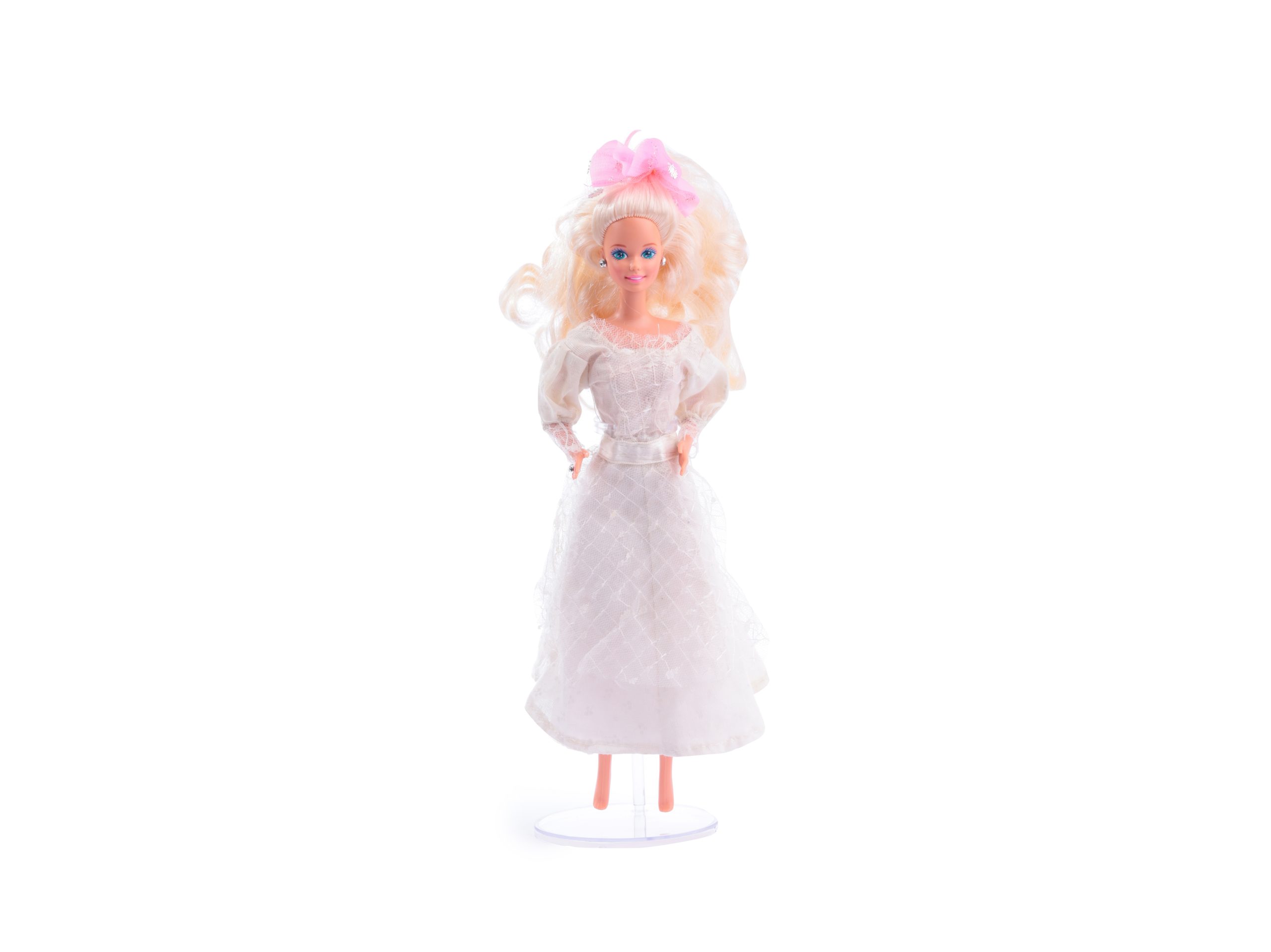
My aunt was a seamstress and often lovingly designed clothes for my Barbie dolls. On my fourth birthday, just before the war began, she gifted me a set of Barbie outfits: a wedding dress, a travel purse, a jacket, a tulle skirt, a pair of jeans, and even a swimsuit. Thanks to her, my Barbies were the best dressed!
Two days later, war broke out in Prijedor, and most of my family was taken to nearby concentration camps. My parents and I survived by hiding in our neighbor’s garage.
We eventually escaped Bosnia on a Red Cross bus. In my backpack, I brought only a few of my most treasured belongings—my Barbie doll and her new clothes.
I never saw my home, or the rest of my dolls and toys, again.
Amila, 1987, Bosnia and Herzegovina
What led you to contribute to the Museum’s collection, and what inspired that decision?
I became aware of the museum and its mission through an online post that I saw on social media several years ago. I was immediately intrigued and felt very seen by the call to remember a childhood riddled by war. I was 6 years old when I had to escape Prijedor and after browsing the museum’s digital collection, each one of the stories and childhood artifacts resonated with me and my own experiences. I was deeply moved by the stories and struck by our collective similarities as children and survivors of genocide and war. At that time, I was moving into my new home in California when the museum issued a call for survivors to submit their stories and donate their artifacts. I had a Barbie dressed in a beautiful lace wedding dress, that my aunt made for me before the war broke out. She gifted the dress to me on my fourth birthday and I was dazzled by the intricate lace work. When I escaped from Prijedor, I did not have much time or many resources, so I could only pack the few things that I could grab and carry. One of the childhood things that escaped with me was that beautiful Barbie dress. I never played with it while I was a refugee. I kept it safe in a box. When I was moving into my home in California, I looked at the box with the childhood dress and thought how silly it was to keep my memories locked away for no one to see or hear. It was then that I decided to answer the call from the museum and donate my childhood memory. Now my story can be heard all over the world.
I am hopeful that we can learn from the past and make “never again” not just a mantra, but a reality for all children in the future.
Do you think your story resonates with the experiences of children living through war and conflict today? If so, why?
My story echoes those of children experiencing war and genocide today. It is a shame that we haven’t learned from the past and are doomed to repeat the same acts of violence again and again. I do believe that the museum’s mission, and the memories of the children of war who shared their stories through the museum, can live on and be a reminder that we need to do better for the future. As a Professor, I have made it my mission to teach about genocide and share my own experiences as a survivor of the Bosnian genocide. And I believe that the museum accomplishes this on a large scale as well, through the exhibits and digital archives, but most importantly through the teacher workshops and classroom experiences that are offered. This is the true power of remembering, teaching others not to forget.
What do the War Childhood Museum and similar initiatives mean to you?
I strongly believe that representation matters. When a child sees other children, who experienced similar struggles and atrocities, publicized, that child can feel heard, comforted and even gain valuable resources and tools for coping with trauma.
Hearing stories from other child survivors and seeing them represented on a global scale gives voice to often unheard or silenced moments in history. It is powerful and restores the agency to those who lost so much during wartime.