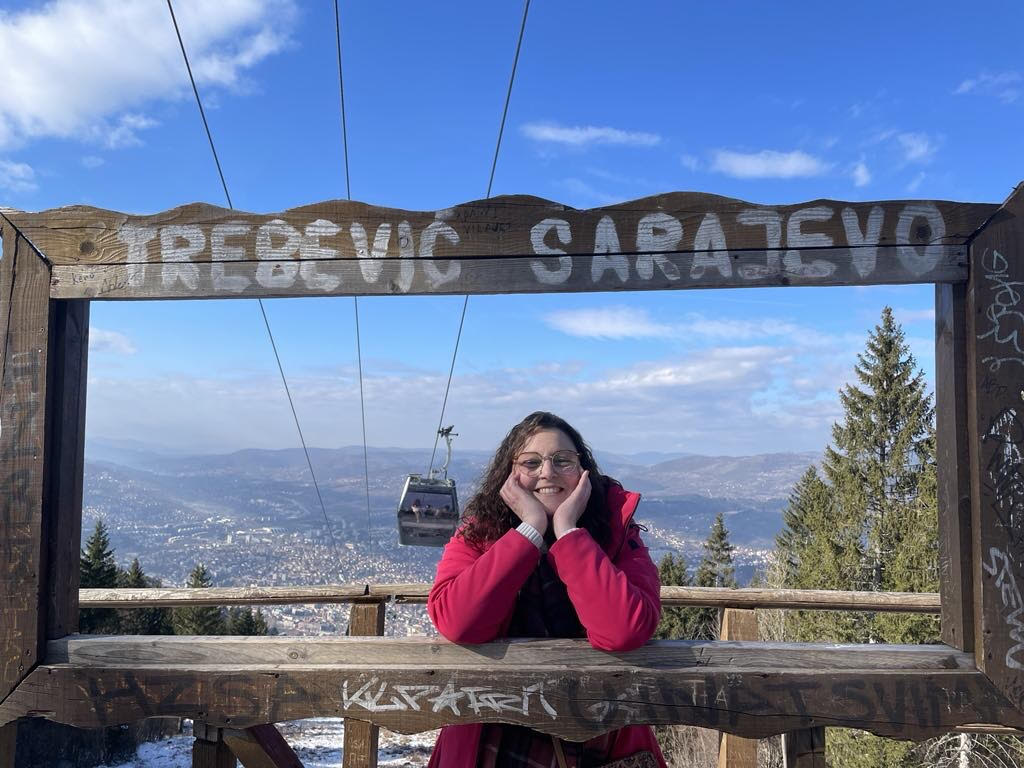
The War Childhood Museum offers internship opportunities for students worldwide, allowing them to engage with memory work and archives. One of our interns was Laura Zenner from Luxembourg, who graduated with a PhD in History from the University of Glasgow. Her research focuses on commemoration and monuments, particularly those related to the First World War in Luxembourg.
Laura first learned about the Museum during a multi-seminar program, where she attended a lecture by Amina Krvavac, the Director of the War Childhood Museum Bosnia and Herzegovina. Inspired by the Museum’s work and storytelling through objects, she later applied for an internship on her own initiative.
What has the experience in Sarajevo been like for you?
Living in Sarajevo has been a new and fascinating experience. It’s my first time in Bosnia-Herzegovina, and I was struck immediately by the multicultural, multireligious atmosphere of the city. On the first evening, I heard the call to prayer and saw how different cultures and histories: Ottoman, Austro-Hungarian… intertwine here.
What kind of work have you been doing at the Museum?
I’ve been focused on collection work, mostly creating condition reports for various objects, everything from drawings and coins to textiles and toys. It’s been valuable hands-on experience, especially since I hadn’t worked with museum collections practically before.
Has this internship sparked any new ideas for your future work?
Definitely. I’m thinking about new research projects that might connect monuments and memory with migration stories, especially of people from the former Yugoslavia who came to Luxembourg during the 1990s. It’s an angle that hasn’t been explored much, and it ties into my academic interests.
What is the importance of institutions like the War Childhood Museum, in your view?
I think it’s essential, especially the focus on childhood, which is often overlooked in war narratives. Children experience conflict differently, and the objects in the Museum carry those stories forward. Each object has its own life, and its presence in the Museum becomes a new chapter in its story.
This interview was edited and condensed for clarity.