The War Childhood Museum participated in the realization of the international traveling exhibition Handle With Care, developed as part of the TexTALES project, which explores migration, identity, and the search for home through fashion and personal stories.
The exhibition was conceived and curated through a mentorship process led by the War Childhood Museum in collaboration with three organizations dedicated to social inclusion and fashion — Dress Again (Italy), ESPERO Atelier (France), and ANKAA Project (Greece). The starting point of this process was a workshop held in Sarajevo in September 2025, during which the partners jointly developed the exhibition concept and storytelling approach, reflecting on how each city could host the traveling collection with its own identity — while maintaining the same goal: fostering empathy, understanding, and new perspectives on migration.
Personal Stories from Around the World
Handle With Care — a traveling exhibition — presents 30 garments and 18 personal stories, accompanied by sketches, drawings, and creative documentation produced throughout the process. “Through this exhibition, we wanted to show that every piece of clothing can carry experience, memory, and a story about the search for belonging. Each fashion creation follows the search for a place that could be called home,” said Adna Muslija, project mentor.
The personal stories and testimonies of project participants from Afghanistan, Iran, Pakistan, Nigeria, Senegal, Gambia, Ukraine, Syria, and other countries also served as the narrative and conceptual foundation of the presented fashion collection, developed through a collaborative creative process that combined professional tailoring skills, ethical storytelling, and the use of recycled and previously used materials.
Paris, Athens, and Faenza
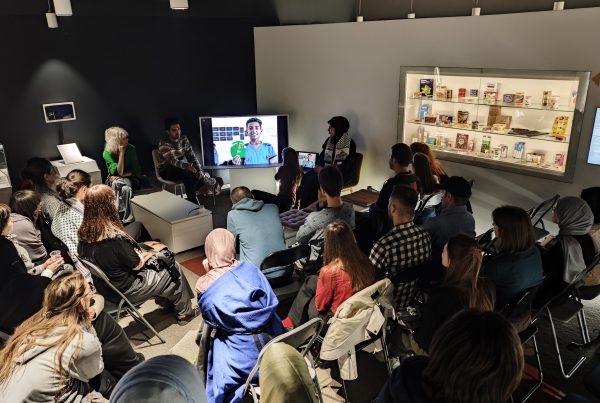
The traveling exhibition Handle With Care was first presented in Paris in March this year at the Maison des Réfugiés. The opening also featured a fashion show formally presenting the collection. The exhibition was later opened in Athens in April, as well as in Faenza at the Galleria Comunale d’Arte, where the exhibition was accompanied by a theatrical performance inspired by the collection and exhibition itself.
The mentorship process developed and implemented by the War Childhood Museum throughout the project draws on the institution’s long-standing experience working with personal testimonies, trauma, and memory. The methodology built through working with stories of those whose childhoods were shaped by war was transferred into the context of migration and social inclusion — affirming that fashion, like personal objects, can carry memory, identity, and dignity.
TexTALES is co-funded by the European Union through the Creative Europe programme. Views and opinions expressed are, however, those of the author(s) only and do not necessarily reflect those of the European Union or the European Education and Culture Executive Agency (EACEA). Neither the European Union nor EACEA can be held responsible for them.