The War Childhood Museum Ukraine documents the experiences of people whose childhoods have been affected by the Russian-Ukrainian war. Currently, the collection contains over 1,050 interviews and nearly 1,900 objects.
We spoke with Anna Kurnytska, who works in the Museum’s communications team and is also one of the Museum’s contributors. In 2025, she donated her own story to the Museum, together with an Alpro coconut yogurt carton that holds the memory of the first day of Russia’s full-scale invasion.
Read more below.
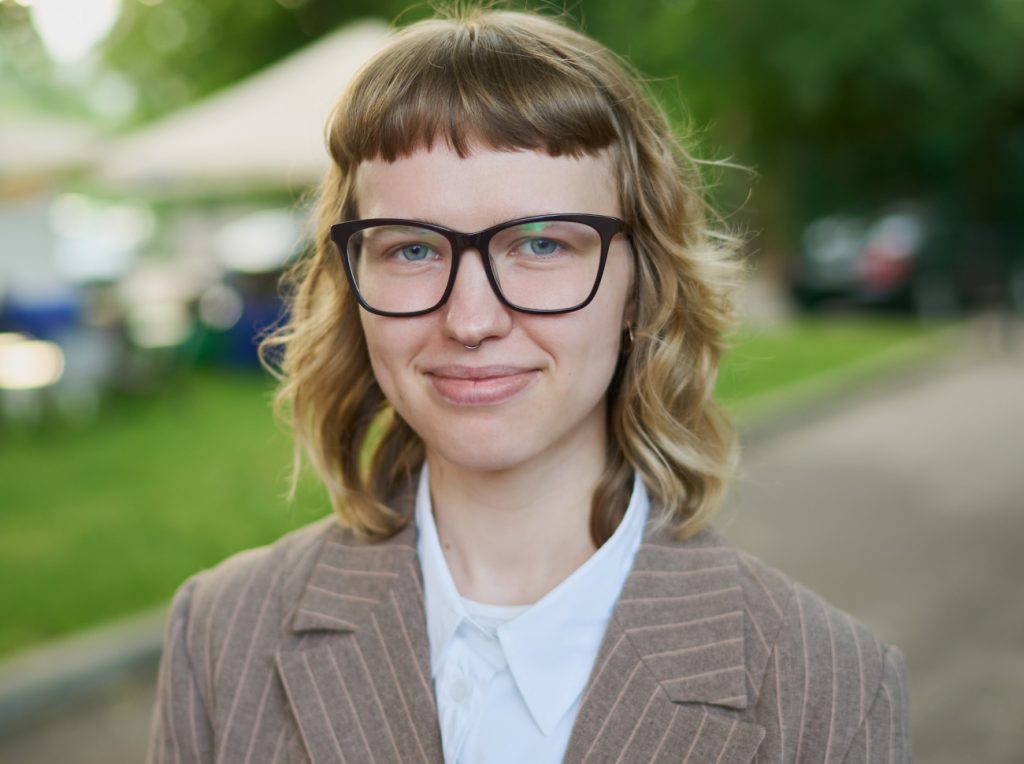
Why did you decide to share your own story with the Museum?
In 2024, a War Childhood Museum Ukraine researcher visited one of my university classes and invited us to share our stories. At the time, I didn’t feel I had anything to say.
In January 2025, I started working at the Museum. Reading the stories in the collection, I saw how different the experiences of young people across Ukraine can be. When the Museum’s program director, Svitlana Osipchuk, suggested I become a collection contributor, I hesitated. I wasn’t sure my story mattered enough. But the interview turned out to be deeply meaningful: for the first time in a long while, I could talk about life before the war without painful nostalgia.
How does being a collection contributor affect your work with other people’s stories?
When I write a post or an article for the Museum, I often think about what the person might have felt during the interview. Why did they choose to talk about this? What does their object mean to them? Behind every story is a person who has entrusted part of their life to the Museum.
I was a child myself when the full-scale invasion began, so my experience inevitably shapes how I read other people’s stories. But it doesn’t mean I understand everyone’s experience. I try not to project my feelings onto others, but to treat them as a reminder to listen carefully and respect each person’s right to tell their story in their own way.
Why is empathy especially important when telling stories about war online?
In digital communications, personal stories become posts, photos, and quotes. It’s easy to focus on wording or on capturing attention. But a person’s experience can’t be reduced to a catchy headline.
I’m not the only one on our team who has donated a story: project manager Renata and public programs coordinator Andrii are also participants. Personal experience doesn’t replace professional standards. It makes us more aware of the responsibility that comes with working with other people’s memories. Children often can’t find the words to explain what is happening to them, and adults may only gradually discover what their childhood memories mean. Our task is not to decide for them what matters, but to create a space where their stories can be heard.
What does preserving these stories mean to you?
For the Museum, the collection helps build a multifaceted narrative of the war. For me, its value lies in showing what people growing up during the war truly feel. Their stories show that war is made up not only of major events, but also of ordinary things: everyday decisions, tastes, smells, and memories.
Now I see that an object that seems insignificant can become the key to memories a person hasn’t spoken about for a long time, even to themselves.
What I Ate Before the War
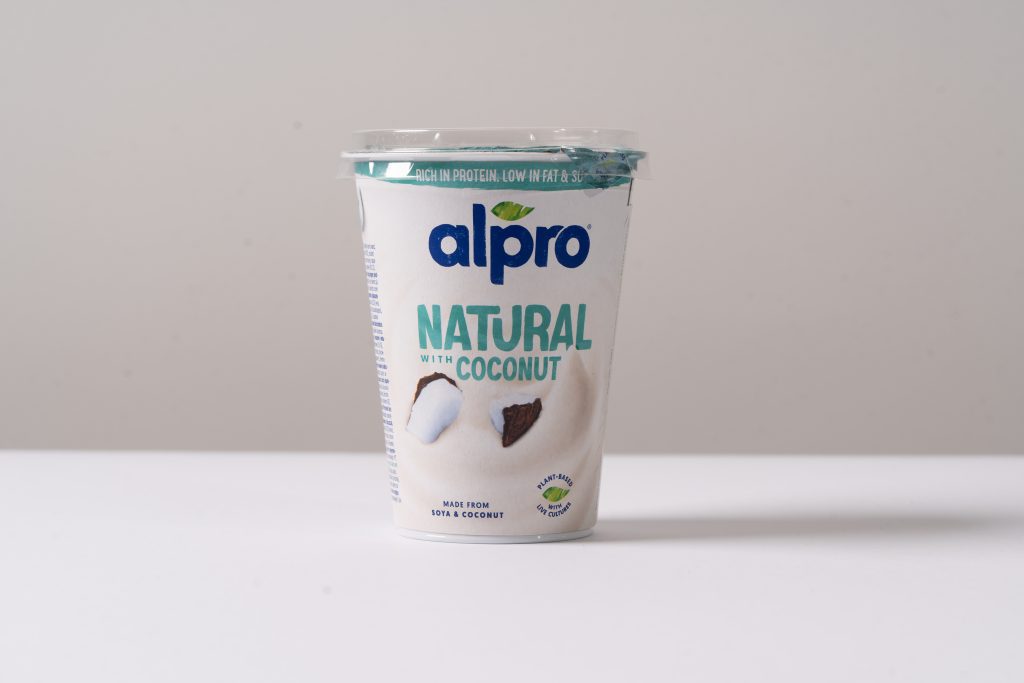
I’m very sensitive to smells. I associate certain smells and tastes with particular events in my life. So whenever I eat this yogurt, I remember that it had been part of my life before the war. It was something I used to eat back then. The last time I had eaten it was on February 24.
At the time, I was going through a phase of eating a plant-based diet, and I bought this yogurt quite often. I usually had it for breakfast or divided it into several portions because the yogurt tub was quite large.
I bought one on February 23, just before the war began. I knew that if we had to leave, it would go bad, so I had to eat it. I ended up eating the whole thing because I needed to finish it.
Anna, born in 2005
Kyiv