“Creativity for Peace” is a program implemented by the War Childhood Museum in partnership with the Center for Educational Initiatives Step by Step, through which young people across Bosnia and Herzegovina learn about peace pedagogy and develop into peer educators who pass on knowledge about peace to their peers.
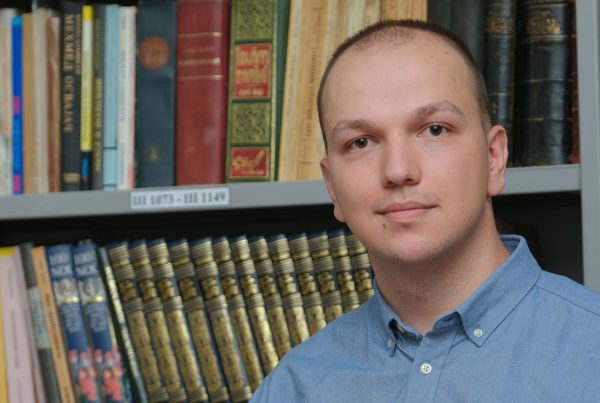
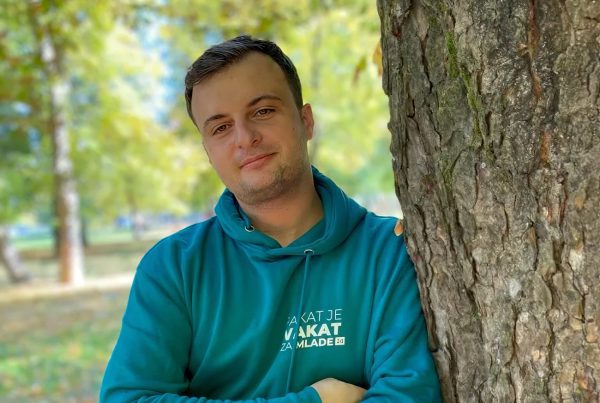
Program participant Armin Husić, a student at the Ivan Merz Catholic School Center in Banja Luka, shares how taking part in the program shaped his thinking and how he views the education system in Bosnia and Herzegovina today. Read his story below.
How did your understanding of peace change through the program?
Even before the workshop in March of the previous year, I was already well aware of how important peace is, as well as how deeply it is threatened—especially by those whose duty it is to protect it. Although youth is a period often marked by rebellious ideas and a certain kind of defiance, the workshop helped me realize that nothing is worth the devastation of peace, in any measure or in any form.
What observations have you made about peace among your peers? Have you noticed any changes in how they talk about peace before and after the workshops?
I noticed that for all of us, “Creativity for Peace” is, above all, a project where we learn a great deal, and that the knowledge we acquire—along with its proper application—is a guarantee for preserving and spreading peace. Together with peers who already uphold common-sense values, we carried out a series of workshops that were, in their own way, revolutionary, because many of the participants had never before had the opportunity to engage in concrete action aimed at promoting nonviolence and peaceful communication.
In your opinion, how should peace education be approached in Bosnia and Herzegovina?
Education in general should be approached in a reform-oriented way, and the same applies to the formal education related to peace. It is necessary to fundamentally change an approach that is focused solely on content and to gradually remove everything that represents the malignant everyday realities of Bosnia and Herzegovina’s education system, namely: revision of official history, denial of crimes and related court verdicts, glorification of war criminals, equating responsibility, avoidance of facts, and unnecessary concentration on trivial details—in short, everything that hinders the development of the educational process and, consequently, the progress of future generations.