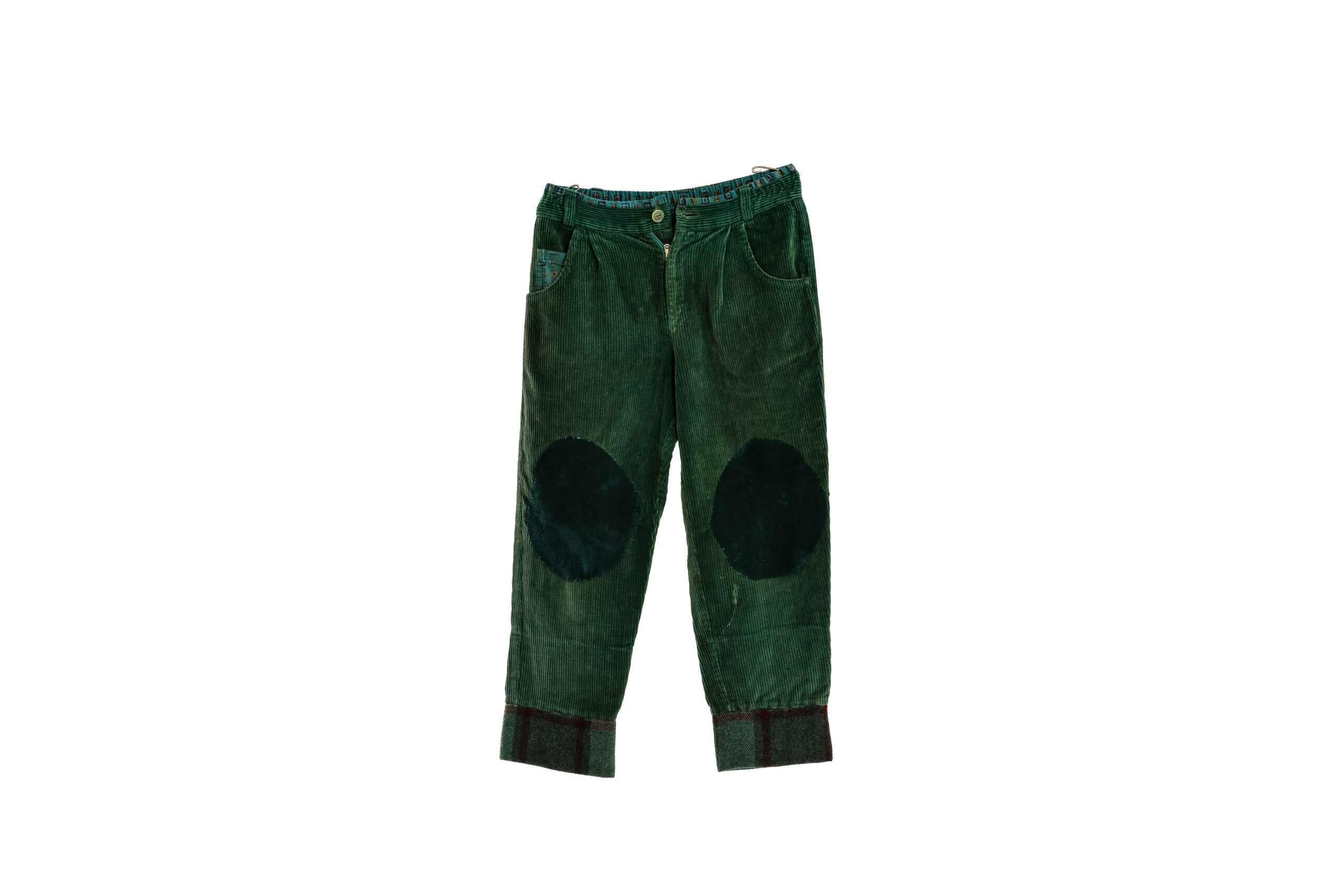
Green trousers with patches

Trousers

My mother, brother, and I went to Tuzla to stay with our grandparents at the start of the war. We stayed there until 1994. I was six or seven years old at the time, and I quickly grew out of all of the clothing I had before the war. All of my trousers were suddenly too short. Our neighbor, Ms. Seka, sewed parts of a blanket to my trousers so that they would be long enough. When I look at them today, I recognize that even in those difficult times she made an effort to ensure that my improvised trousers look nice. Thank you, Ms. Seka.

Damir (m), b. 1987
Bosnia and Herzegovina

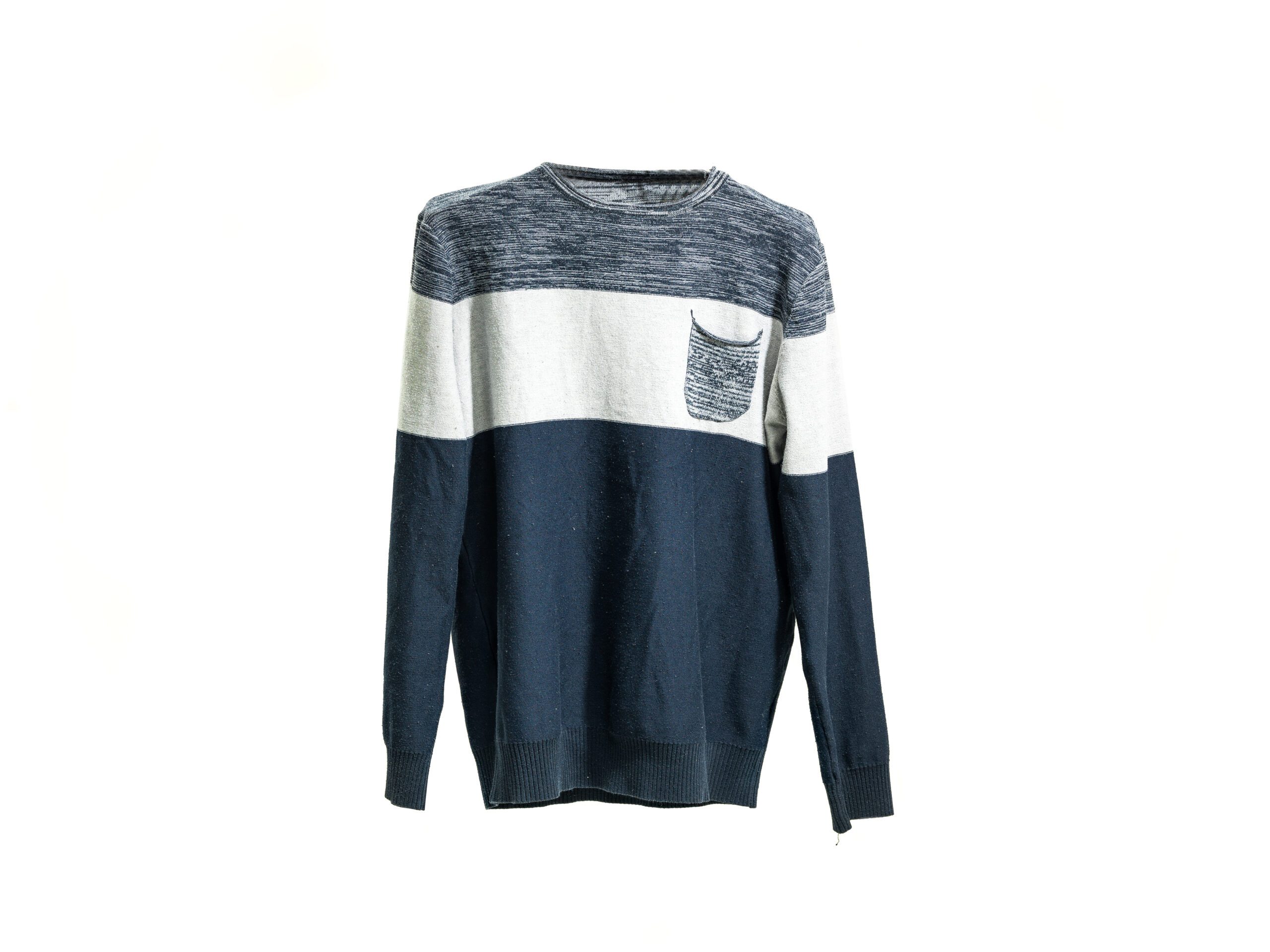
Navy blue sweatshirt with white stripe

Shirt for the “Game”

This is a shirt I bought for myself in one of the Chinese shops in Athens. I bought it because my little brother and I were preparing for the “game”—a long train journey to North Macedonia. The journey started at 4 PM. We entered a train wagon together with sixty other people. The wagon was cramped, and we were struggling to breathe. I placed my little brother close to the wagon doors so that he could get some air, while I sat at the back. The train arrived at the Serbian border at 12 AM. 

I tried to protect my little brother from all difficulties during the journey. When we were placed at a refugee camp in Preševo in Serbia, I tried to isolate the two of us so that he wouldn’t be exposed to the bad things which were happening there.

We walked all the way from Serbia to here, and we’ve been in Ušivak since 2020.

Mustafa (m), b. 2005
Afganistan

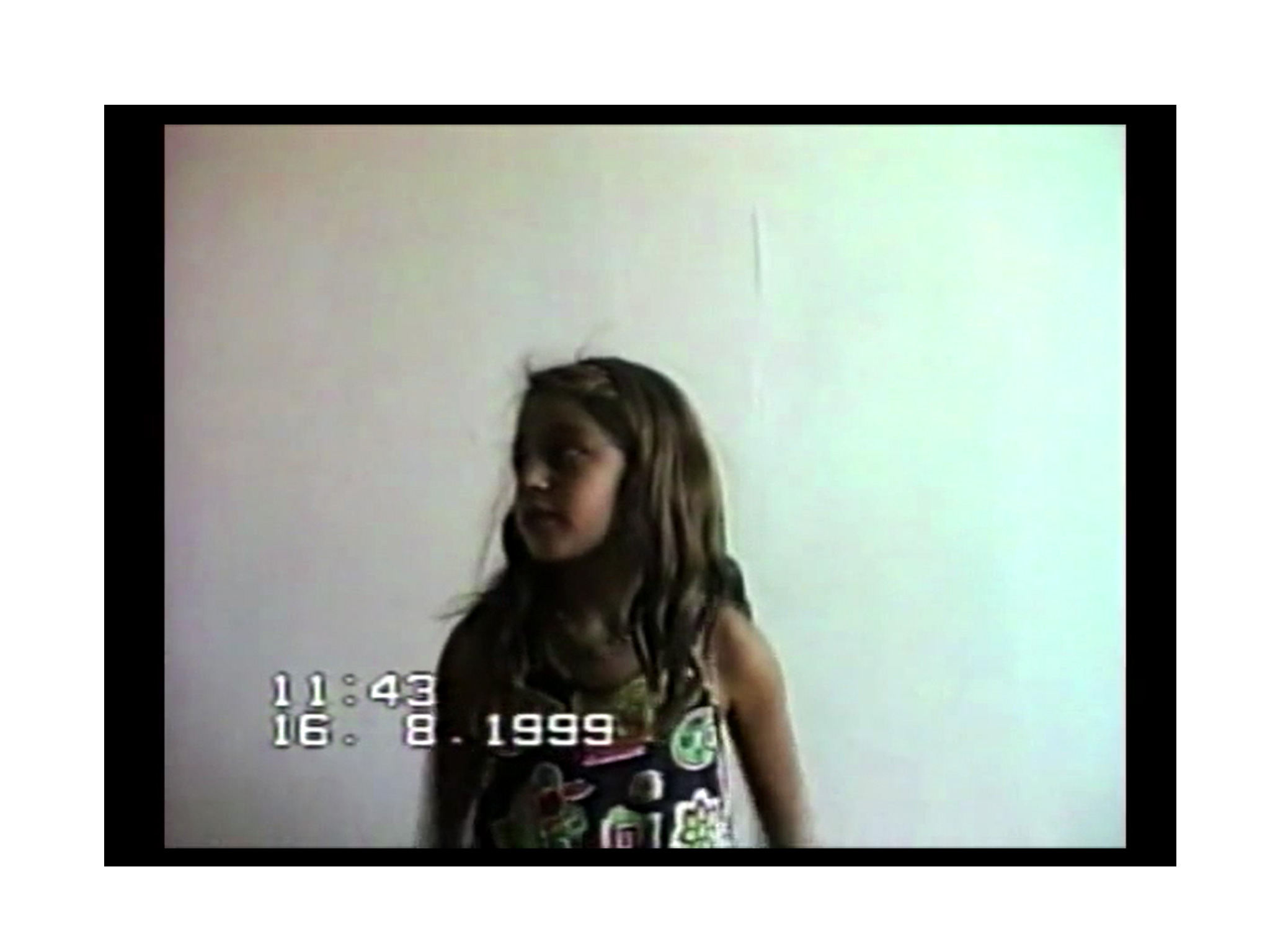
Screencap from video, showing a young girl

The Ruins of Our Home

After being refugees in Turkey, my family and I returned to Kosovo once the war was over. I was 7 years old at the time and I remember the excitement I felt at being able to return and see my old friends, as well as my dolls and the books we left behind in our family home. 

Once we returned, we found out that our house was burned down by one of our close neighbors. He was the father of my close friend Maja, who attended the same school as I. I thought of all the times I defended her when other kids would call her names. I also thought of that time I lent her my brand new roller skates. Although I was little at the time, I remember the feeling of loss and emptiness that rose in me at the sight of our burned-down home.

This is a video of the ruins of our home, of all our burned books, my burned dolls, and memories. In the last few minutes of the video, my sister Paulina and I are playing grown-ups, pretending to smoke cigarettes, and talking about past events including the events which left our house in ruins. 

Renea (f), b. 1991
Kosovo

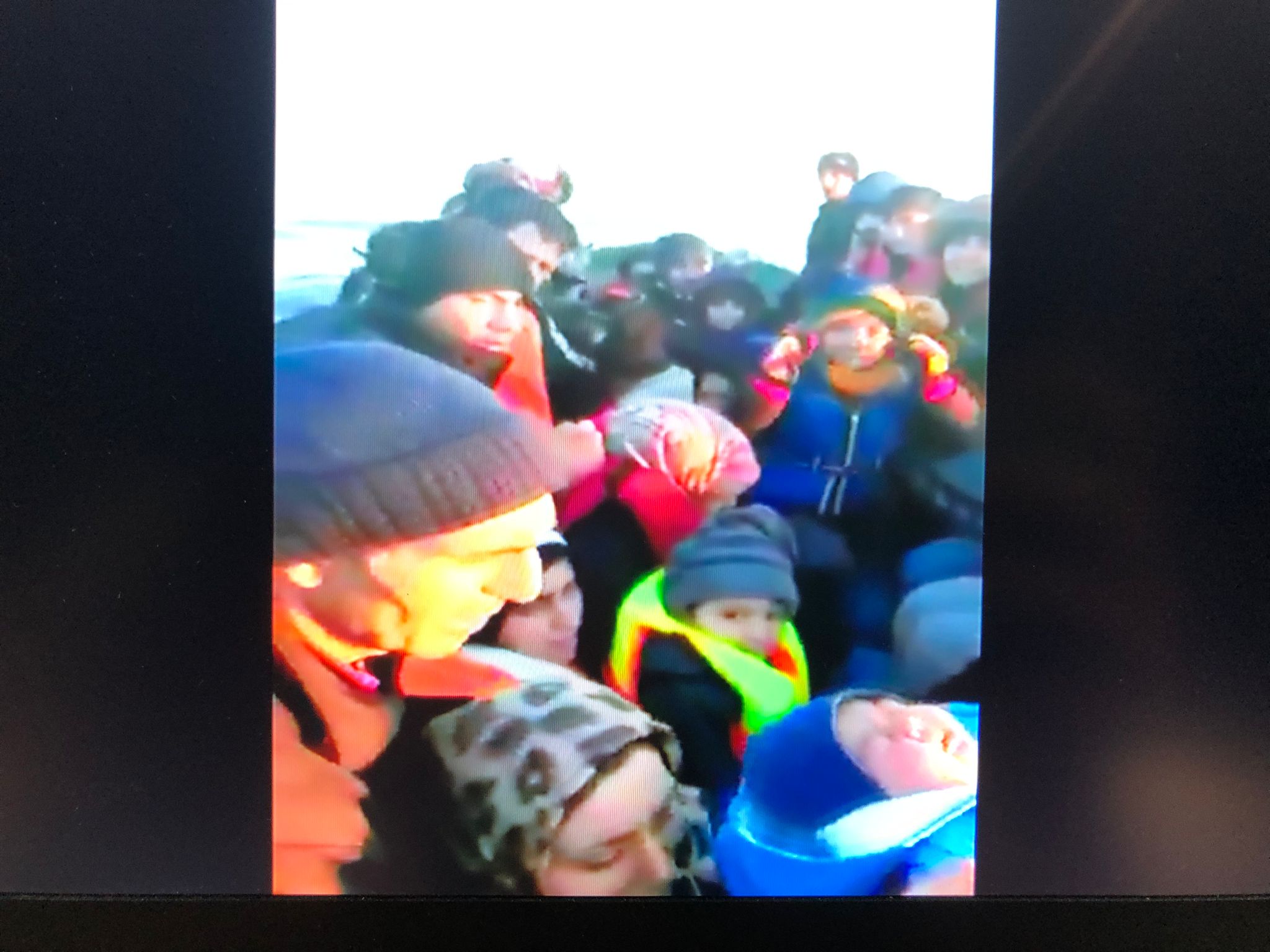
Screen cap of the video showing people on the move in boat

Peace at the Sea Side

My family and I were separated in two different refugee camps in Turkey. It took us a whole month before we could reunite again. Once we were together, we had to find a way to travel to Greece. We found out about a boat that would take us there. I remember the boat was very small. There were sixty of us waiting to get inside, and the boat had the capacity to carry only twenty. There were men, women, children and babies inside this boat. My father, who would often document things with his phone camera, recorded some videos of the people in the boat. We kept those videos, and we watched them from time to time as a memory of the things that we overcame. Along our journey, we lost many physical possessions. Among the few things we succeeded to keep is my father’s old cellphone, which I am donating to the Museum. When I think about positive memories from our journey, I remember standing at the seaside in Turkey and looking at the sea. There was just peace and calmness there. 

Shahab (m), b. 2006
Afghanistan

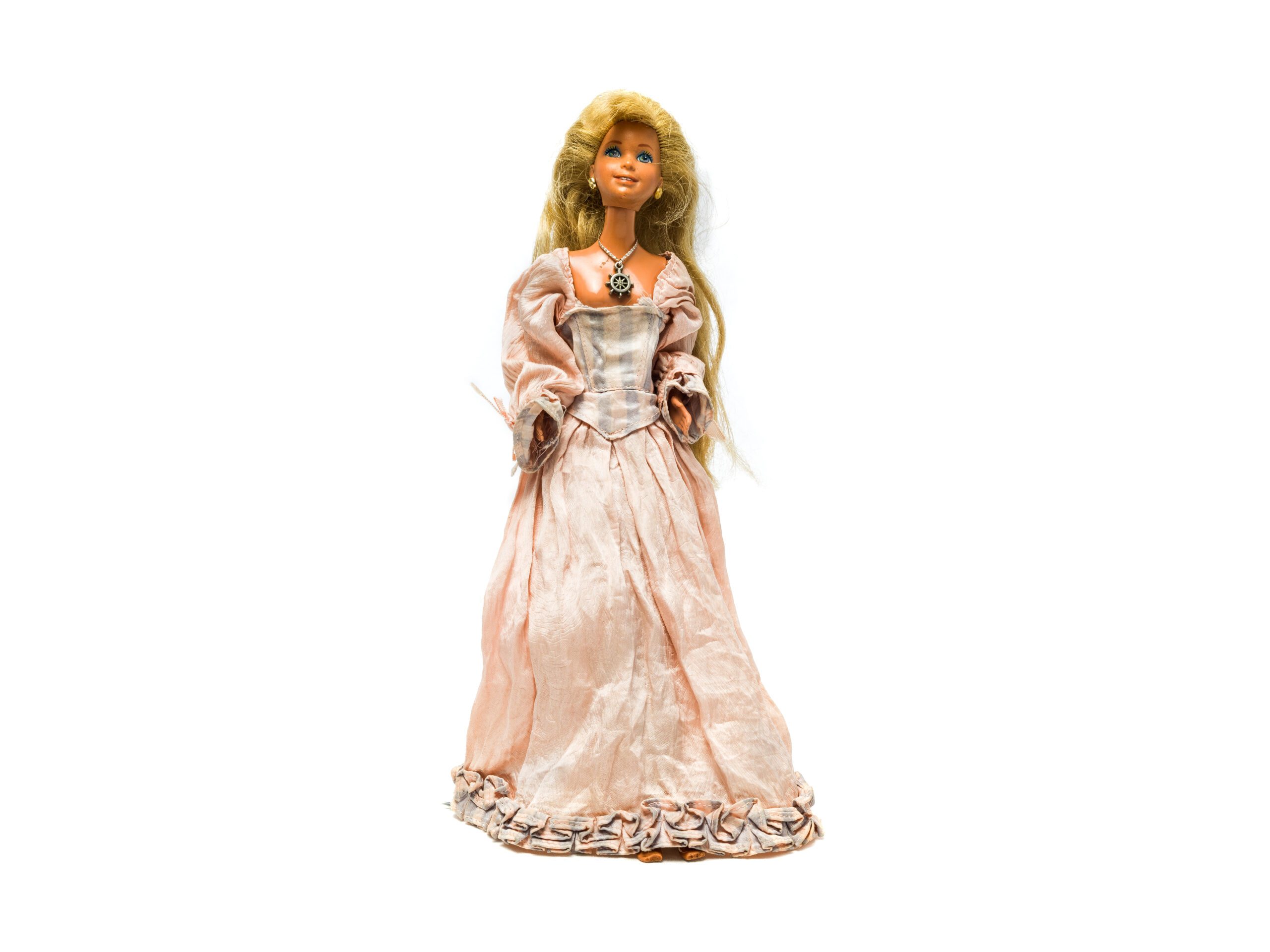
Barbie doll in pink gown

Barbie in a Shoebox

My mom, brother, and I were forced from our home in Bratunac, in 1992. My dad was detained in a concentration camp for a long time to follow. When we arrived in Tuzla, we were placed into a house with other refugees. The house overflowed with boys, and their main toy was this ball made from pieces of sponge. I was sad that I did not have a toy that I could play with. One day our neighbor, Mr. Rudo, who was like a grandfather to the whole neighborhood, brought me a real Barbie doll! I took care of the doll as though she were holy: I would wrap her in a cotton cloth or towel, and she always slept in a shoebox. I would normally set that shoebox, with my Barbie in it, in a little house that I built from wood scraps. Barbie did not have a name. Usually when I played, Barbie was selling food, sewing up casualties’ wounds, or healing sick people. Later I became a doctor, too.

Asmira (f), b. 1989
Bosnia and Herzegovina

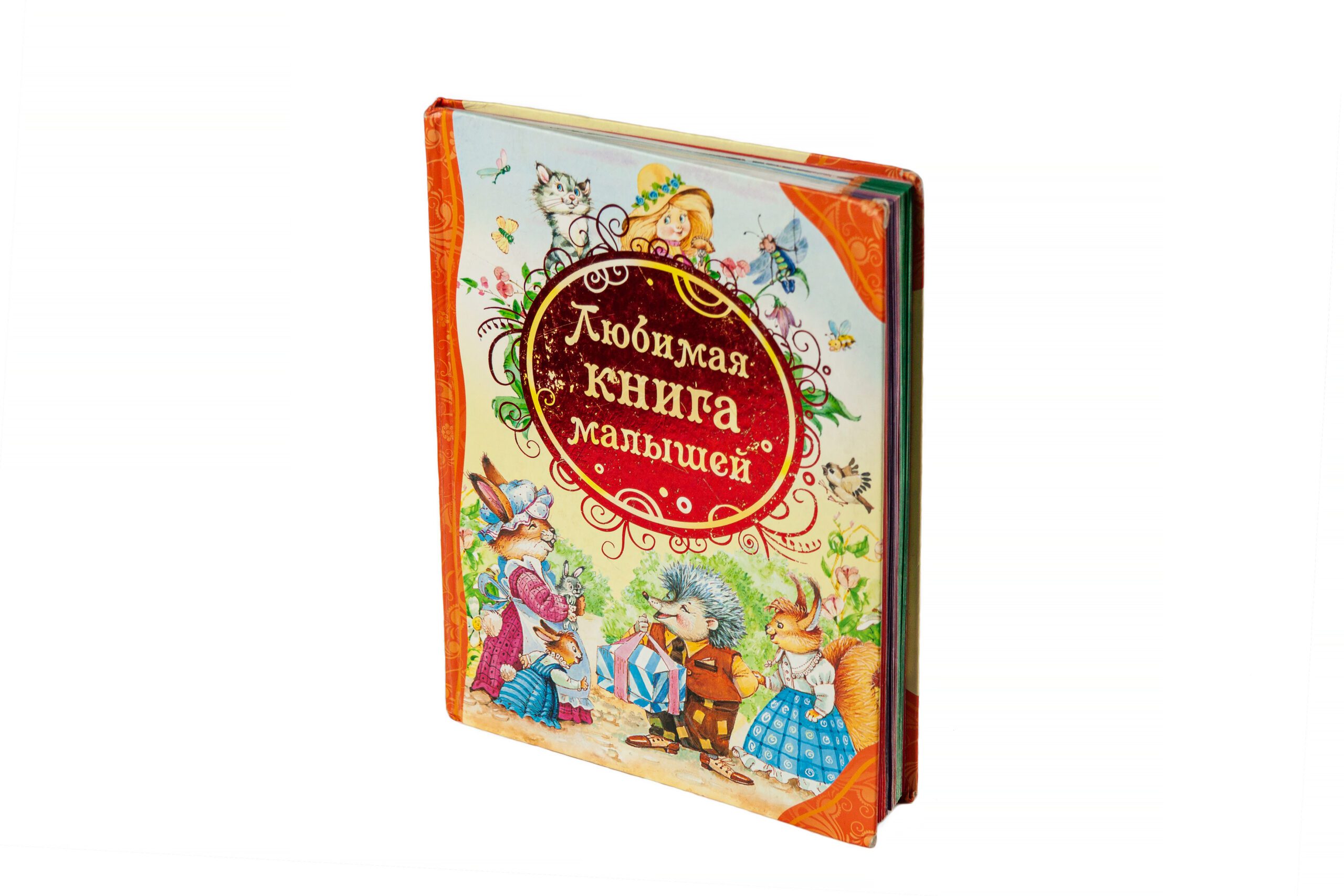
Colorful book in Ukrainian

The Book 

My Mom used to read me this book. My Mom and my brother died. He lived a while after the shelling. They started taking the shrapnel out of his body, and he died.

Yevheniia (f),  b. 2010
Ukraine

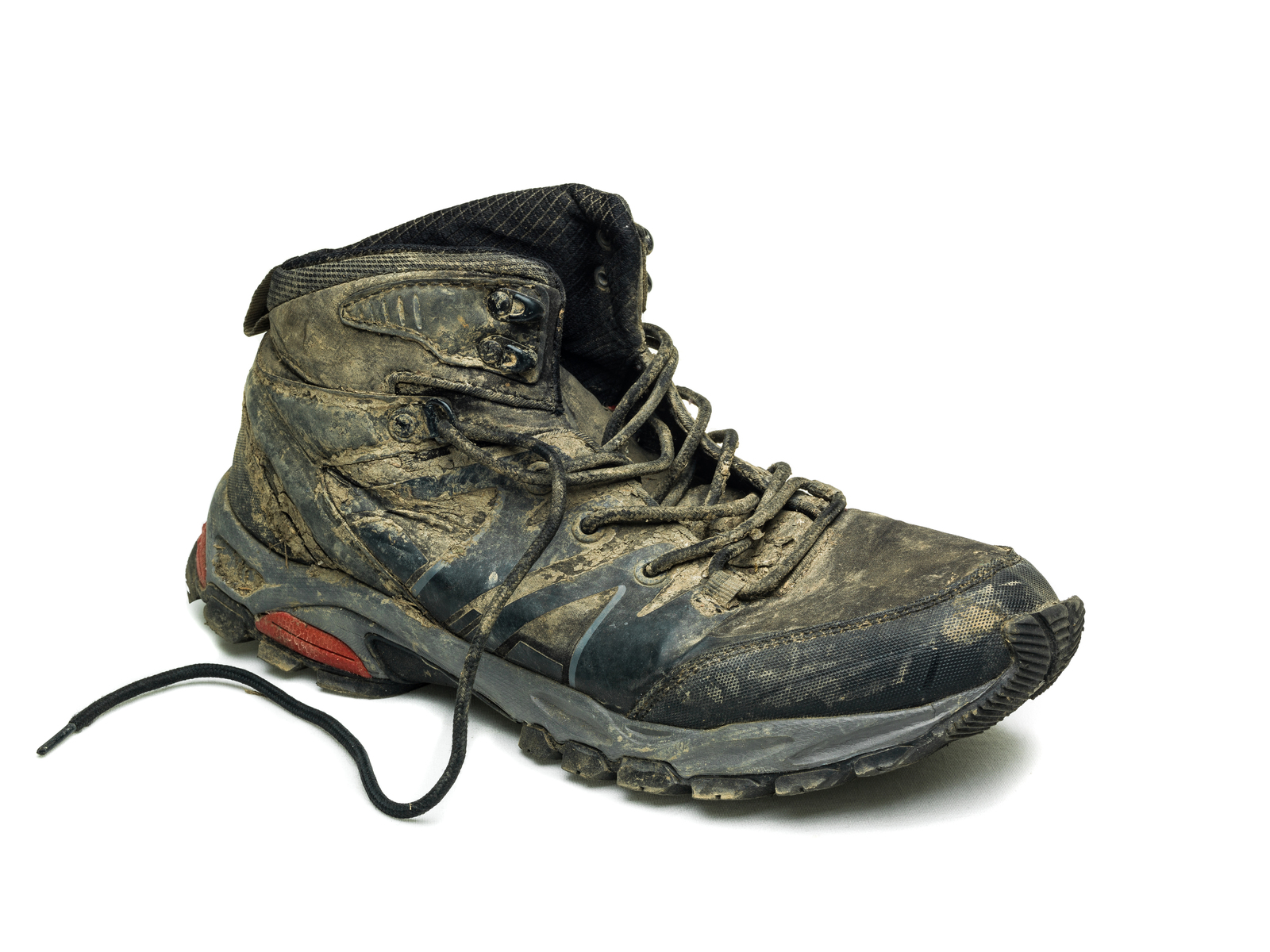
Boot caked in mud

A Thousand-Year-Old Boots

We lived as Afghan refugees in Iran. Because we had no documents, we couldn’t access health care, education, or other basic needs. I was 14 years old and I decided to embark on a week-long journey by foot to the Turkish border town of Diyarbakir. I had no one by my side but my best friend Ali. The journey brought us to the streets of Istanbul where we had slept under the open sky. From there we continued by a small boat which carried around 50 of us. Once we arrived in Greece, we stayed at refugee camps on the island of Lesbos and in Athens. This is where Ali and I parted ways.

I continued alone, and, after crossing the borders of North Macedonia and Serbia, some months ago I arrived in Bosnia. 

These are the boots I got upon arriving at the refugee camp in Bosnia. I wore them only for the week I went to the “game”. Even though I wore them only for a short time, when you look at them they appear as if I had been wearing them for thousands of years! 

I hope to make it to Sweden and to become a football player. I think I’ve got a talent for it.

Mohammad (m), b. 2004
Afghanistan

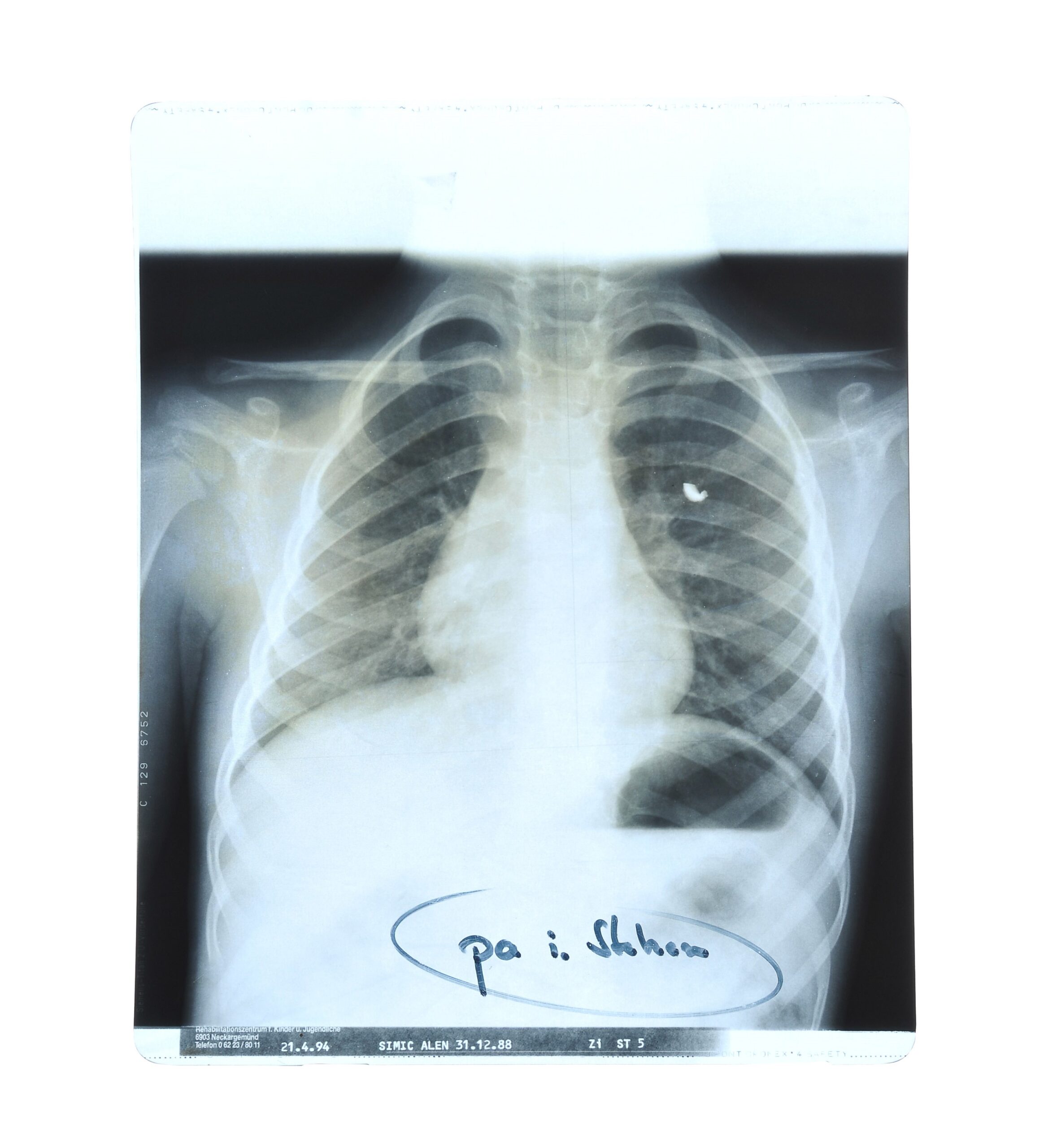
X-ray image, with piece of shrapnel visible in ribcage

X-ray Image

I was wounded on May 5, 1993, during shelling of Tuzla. That same shell killed my parents.

Soon after the wounding, I was sent to Germany for recovery. Grandma went with me. This is one of the X-ray images that grandma and I would show to the doctors during our 1-year stay in Germany. That showing of the X-ray remains etched in my memory, more than anything else. Together with the image, we would also show some pieces of shrapnel removed from my body soon after the wounding. A year passed, and in 1994 we returned to BiH. Several other shrapnel pieces were removed in the meantime, making this image irrelevant to doctors. For me, however, it still showed the time when it was made.

Alen (m), b. 1988
Bosnia and Herzegovina

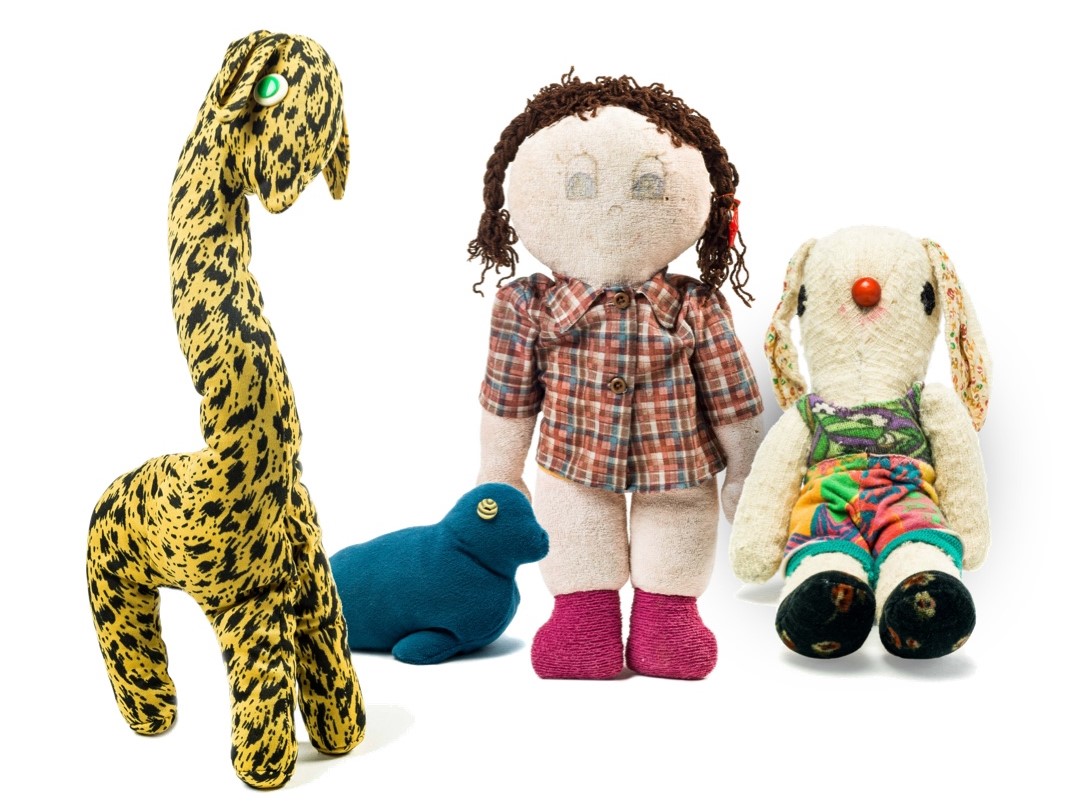
Group of handmade dolls of different sizes (giraffe, seal, doll, bunny)

A Group of Happy Dolls

My grandmother Jovanka made these toys. 

My sister and I wanted a giraffe, but we did not have a pattern so we described for our grandmother what we wanted it to look like. First we built a wireframe, then we covered it in sponge and rags. Only after that did we sew its “skin”. Its neck was too long and it would always topple over. 

The seal was our “secret weapon”, because my younger sister and I primarily used it to beat each other. Our mischief left a mark on its fabric, particularly around the tail. 

The doll was called Baby. Her dress was an old blouse of mine that I wore when I was only a few months old. 

The bunny’s name is Goran and he was sewn from an old dress and coat. He was my favorite toy.

Amra (f), b. 1986
Bosnia and Herzegovina

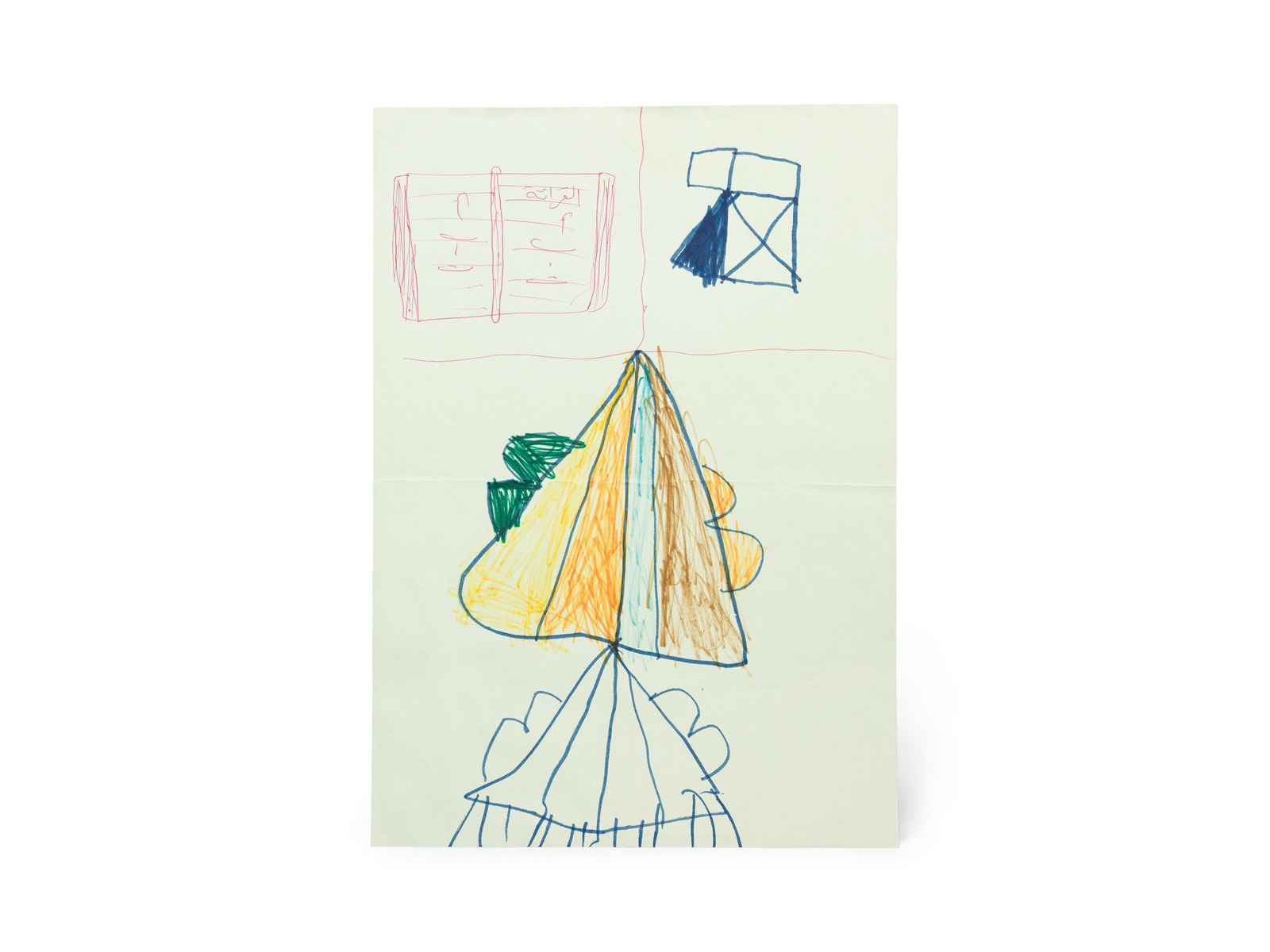
Drawing of an airplane/kite

Airplane

I don’t remember anything about Syria. I was only two years old when we left. My mother and siblings talk about it all the time, however. They say that Syria is a beautiful place and that we used to live such a great life there. Now, I am 6 years old, and my greatest wish is to go back and see my country. I made this drawing of an airplane that I will someday take to see Syria from the sky. I just wish this airplane were real.

Mohamad (m), b. 2011
Syria

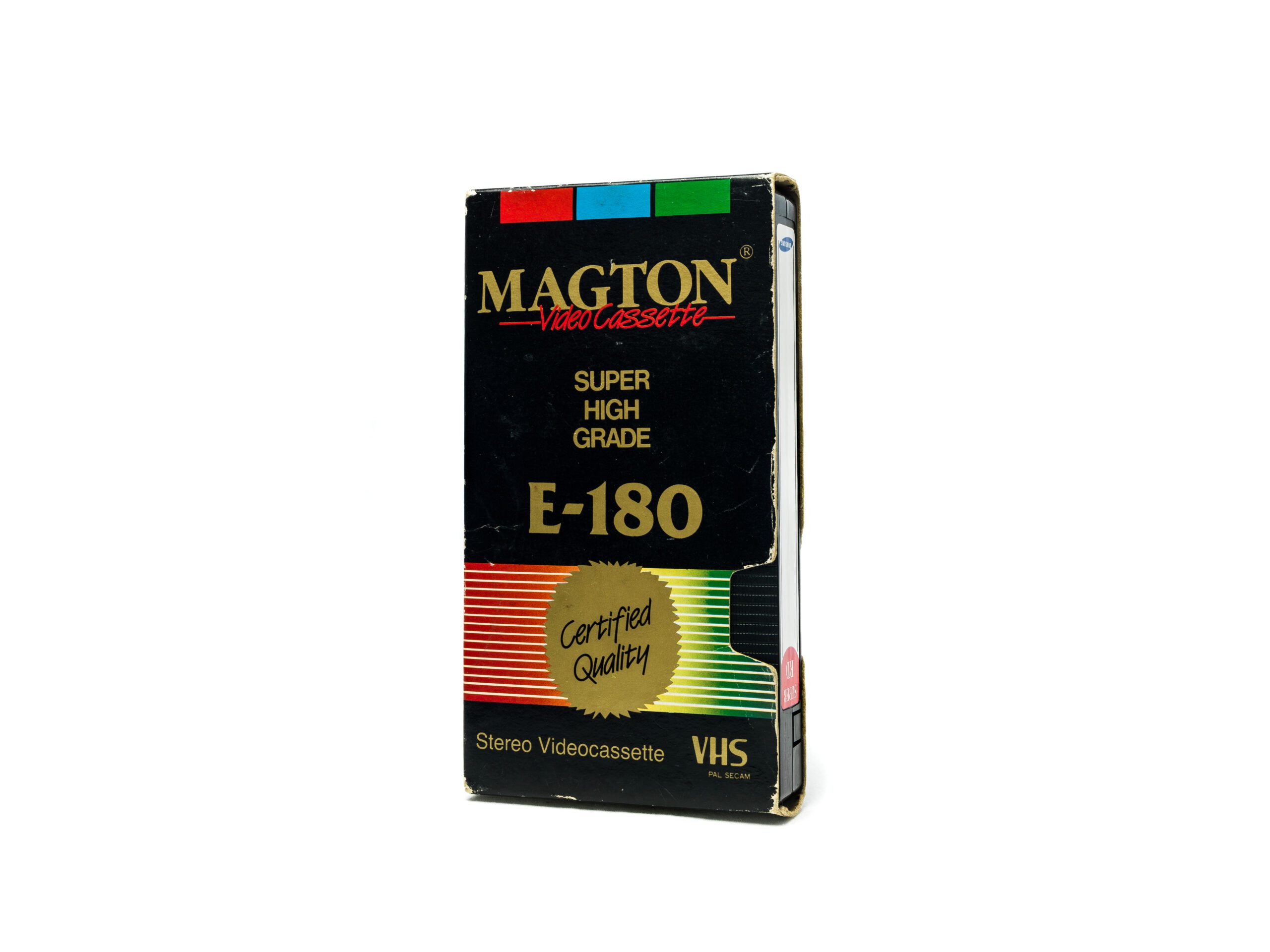
VHS tape "Magton", black packaging

Wartime Video Rental Store

At the start of the war, our neighbor decided to seize the video rental store whose owner had left Tuzla. Thanks to him, I had many video cassettes with interesting movies.

I spent most of my war childhood at my grandparents’ house in the countryside, where it was safer than in the city. I brought a collection of some thirty video cassettes with me and watched them in my free time in my room. In a way, watching movies was an escape from reality—my favorite movies were those with Chuck Norris, Bud Spencer, and Terence Hill, as well as those with ninjas.

Damir (m), b. 1981
Bosnia and Herzegovina

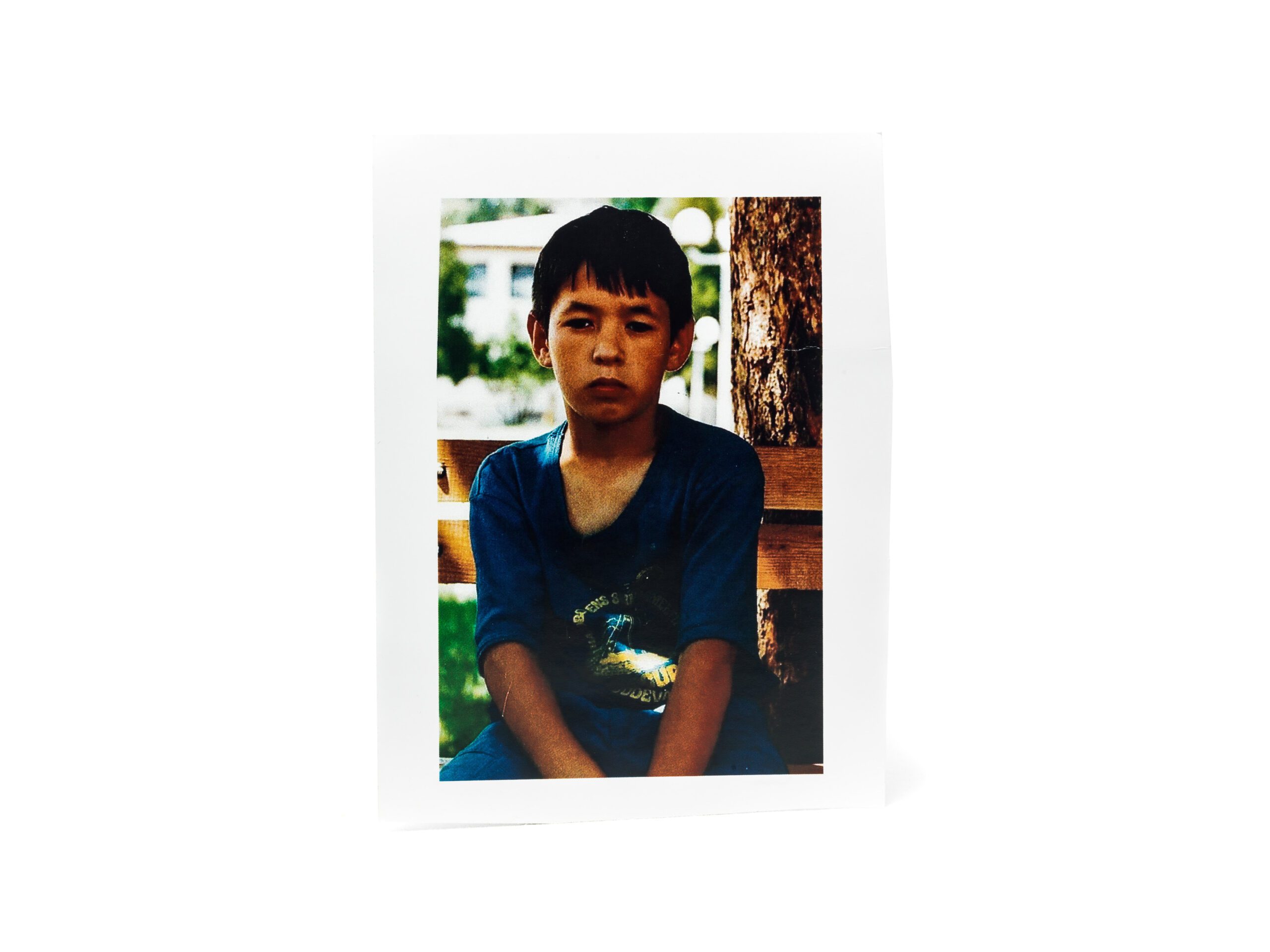
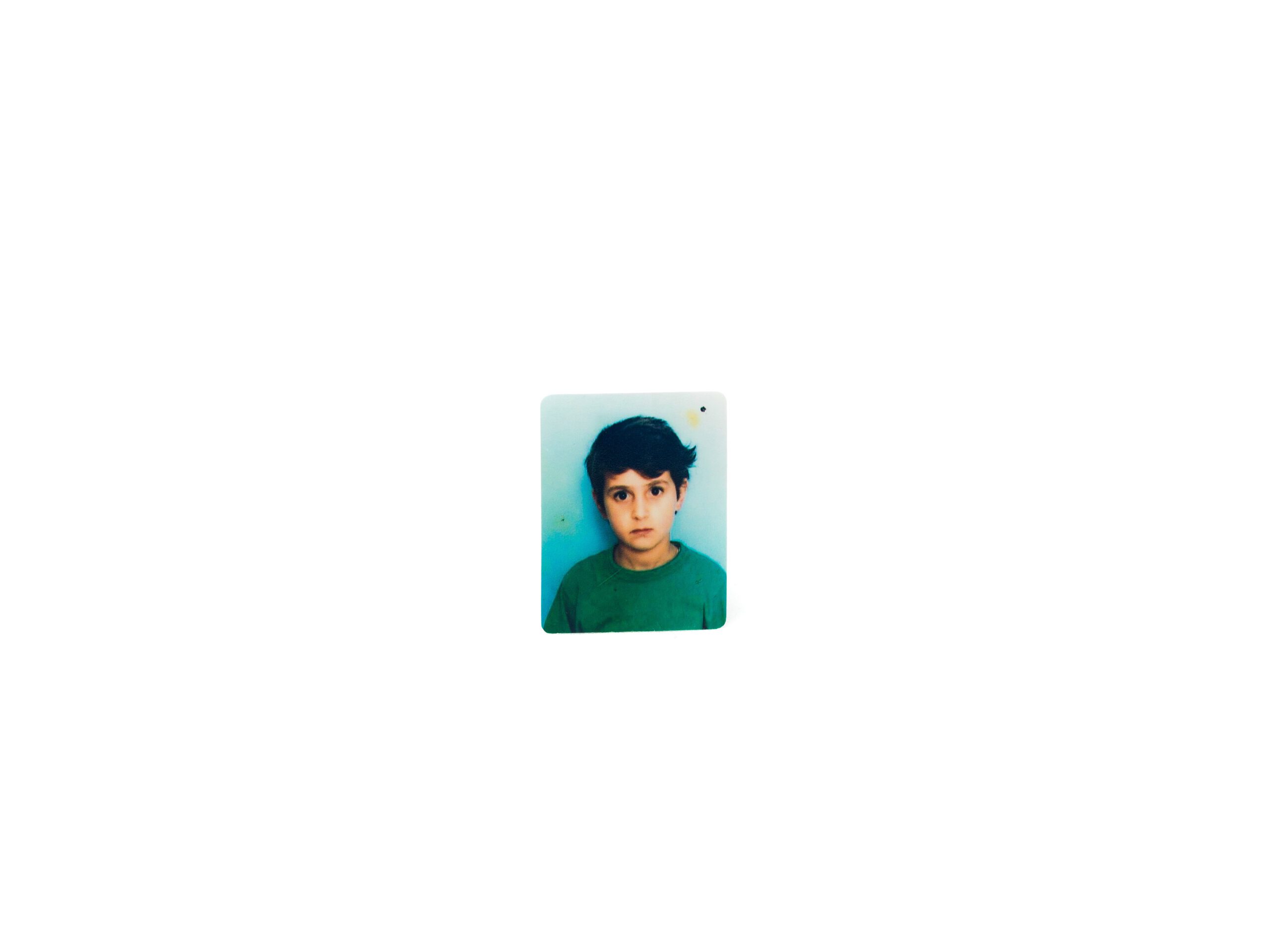
Photo of a brooding boy in blue t-shirt

The Driver of the White Jeep

I was six years old when the Chetniks suddenly entered the house where my father and I lived. I followed my father’s instructions and hid under the bed, but they quickly found me and brought me outside, alongside my father and many of our neighbors. They covered our eyes with white blindfolds and brought us inside a truck. After a while, the truck stopped, and they ordered us to come out and lie down on our stomachs. They started shooting. Time passed, and once the shots quieted, I looked around and realized that everyone around me was dead.

I tried to move on the spot, and then I saw my left leg which was bleeding. In the distance, I noticed a white jeep and its driver sitting inside and calling out to the gathered soldiers: “Give him to me, I’ll kill him!” I realized they were talking about me. The next moment, I was sitting in the white jeep next to the driver, who didn’t hurt me in the end. On the contrary, he drove me to the hospital in Zvornik, where I spent some time getting treatment. The driver of the white jeep saved my life that way.

After that event, I was sent to the Home for Children without Parental Care in Tuzla, where I continued to live after the war. This photograph was taken in the Home, and today it reminds me of one important period of my life.

Fahrudin (m), b. 1987
Bosnia and Herzegovina

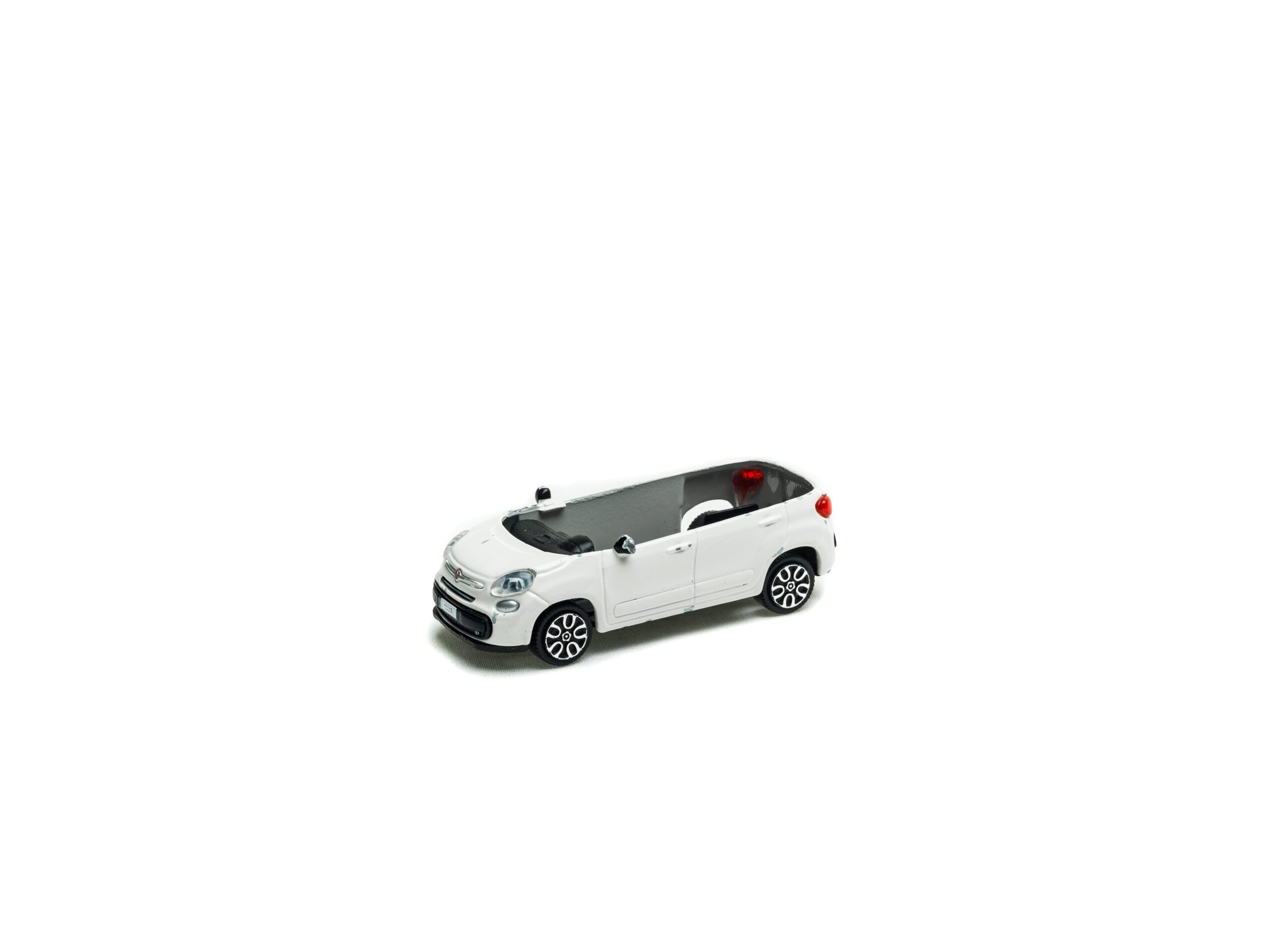
White toy car

Our School as a Shield

We had to stop going to school in Kabul, as it was no longer safe.

While we were still in class, the Taliban started showing up at our school. They would come whenever they needed a place to hide from the American attacks. One time, after learning that American planes were about to launch an attack, they came to our school, which on that day was crowded with students. The planes launched the attack and there were many people injured. Luckily, none of the students died.

With the Taliban and ISIL continuing to cause violence in Afghanistan, we decided to leave the country. We didn’t take much with us, just some clothing and our mobile phones. During our journey we met some nice people. Some of them gave us clothes and shoes. We don’t even know their names. We just know that they were Albanian people, and we feel very grateful.

Mustafa (m), b. 2009
Afghanistan

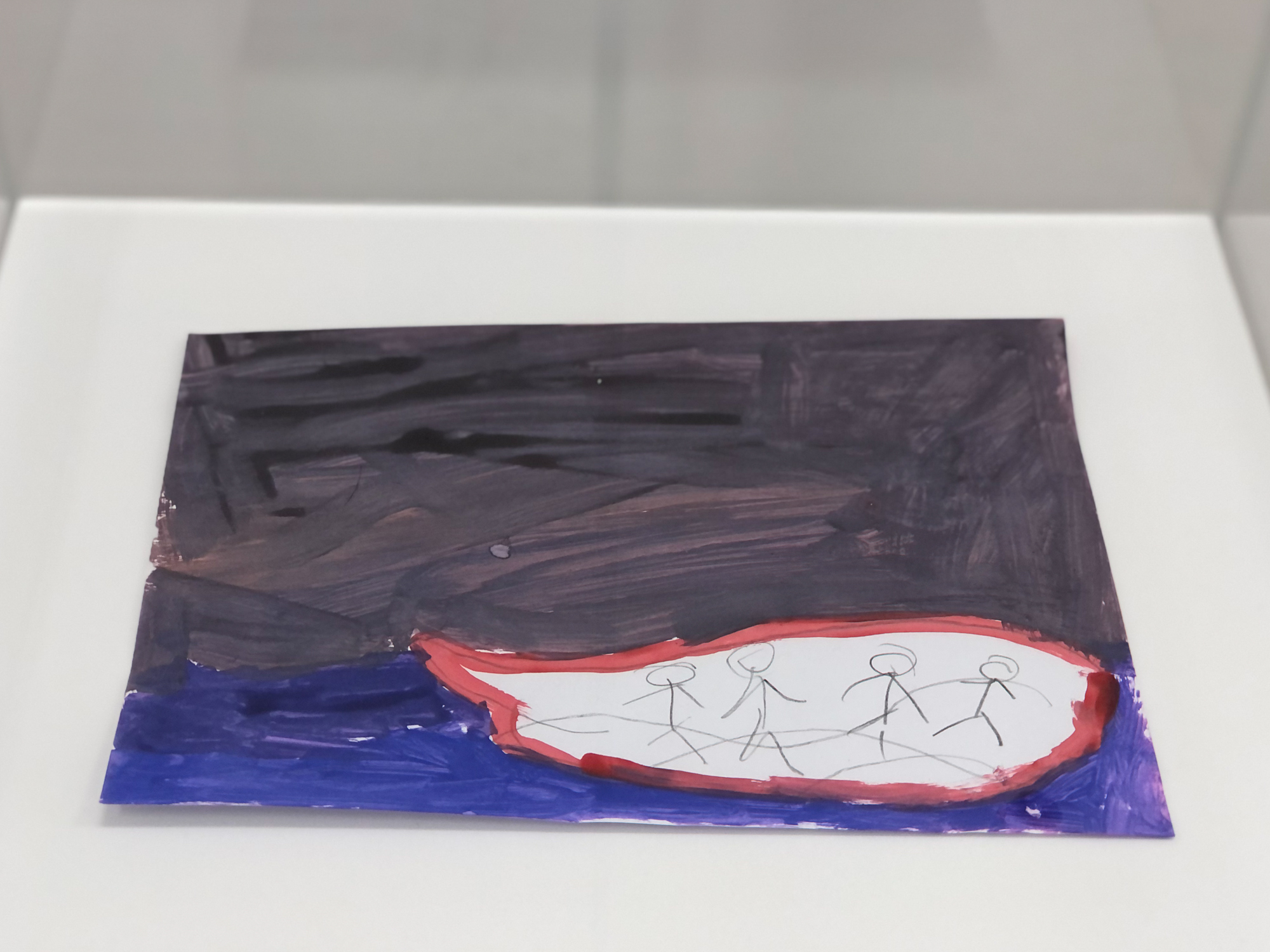
Drawing of people on boat during stormy night

Long Journey 

This is the drawing of us, trying to reach Greece by boat. At first, we walked and slept in tents, then we continued our journey by boat. There were 19 people on the boat, some of them with small kids. One lady had a baby in her tummy. 

The journey was very long, and I was scared that we will die. The water kept entering inside, so it was terrifying, even with the lifesaver ring on.

Mia (f), b. 2009
Yemen

Plastic ball in the shape of heart-eyes emoji

Friendships

It is hard to make friendships when you are always on the move. After leaving Iraq, my family and I passed through many different countries and refugee camps, where I met and became friends with many children.

When we were staying at the refugee camp in Greece, I had two friends—Eland and Hassan. We attended classes together and we loved to play football. But when my parents decided that it was time for us to leave, I had to say goodbye to my friends. Just like with the other friends I met while on the move, we never knew if we would see each other again.

After arriving in Bosnia and Herzegovina, at the camp in Ušivak, I began to recognize some of the children that I met in Greece. We reconnected here in Bosnia. I have a big family and my siblings and I all play together. We have very few toys, since we can’t take any with us when we travel. My parents bought this yellow ball for my little sister Huda when we first arrived in Bosnia. As we hope to continue our journey soon, we want the ball to stay at the Museum, where it will be well taken care of.

Ahmed (m), b. 2008
Iraq

Small photo of a girl with short haircut in green shirt

School Photograph

The war came into our lives the moment mom woke us up and said we needed to flee our home. While my parents and I managed to flee to Potočari, my older brother remained in our village. I was six back then, and my brother was seventeen.

We never saw each other again. His remains were found in a mass grave in Kamenica. 

This photograph, taken in Tuzla in 1995, reminds me that I survived genocide as a girl.

Kadira (f), b. 1986
Bosnia and Herzegovina

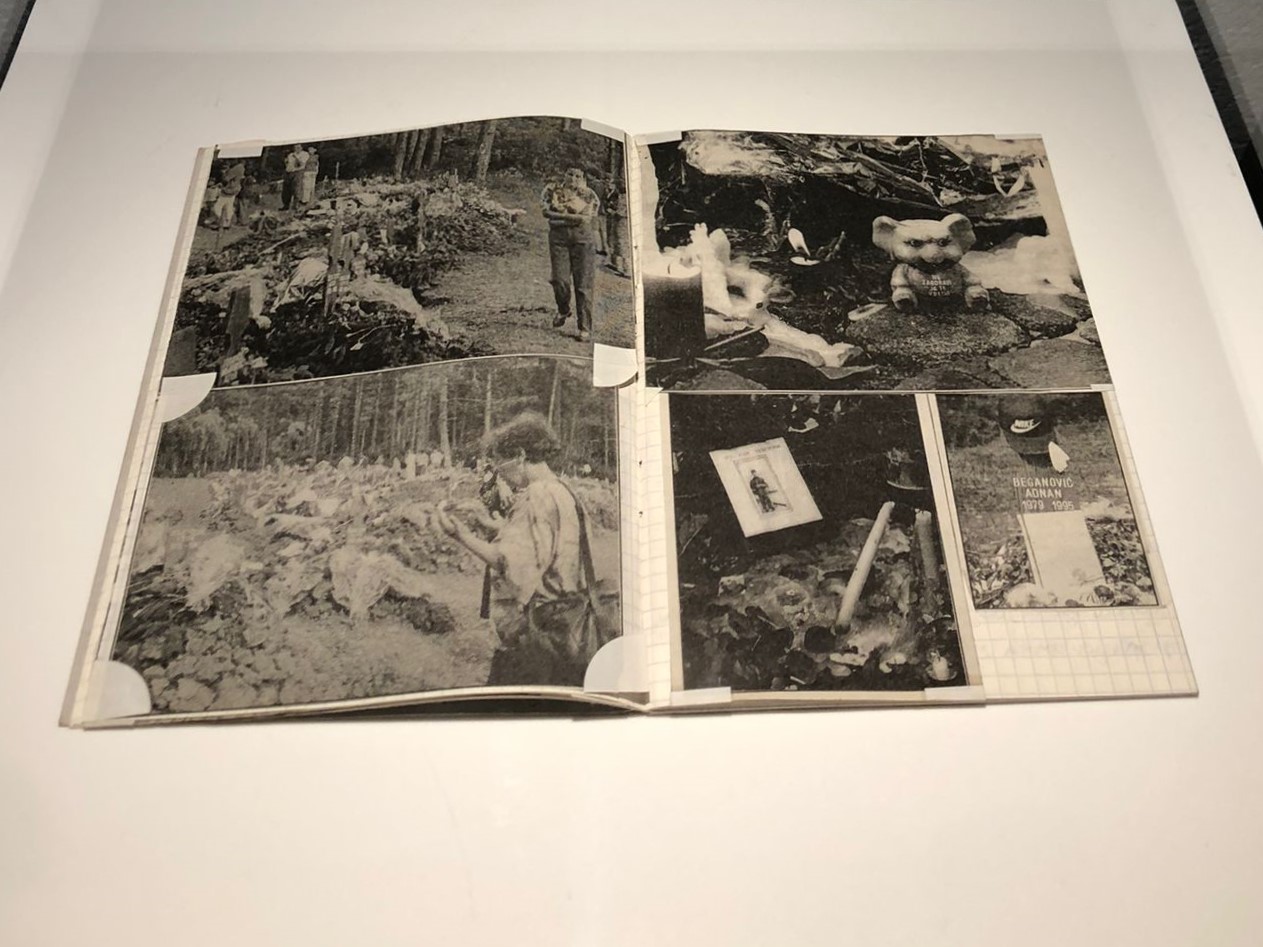
Black and white photo of diary

May 26, 1995

“On that fateful night, there were 500 people gathered at Kapija (Gate). No, not people, they were youth, children. The shell hit at 20:55 killing 72 people and leaving 180 of them with serious or minor injuries. I was in front of the building, sitting there with my friend Aki when we suddenly heard a detonation—we couldn’t imagine that the shell we heard would end 72 young lives and maim dozens of others…”

Almir (m), b. 1980
Bosnia and Herzegovina