“Creativity for Peace” is a program implemented by the War Childhood Museum in partnership with the Center for Educational Initiatives Step by Step, with the support of the United Nations Secretary-General’s Peacebuilding Fund. Over the course of two years, teachers and students from across Bosnia and Herzegovina developed skills in peace pedagogy and contributed to building a culture of peace in their schools and local communities through creative activities.
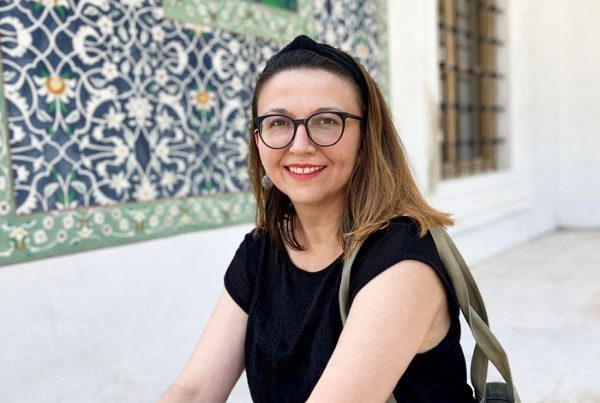
One of the program participants was Vernesa Manov, a teacher at the First Primary School in Donji Vakuf, who, together with her students, expanded the program activities far beyond what had originally been envisioned—from creating a school museum to organizing humanitarian initiatives in the local community. Below, read her reflections on the program and what it brought to her students.
From Trust to Partnership
Vernesa emphasizes that her story with the War Childhood Museum did not begin with the “Creativity for Peace” (CfP) program, but much earlier, when she shared her personal story and objects from the war with the Museum. Because of that experience, she says, she had no hesitation about applying when the call for participation was announced.
“I was simply looking, after everything that had happened, for a space and for people who, without hatred, nurture a culture of remembrance in a normal, civic, peacebuilding way. So that what happened to us never happens to anyone else.”
Speaking about her collaboration with the Museum, she particularly emphasizes that it was this sense of trust that motivated her to become even more involved.
“The War Childhood Museum created a sincere, safe, friendly, and well-intentioned environment for me, where I felt I could do everything I wanted to do with my students through your projects.”
When a Project Grows Beyond Its Original Scope
One of the activities within CfP was initially envisioned as a classroom exhibition in Donji Vakuf that would help students broaden their understanding of others and strengthen their empathy. However, the activity grew into a permanent museum corner at the school, which uses personal stories to teach students about experiences of war in a constructive way. Vernesa says she quickly realized that she wanted to create a space that would continue to live on after the project ended. Students, teachers, the school administration, and technical staff all became involved in creating the space, while over time, the exhibition also began incorporating objects contributed by other school staff.
For Vernesa, this is proof that the project became much more than a set of activities.
“I don’t think we simply carried out activities. I think we carried out an entire project mission.”
Learning Peace Through Concrete Actions
Vernesa believes that one of the program’s most important outcomes was the way students began to understand their own role in the community. One of the exercises they completed as part of the program, which focused on empathy, inspired the idea of working with the people who use the public kitchen in Donji Vakuf.
“Through this ‘Creativity for Peace’ project, I wanted the students to understand that they are part of a larger human endeavor and that they themselves are doing something for the benefit of humanity, for the benefit of our country.”
The children, she says, quickly embraced the idea and demonstrated that solidarity does not depend on how much someone has.
Big Ideas Do Not Depend on the Size of a Place
At the end of the conversation, Vernesa reflected on common prejudices about smaller communities. She believes that young people, through their work, demonstrate just how meaningless such divisions can be.
“I think it is precisely children and young people who are moving beyond the usual clichés about small and large communities and breaking down that taboo, those prejudices. There are great young creatives in Donji Vakuf. There are children with big hearts in Donji Vakuf. And there is tremendous enthusiasm among people who refuse to accept that they cannot bring their big ideas to life.”
For her, this is precisely one of the program’s key values—showing young people that where they come from does not prevent them from creating, helping others, and building a culture of peace.