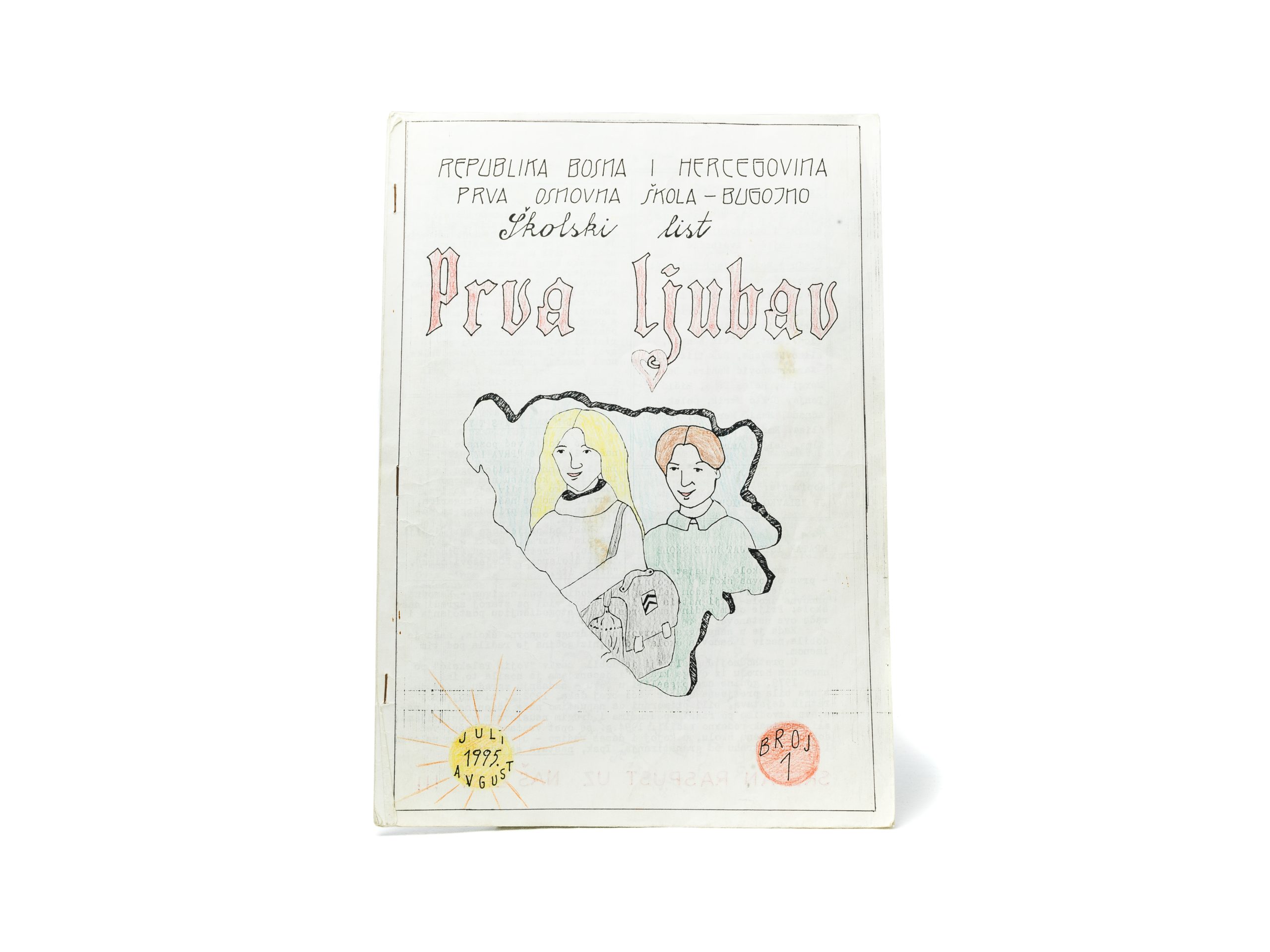
How did you become a contributor to the Museum’s collection, and why did you make that decision?
I became a contributor at the encouragement of a friend who knew how much school had meant to me during the war. But like many other contributors, I initially felt that my story was too ordinary. My experience had not been traumatic in the way many others’ had been, and I thought that, as such, it was not relevant for a museum.
However, when I began reflecting on my childhood during the war, I realized how important those memories were to me. Suddenly, I felt a strong need to share how school had saved me during that time — especially my homeroom teacher.
Because of the war, I had to leave behind a world in which my classmates and I organized little parties inspired by the TV series Beverly Hills, each of us taking on the role of one of the characters — I was Brenda. Then, almost overnight, I found myself in another city, another school, without my friends.
Years later, I understood that school had restored the identity I had lost when I left my hometown. I was no longer just a refugee; I became a girl others wanted to be friends with again, thanks to the effort and success I achieved in school.
Do you think your story has similarities with the stories of children who are experiencing war and conflict today? Why?
I believe that every child is equally afraid of shelling, equally misses their family, friends, and favorite toys, feels the same pain when hurt, and experiences the same fear. On that level, all stories are similar and the experience is universal.
I was fortunate not to endure the worst horrors of war, but I missed my brother just as much as any other little girl would miss her brother, anywhere in the world. When I read stories of children from war zones today, I recognize the same fear and the same longing for normalcy.
And yet, I hope that even today there are teachers who bring moments of joy to children living through war — whether through warmth and care, or by organizing math competitions or school journalism clubs.
I am certain that school can become an additional home, a place where children can feel at least a little safer. With the support of teachers who truly love their work, children can, even if only for a moment, forget that outside, the world is at war.
What do the War Childhood Museum and similar initiatives mean to you?
For me, the War Childhood Museum is not merely an institution that researches and collects the experiences of children whose childhoods are affected by war. It is a special kind of home that carefully preserves my own memory of a beloved homeroom teacher.
In the Museum’s archive, it is not only colorful, stapled pages of a school newspaper that are preserved, but also the memory of the happiest chapter of my childhood during the war.
The Museum helped me understand how precious individual memories are — not only for those who carry them, but also for others, and perhaps one day, for history itself.