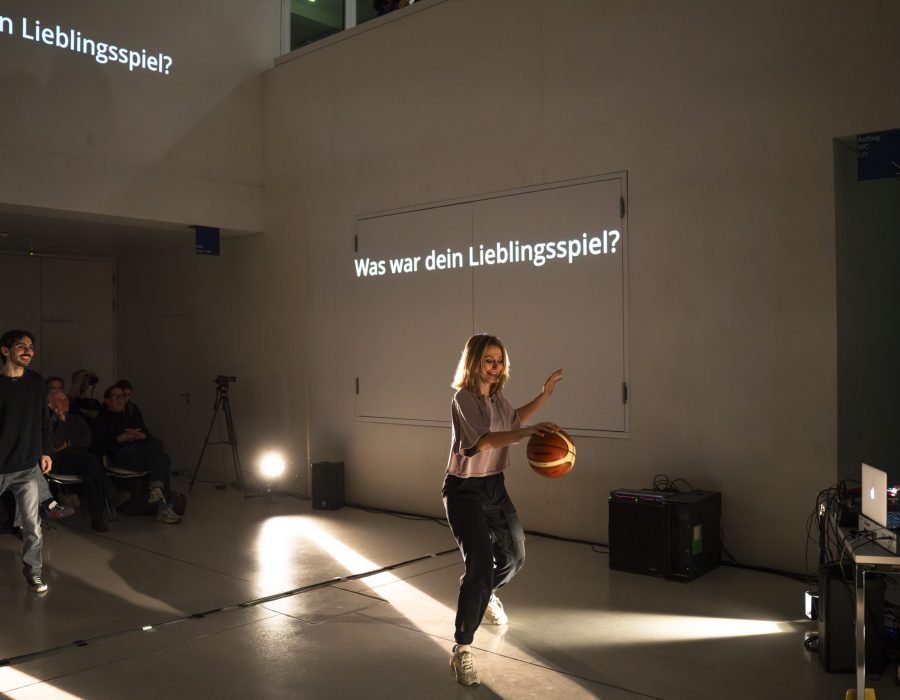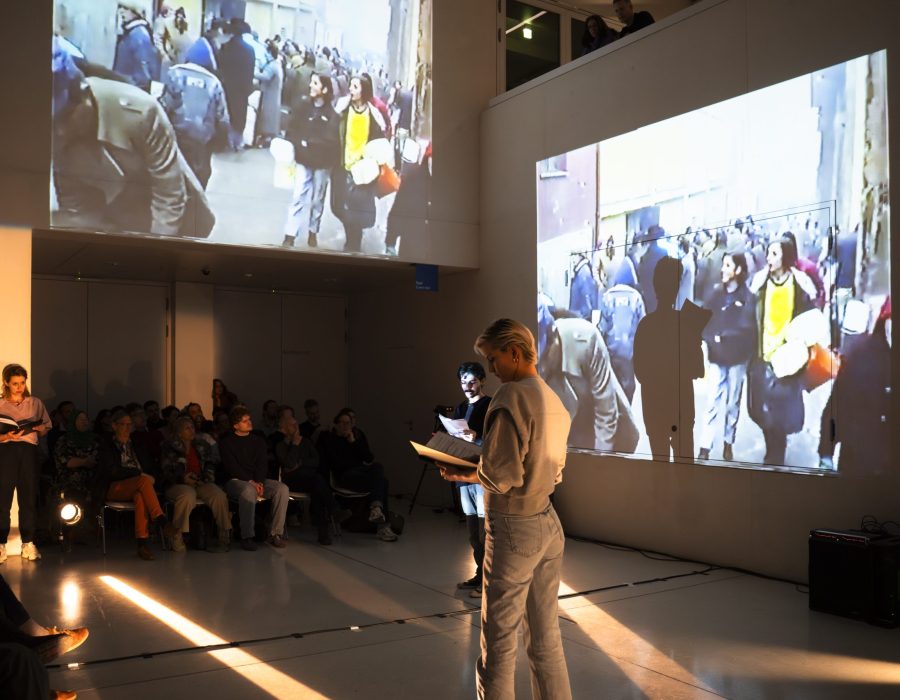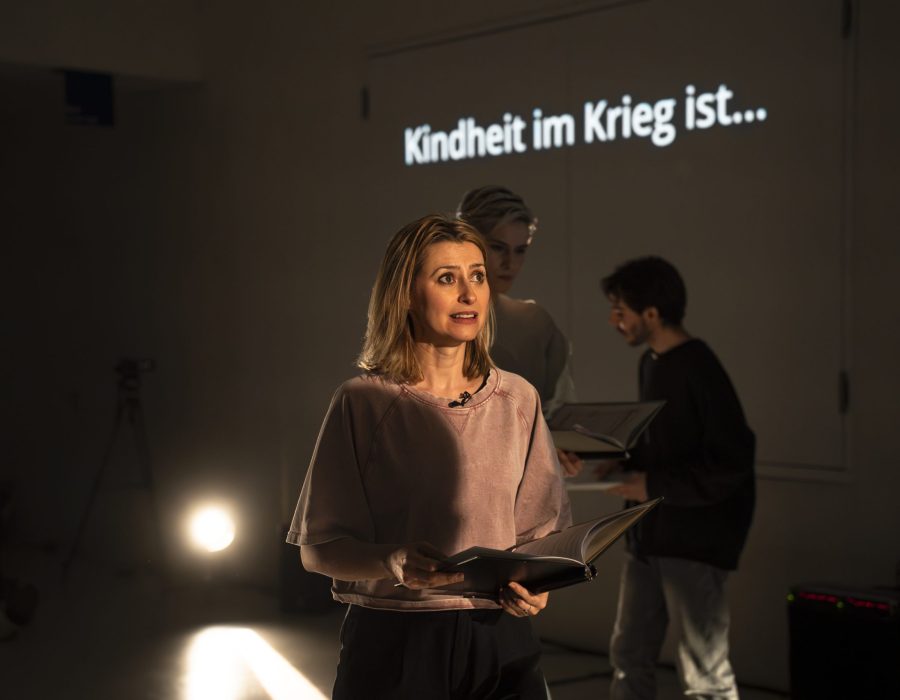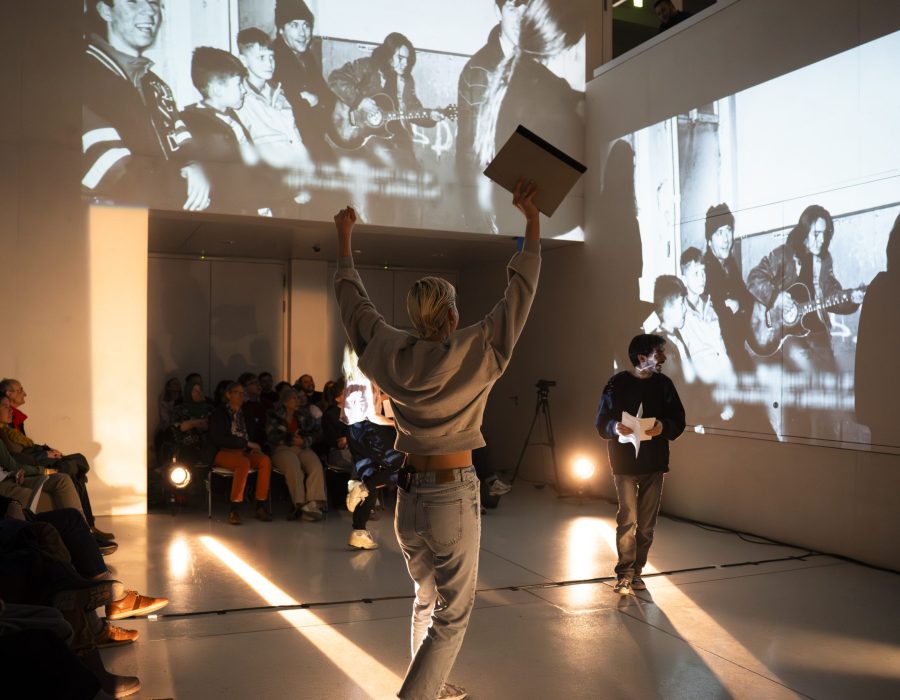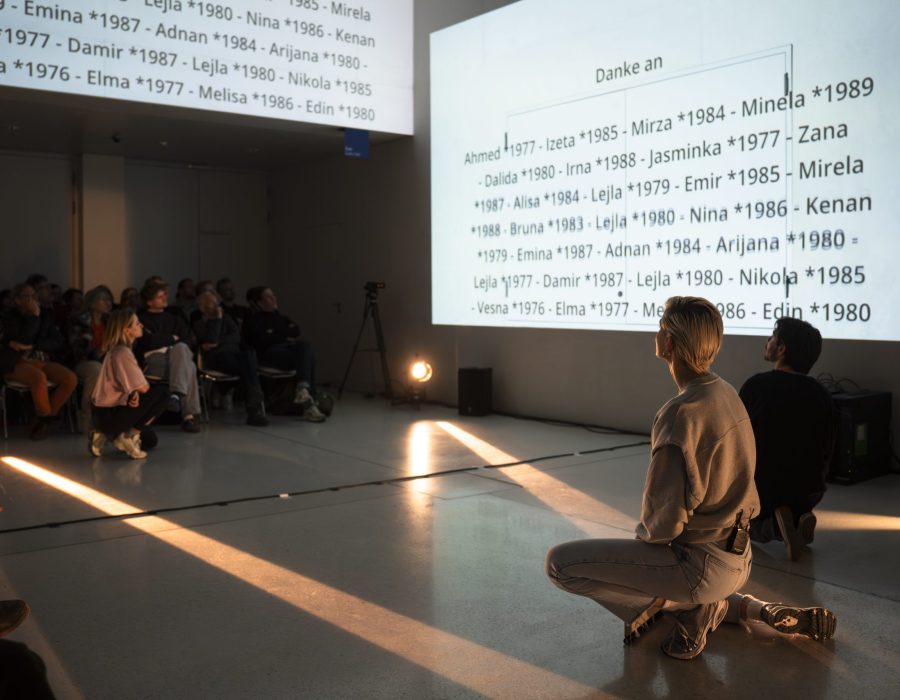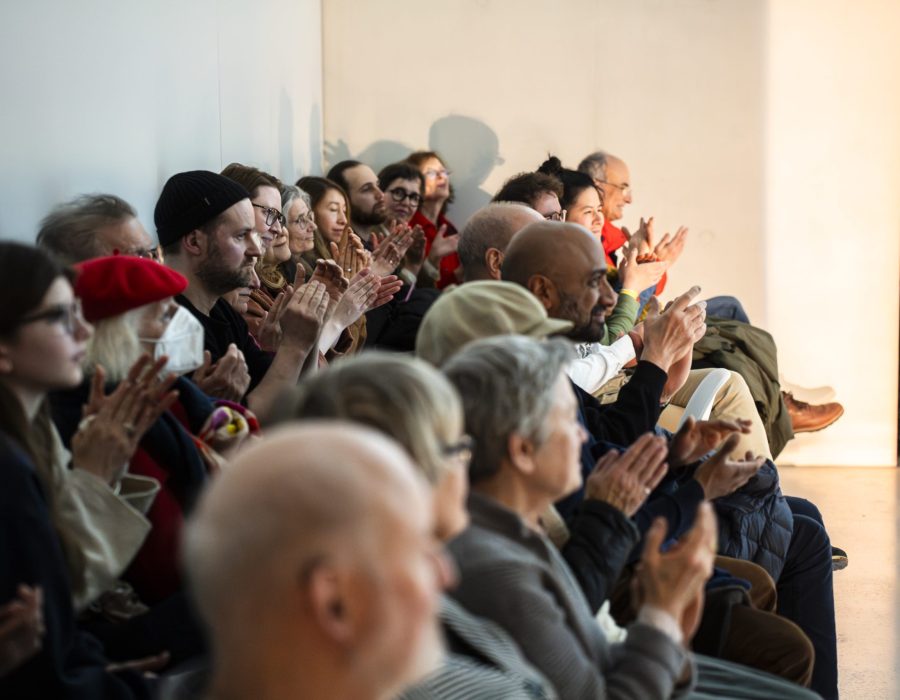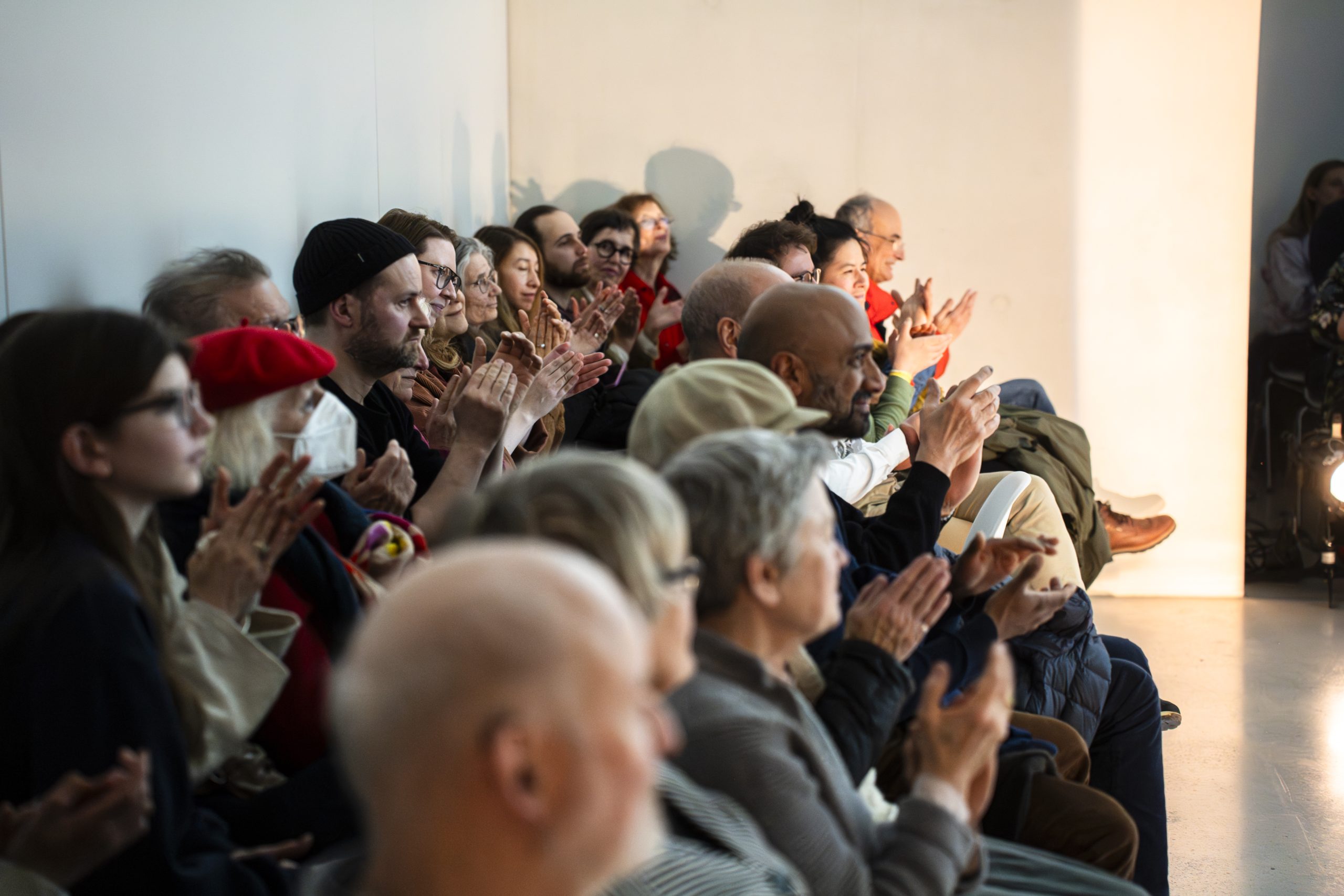
On April 1, 2026, the NS-Dokumentationszentrum München became a space where memories of Sarajevo met a new audience. Through a multimedia staged reading titled “I’m sick to death of war and shells, of big ‘men’ selling lies,” testimonies from Jasminko Halilović’s Childhood in War were brought to life by the voices of Ivona Baković, Maja Zećo, and Enes Şahin.
From Personal Encounter to Performance
The performance, directed by Christiane Mudra, grew out of a personal encounter with the book. “When I opened it, I was so touched, and I proposed a reading right away,” Mudra told us.
The visitors had the opportunity to listen to short, direct testimonies that speak of everyday life during the siege: moments of fear and loss, but also of humor, warmth, and small joys that persist even in the most difficult circumstances. In this way, the evening in Munich echoed something at the core of the Museum’s work: that childhood in war is not only defined by violence, but also by the ways children adapt, connect, and endure.
Universal Stories of War Childhood
For Mudra, these stories resonate far beyond Sarajevo. “The testimonies are universal,” she said. “They are about children everywhere who live in these conditions.”
As someone who was a teenager during the war in Bosnia and Herzegovina, she remembers the feeling of frustration. “I felt anger and despair about the lack of interest of the world to stop the war,” she said. Today, she uses art to speak out about the injustices she feels. “Through art, I can bring another perspective, inform people, and help them understand,” she told us.
Empathy and Responsibility
This intention to reach different audiences through art also shapes the future of the project. Mudra is exploring formats that could speak to both adults and younger audiences, with the hope of bringing the reading into schools across Germany.
Mudra hopes that audiences leave with empathy, but also with a sense of responsibility to prevent and oppose armed conflict wherever it occurs.
“We tell these stories from Bosnia to commemorate the siege of Sarajevo and to draw attention to all the children who live in conflict today,” she said.