The War Childhood Museum Ukraine has operated since 2020 and despite the full-scale invasion that began four years ago, on February 24, 2022, the Museum’s staff continues their activities. Learn more about everyday Museum’s work despite the ongoing war.
Over these years, the Museum has become one of the key institutions in Ukraine systematically working with the topic of children’s experiences of the Russian-Ukraine war.
The WCM Ukraine’s work includes expanding the collection based on testimonies and objects, exhibiting in the country and abroad, developing educational programs, working with youth, parents, researchers and educators.
Working Under the Full-Scale Invasion
Four years of full-scale invasion have profoundly shaped the Museum’s internal processes. What initially required emergency adjustments gradually became a new operational reality. The team expanded, new roles were introduced, and internal procedures were formalized to ensure continuity in unstable conditions.
Svitlana Osipchuk, Program Director of WCM Ukraine, describes this period as one of institutional maturation. The organization has become more structured, while formalized processes have strengthened resilience amid external uncertainty.
For Oksana Karpiuk, Operations Director, the past years have required a rethinking of the Museum’s priorities. “Our task is to continue doing what is familiar in abnormal conditions. We follow Plan A, but we have Plans B and C ready, and we are prepared to revise them as circumstances dictate.”
War has become the permanent context of everyday work. The team often describes this period as a long-distance run, where uncertainty is constant and flexibility, prioritization, and self-care are essential.
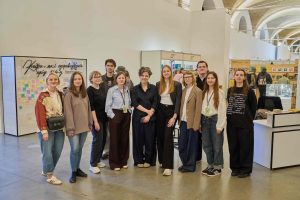
WCM Ukraine team
Documenting and Collecting Children’s Testimonies
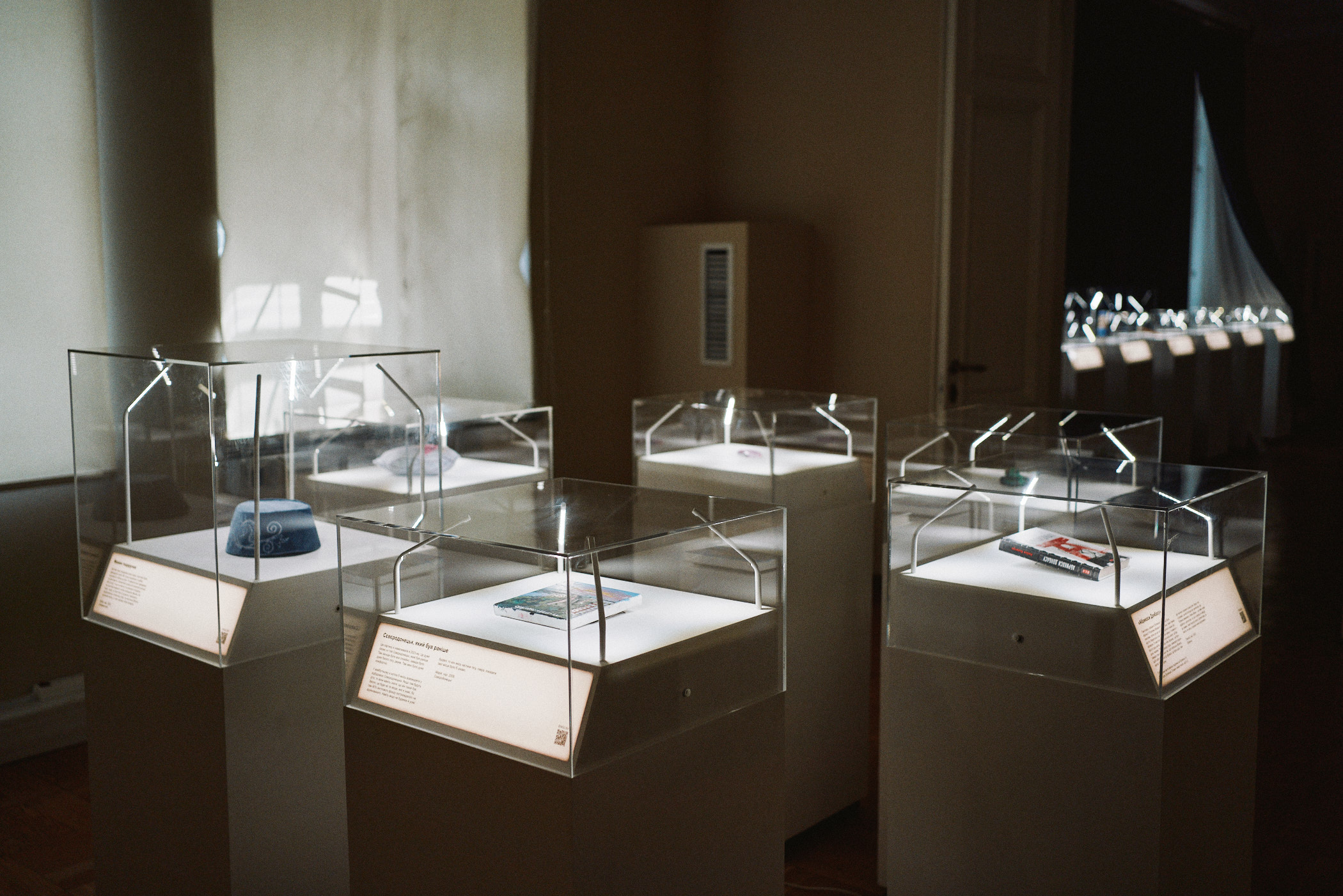
The Museum’s collection includes over 856 interviews and 1,476 objects. This represents the largest archive focused on childhood experiences during the Russo-Ukrainian war since 2014. Simultaneously, the Museum documents the stories of those whose childhoods were affected by World War II, building a broader historical perspective on the experience of children in conflict.
One of the key challenges is documenting experiences while the war continues. The work is grounded in a commitment to children’s right to their own stories. The team works with highly vulnerable experiences, and one of its fundamental principles is “do no harm.” Museum researchers follow rigorous procedures when conducting interviews with minors to avoid retraumatization.
“Children deserve to just live and have the space to talk about both their traumas and their joys,” says Anna Kurnytska, Digital Platforms Manager.
Collection Manager Oksana Lepesiienko says that the Museum’s collection being formed during the war must speak both now and in the future.
“Children carry an enormous burden: growing up is difficult in itself, and they have to do it during war. We emphasize that children in Ukraine are not victims by default, but they live in extraordinarily difficult circumstances. Our work helps to see them beyond stereotypes,” emphasizes Svitlana Osipchuk.
Education and Mental Health Support
Sustaining this work requires consistent attention to mental health—both within the team and in the broader community.
WCM Ukraine organizes workshops for parents and teachers focused on how to safely discuss different aspects of war with children: how to help children articulate their experiences, and how to avoid retraumatization.
At the same time, caring for the team’s own well-being remains essential. Staff members speak about daily rituals that help sustain them: journaling, reading, time with family, physical activity, therapy, community support, and consciously limiting exposure to distressing news.
For Oleksandr Voroniuk, Museum Researcher, continuing to work means “living and pulling through, even when things feel impossible.” For Andrii Borutia, Public Programs Coordinator and Researcher, it’s about maintaining hope for the future.
“Continuing to work in a state of constant uncertainty is also about daily support and understanding for me. The team gives me a reserve — a safety net I can draw strength from and keep going when it feels like I have none left,” adds Renata Chechel, the museum’s Project Manager.
Oksana Karpiuk describes the approach as working “step by step,” relying on the team and accepting adaptation as the standard condition of work in Ukraine today.
“It is not about the illusion of stability, but about readiness for change as a working mode: planning flexibly, constantly adapting, revising decisions—and accepting that, after four years of war, this has become the norm.” – she says.
Despite fatigue and uncertainty, the work continues—sustained by community, responsibility, and belief in the value of documenting the children’s experiences for the future.
“We are running a long-distance race where uncertainty has become a constant,” concludes Karpiuk.