The War Childhood Museum Ukraine holds the largest collection of documented experiences of people whose childhoods have been affected by the Russo-Ukrainian war. Currently, the archive contains over 850 interviews and more than 1,475 objects.
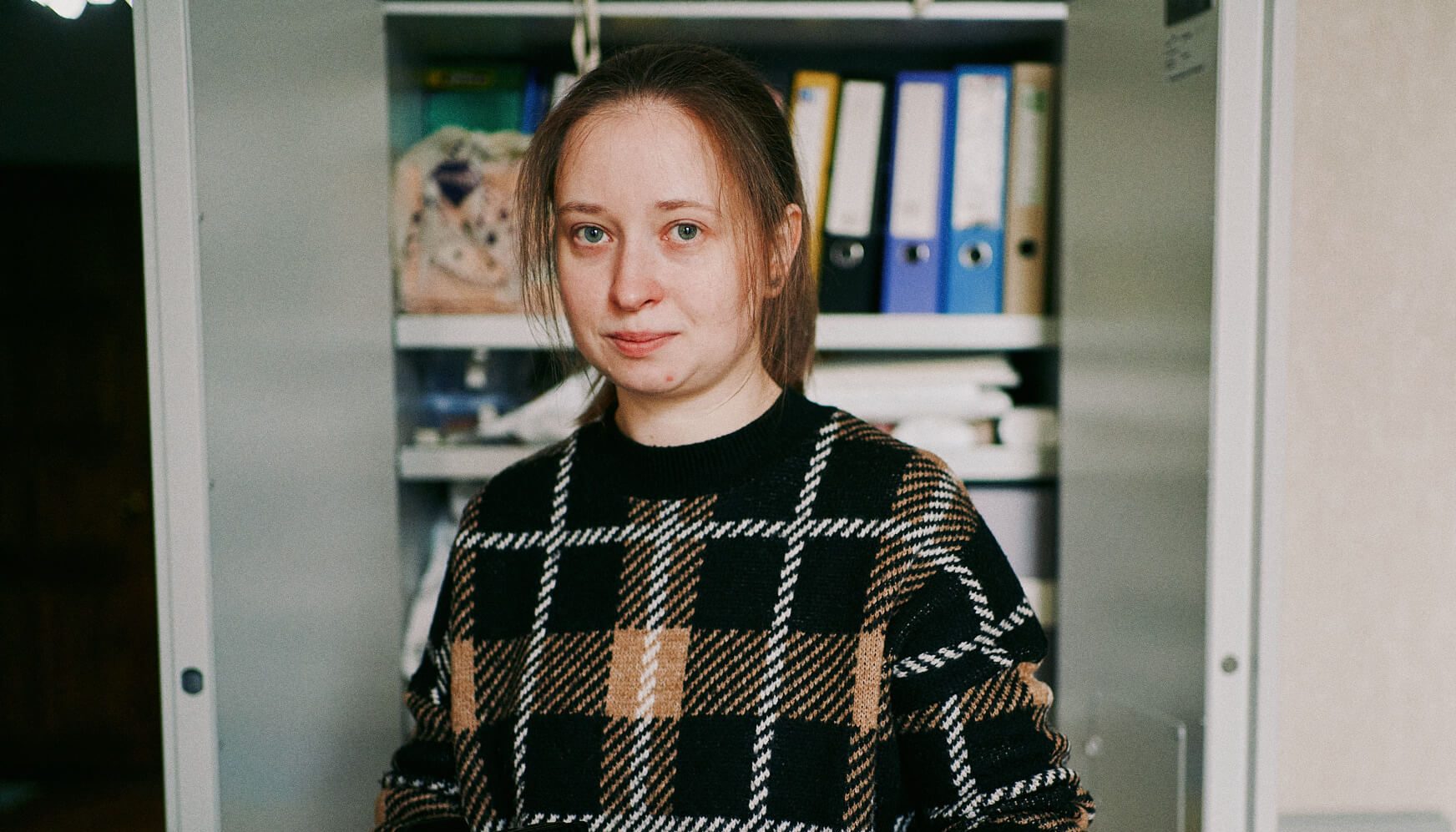
We spoke with the Museum’s collection manager, Oksana Lepesiienko, about the specifics of her work with children’s experiences and gained deeper insight into the Museum’s archiving practices.
Read more below.
What does the process of acquiring and cataloging a new object for the WCM Ukraine collection look like?
The process begins during the interview, when participants donate personal objects to our researchers. Each object is assigned a unique ID in our digital system, where I record its description, dimensions, materials, and condition.
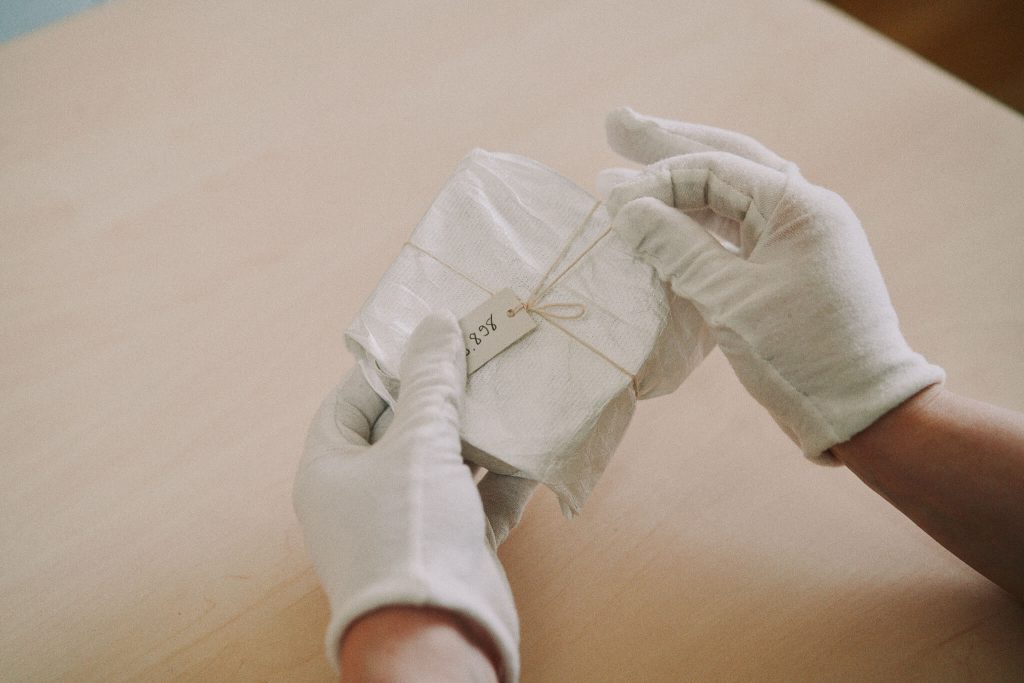
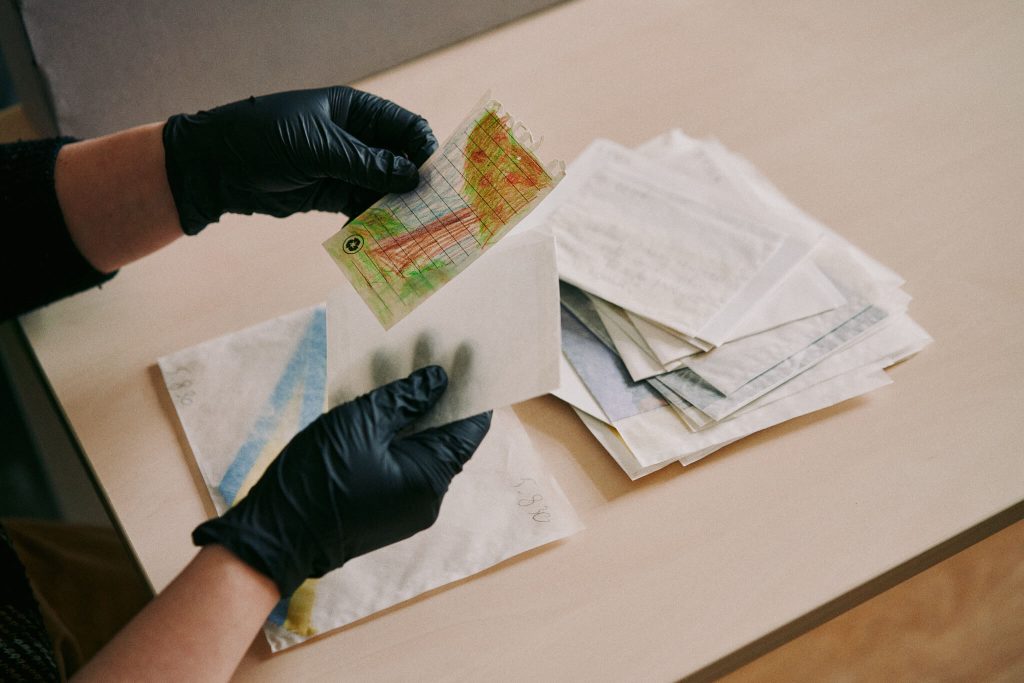
Physical objects are photographed, labeled, and packed using archival-grade materials: Tyvek for 3D objects and acid-free envelopes for 2D items. They are then stored in coded boxes for precise tracking (cabinet, shelf). Digital objects are kept in organized cloud storage. Ultimately, every object receives a comprehensive digital “passport,” allowing us to locate it within the collection instantly.
What are the main challenges of working with the collection in wartime?
Safety is our priority: we focus on physical preservation, digital security, and reliable backups. While these are standard archival practices, they have become vital in Kyiv today.
Faced with frequent Russian shellings and power outages, our team strives for maximum autonomy to ensure work continues regardless of external factors. Archiving in wartime requires a constant balance between professional standards and daily adaptation. Because the Museum documents the very war it is living through, we feel a profound motivation to protect this history despite the instability.
Name three of the most unusual conservation challenges in your collection.
From a conservation perspective, the most unusual challenges are food items: a poppy seed bun, a Snickers bar, and a small bag of dried bread rings (sushky).
These objects require special storage conditions to protect the rest of the collection. For instance, the Snickers wrapper is no longer airtight due to a damaged seam. To ensure their preservation, we keep such items in isolated, transparent, airtight packaging and inspect them regularly.
Which objects were the most difficult to archive?
The process is simple but time-consuming, especially when archiving entire personal collections. Large digital sets, such as dozens of photos, videos, and scans, or numerous small physical items, like tokens or seashells, require the most effort. However, these collections are the most engaging to work with, as they demand a thoughtful approach to systematizing them as a cohesive whole.