April 23 marks World Book Day, a moment to celebrate the power of reading and the worlds it opens. For children growing up in war, books often turn into a refuge, a way to make sense of fear, and a space where imagination can briefly replace uncertainty.
At the moment, War Childhood Museum Ukraine has an exhibition open in Chernivtsi, in the South-West of Ukraine, titled “Books That Walk With You Through War,” featuring 15 stories of children and adolescents for whom books became a way to cope with the experience of full-scale invasion.
In our collection, children and young people across different conflicts have described how reading helped them endure moments of isolation, displacement, and danger. We invite you to read some of these stories below.
The Secret Diary of Adrian Mole
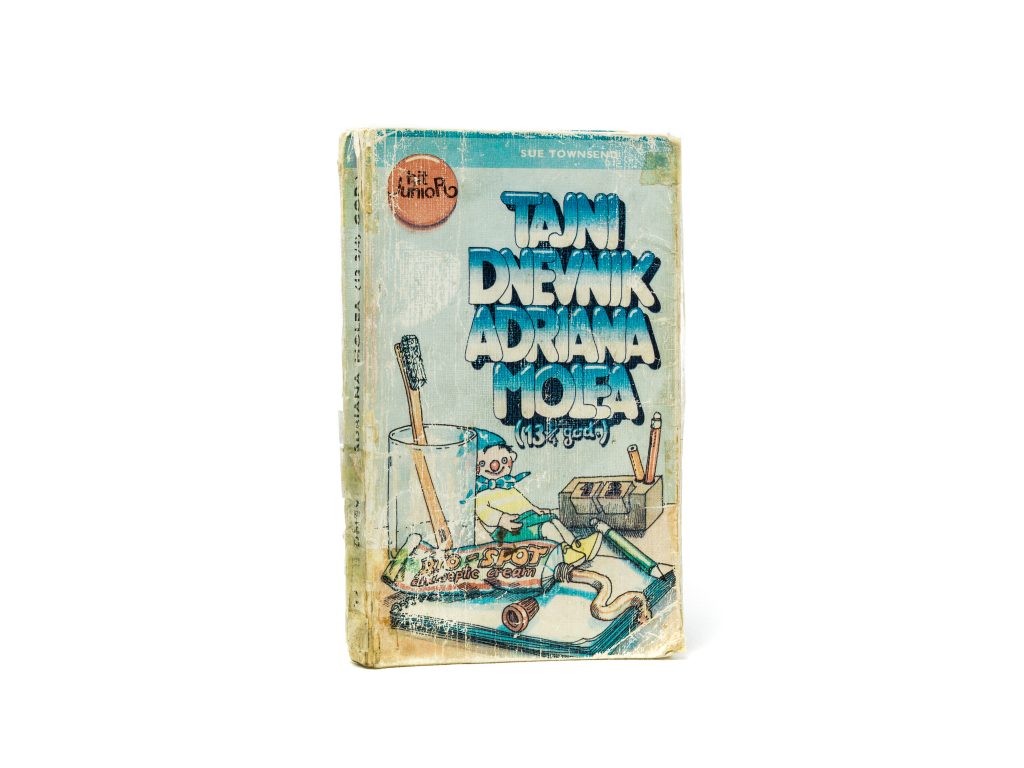
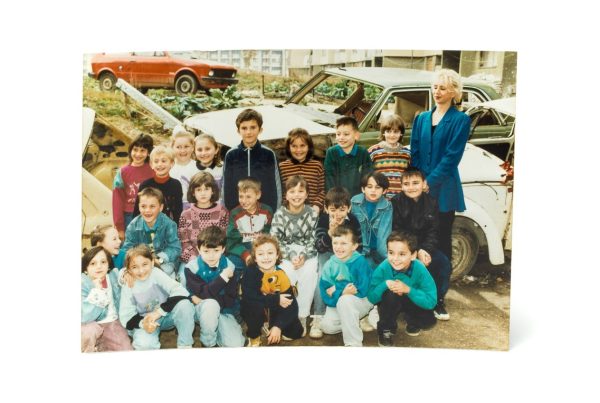
I learned to read because of the war. I devoured books, one after the next. Ironically, the war, and the time spent in our basement shelter, led to my love affair with the written word. I guess it was an escape from the reality of war because life in books was happier and safer than the one we were living. I imagined my friends and myself as the characters in these books. Each hour spent reading was an hour spent without war… Even if it was only in my head!
Azra, b. 1982, Bosnia and Herzegovina
There Was Only a Book
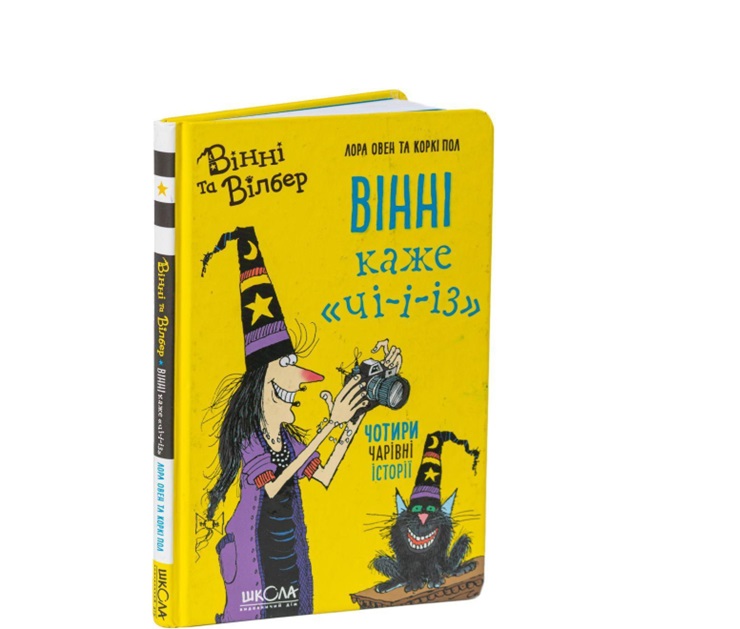
I woke up on the 24th at 7:30, saying to my mom, “Let’s get ready for school, we are going to be late. Class starts already at 8.” She said, “There will be no more school. There’s a war.” The shooting started, and I heard a machine gun. It frightened me. I would lay in bed, not knowing what to do. Later, we went to my grandfather’s basement. There was a TV, a kettle, a sofa – it was a cool basement. Our cat Glasha was with us in the basement.
In the spring we moved to western Ukraine. My father’s sister lives there. We read this book on the sleeper train on the way there. They had given these out to us at school not long before this. Such an awesome book! While we were on the way, I read it from start to finish – it’s 95 pages. At home, I read it a couple more times – I didn’t want to lose any battery life. There was no internet anyway, so there was only this book.
Nastya, b. 2011 , Ukraine
My World, as Discovered in Books
The war began when people wearing camouflage uniforms rang our doorbell and said my dad had to come with them. I was in the living room, watching them through the glass panel door as they gave my dad instructions on what he can and can’t bring with him. Those stern men, who wore trench coats and took dad away on that day, marked the beginning of the war for me. It was in 1999 already – when dad was drafted for the second time – that a great fear of death got hold of me. At that moment, everyone had their own way of surviving—the books were my escape. Since everyday life wasn’t so colorful and full of possibilities, I immersed myself in books and all the worlds I could explore through them. I worried deeply that I would never get to visit London and Paris, and see that world I discovered in books. I kept a lot of objects from that period—my diaries, notebooks with a lock, scented stickers, letters, Barbie dolls. This drawing, which I did in art class, shows my imaginary room—a room I wanted to play in. Back then, playtime was, next to books, my only escape, and a lifeline.
Bojana, b. 1983, Serbia
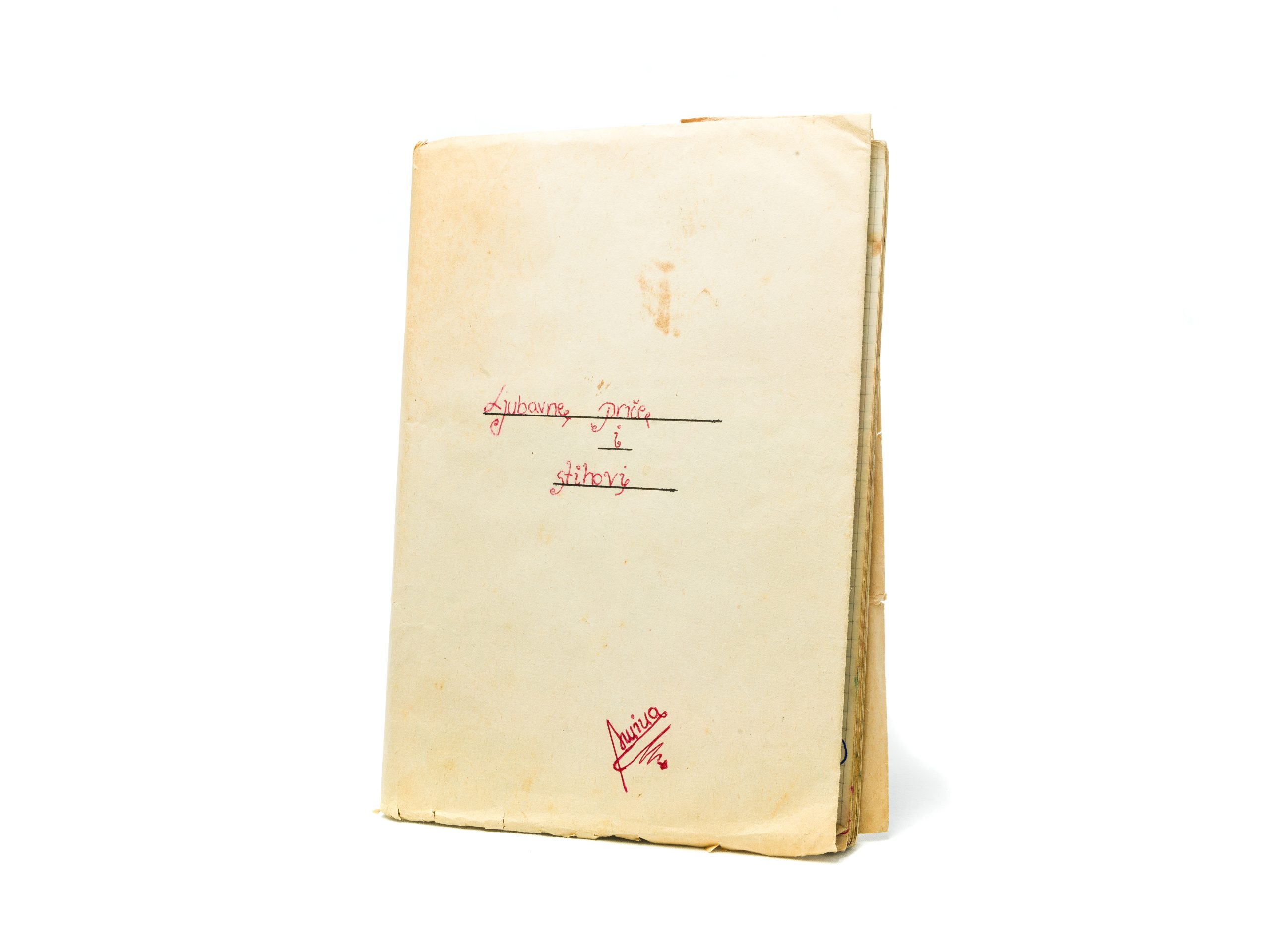
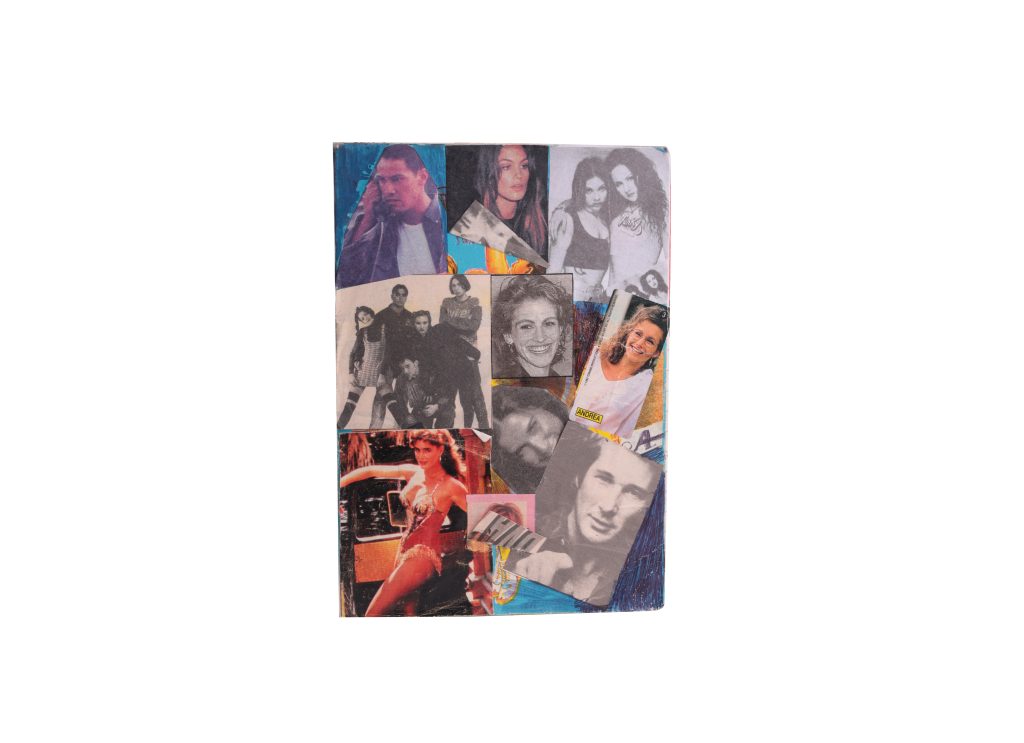
Love Stories and Poems
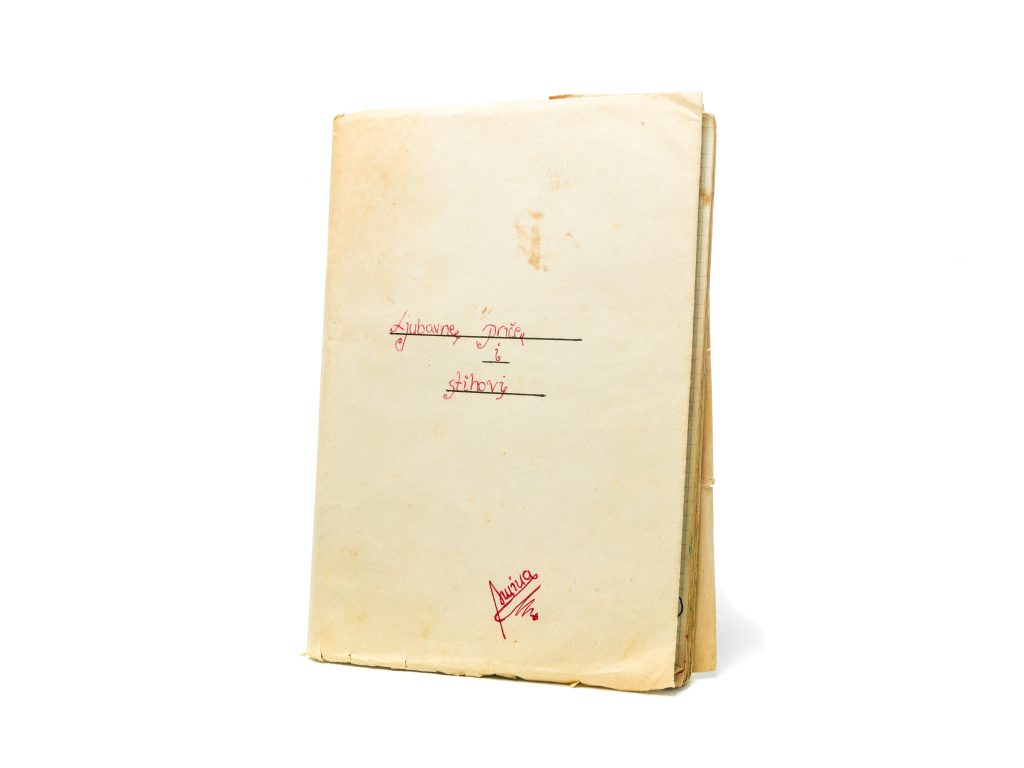
Poems and stories were a form of escapism from the wartime activities happening all around us. I borrowed scrapbooks and notebooks from older children in the neighborhood and copied what was in them into this notebook, which I received in a humanitarian aid package. I filled the pages with the usual doodles, but I would also paste in various pictures cut from old magazines, pre-war cassette tape and record sleeves, and wrappers from chocolates we used to buy at the market. Instead of glue, I used old nail polish or a mixture of flour and water – confirmed to be the best improvised glue we had access to!
Amina, b. 1980, Bosnia and Herzegovina
Grandfather’s Memento
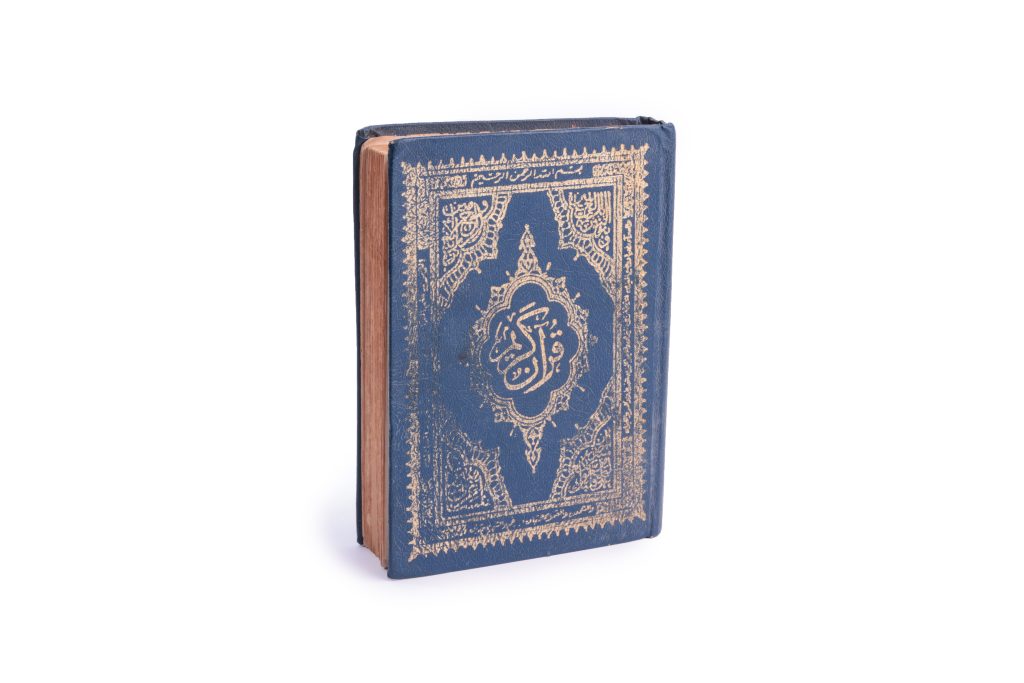
This Quran has a long and storied family history, having once belonged to my grandfather. He was forcibly expelled from his home and village. When the soldiers broke into his home, this book was among the very few things he managed to grab before he was expelled.
After my grandfather’s passing, the Quran remained within our family, serving as a memento of him and a reminder of our ancestral village.
These days, I often feel scared of something bad happening to me, but my family, particularly my mom and dad, comfort me and help me feel safe.
Salwa, b. 2006, Palestine