On August 19, we mark World Humanitarian Day, a day that draws attention to the importance of protecting the lives, dignity, and safety of people affected by crises, as well as those working to provide them with assistance and support. At a time when humanitarian action faces growing challenges around the world, stories from the War Childhood Museum collection remind us of the role humanitarian assistance can play during war—and of how children experience and remember it.
Read some of them below.
Humanitarian Aid Packaging Collection
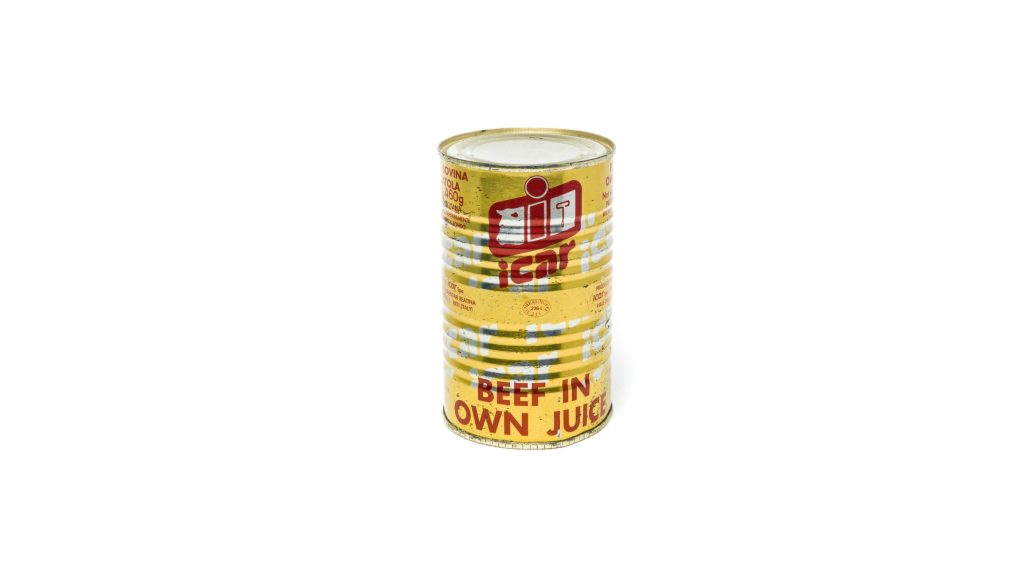
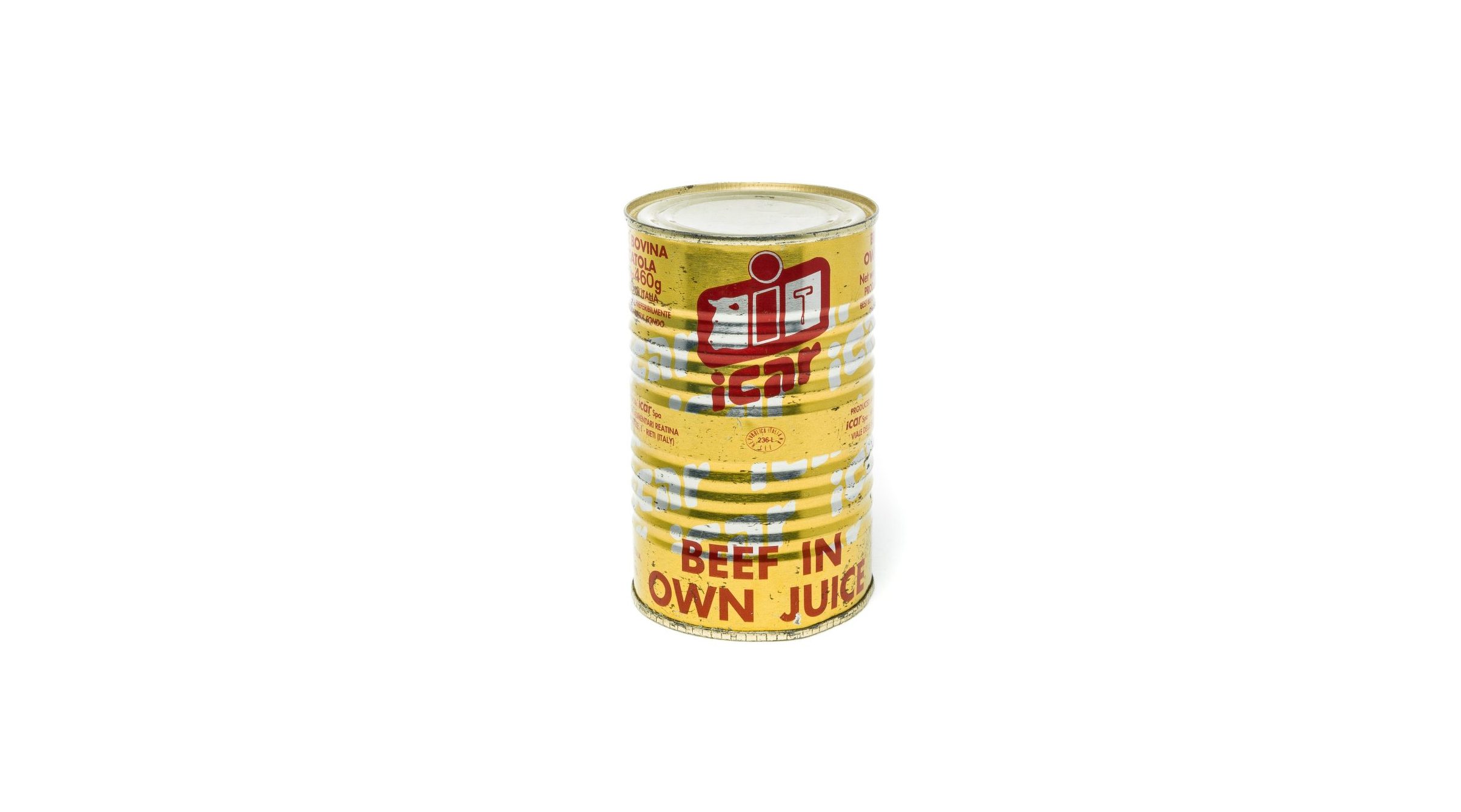
I wanted to keep a memento of something completely new to Yugoslavia—humanitarian aid. We laughed about it at the time, thinking: Come on, by Monday everything will be back to normal. That’s the real reason why I kept that first tin. But the crisis wasn’t over by Monday, and more tins followed. Soon we were eating things that had never been seen before in Yugoslavia. It was an excellent reason to collect all those wrappers and tins.
At one point as I was forming this collection I had to ask myself how long I would continue to do so. That’s when I decided to keep collecting either until I made it into the Guinness World Records or until the war ended and we stopped receiving aid. Thanks to the journalists who visited Sarajevo, I was able to send a letter to Guinness. I continued collecting wrappers as I awaited their response. Even though my collection made it into the record book, the number of wrappers is actually greater than the one listed by several hundred.
We even erected a monument to ICAR in Sarajevo, but few remember that there were actually three different types of ICAR tin. Because of details like that one, collecting proved to be a good way to preserve our collective memory of that period.
Filip, b. 1981, Bosnia and Herzegovina
Magic Wand
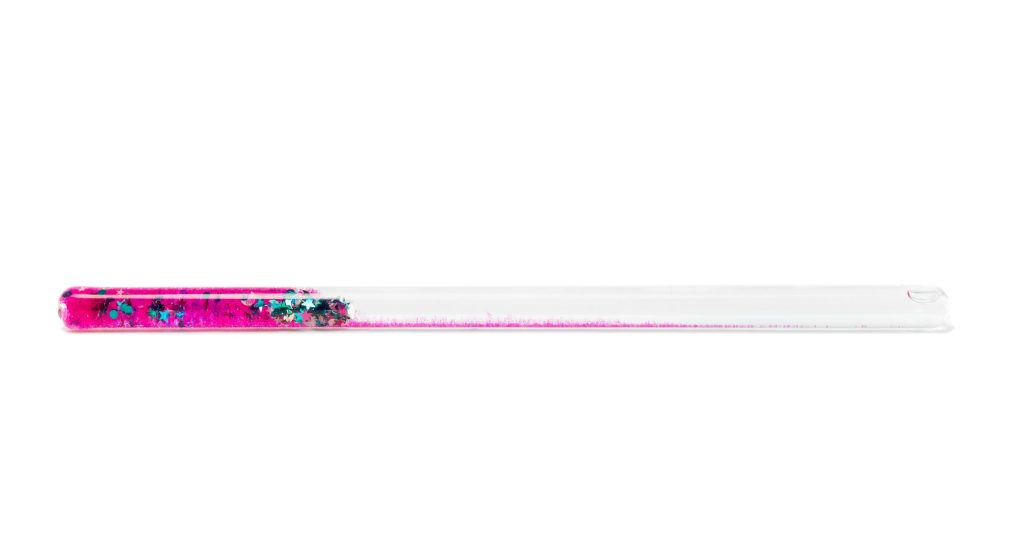
This magic wand was part of a New Year’s care package filled with colorful knickknacks from a humanitarian organization that was active at the time. The New Year’s celebrations included a recital. Each child received a magic wand: we hoped that by playing “abracadabra” we could make the war end.
Unfortunately, it took a long time for the war to end. I held on to that magic wand, occasionally lending it to younger children to make their own wishes, provided that they return it to its rightful owner.
Denisa, b. 1981, Bosnia and Herzegovina
Letters for First Graders
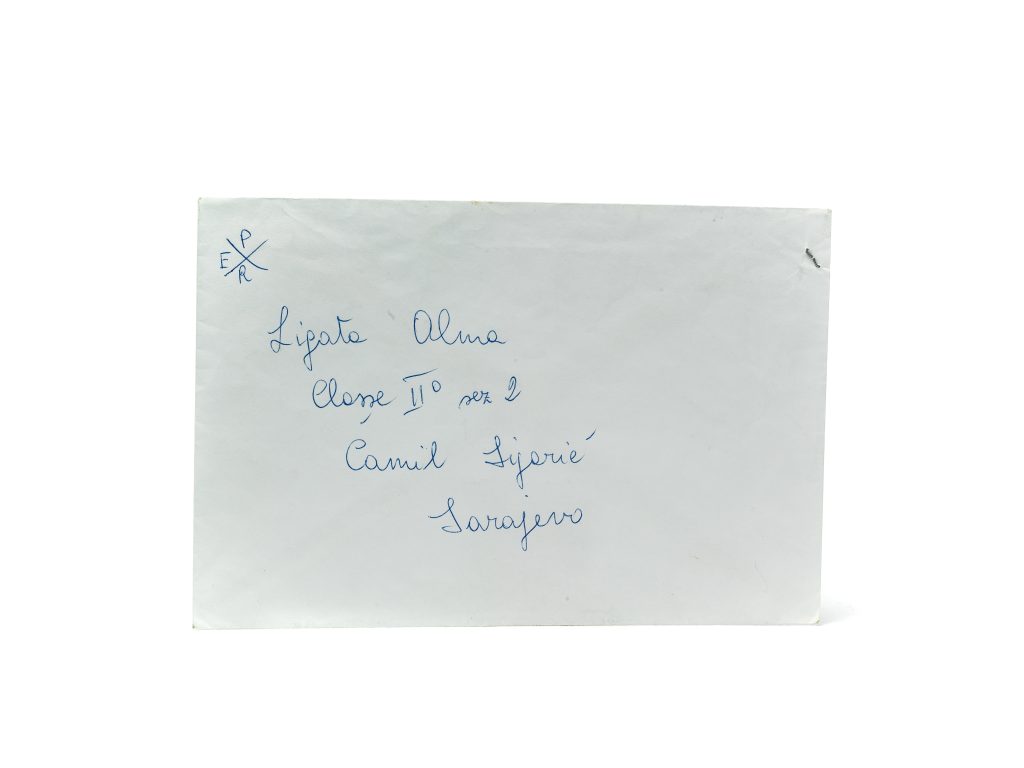
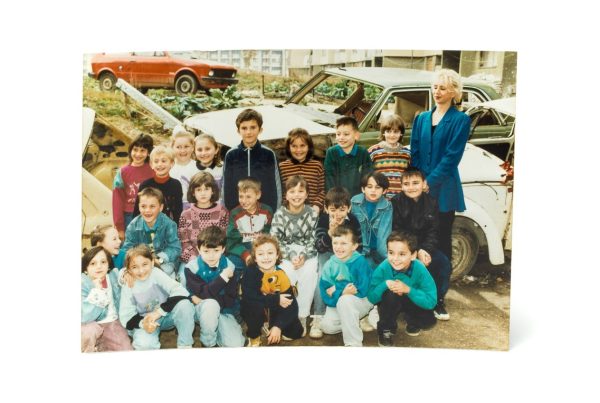
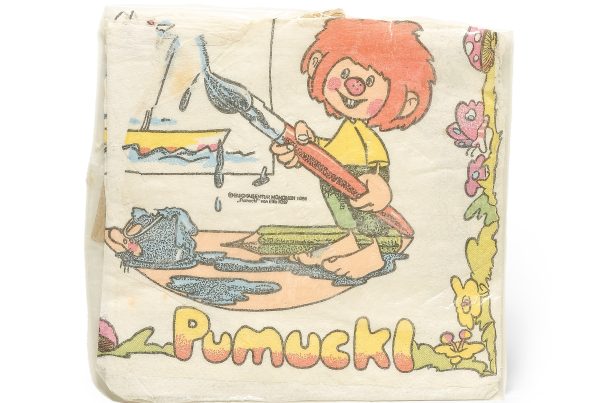
During the Siege of Sarajevo, we had our classes in improvized basement classrooms. When we were in first grade, on one occasion, we received humanitarian aid care packages that contained toys and letters from our peers from other countries.
I kept mine to this day because they reminded me of the wonderful feeling of knowing that, even in the most difficult times, there was someone out there thinking about us.
Alma, b. 1988, Bosnia and Herzegovina
A Box for Play
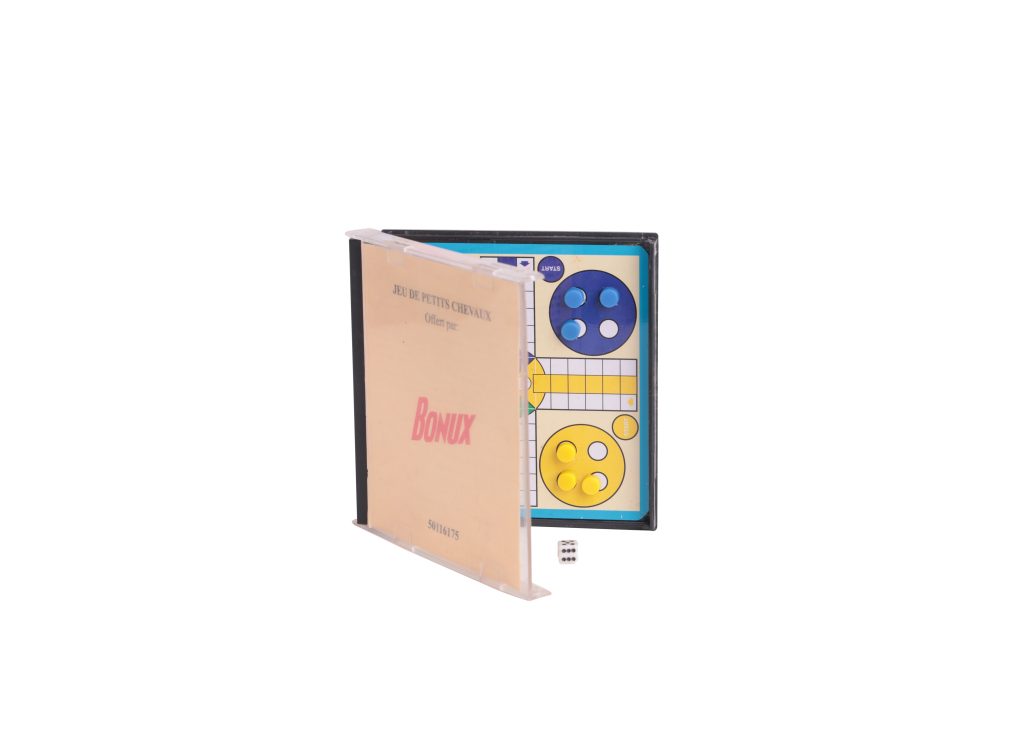
I got this box in early 1999 from an English humanitarian organization. When the bombing of the Federal Republic of Yugoslavia began that same year, and when the air-raid sirens sounded for the first time, it was the first thing I brought down to the basement with me. I would play with this box’s contents during all 78 days of the bombing. I spent the time in the basement together with my mom and my younger brother, while dad who was in the army was often at the military airport. Whenever dad was home we would read the “Zabavnik” children’s magazine or play games from the box. During my time in the basement, I also discovered books and comic books. These things comforted me and brought me fun, but today they remind me of the fear and danger I felt.
Maja, b. 1990, Serbia
Reward for an Important Task
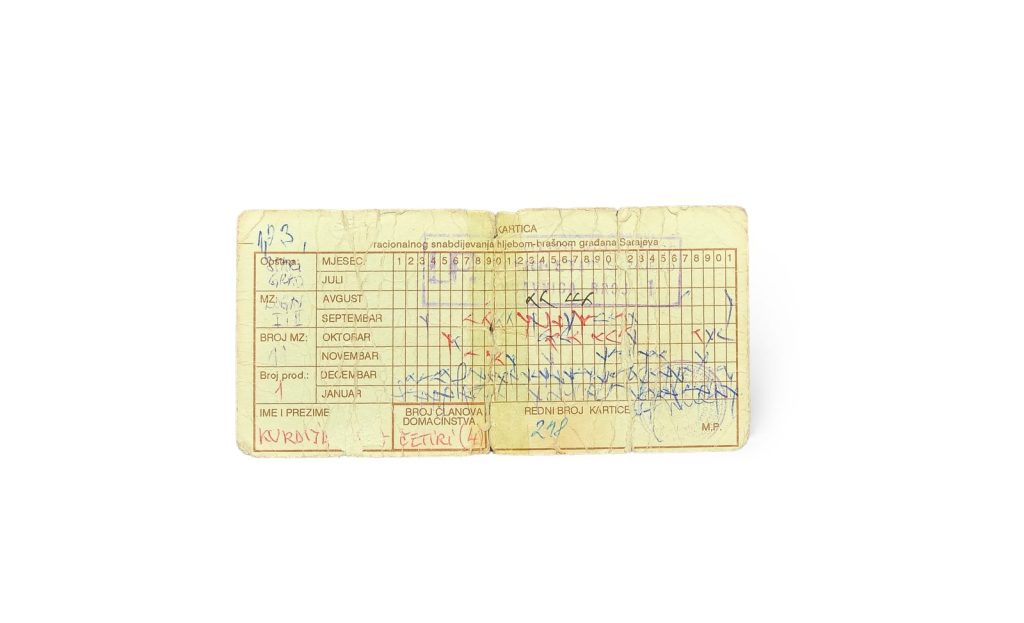
Occasionally, we received humanitarian food aid, which was distributed based on the number of “heads” in a household. My family would receive one loaf of bread and one end piece. The bread was distributed near my grandmother’s building, in a place hidden from shelling, so we children were allowed to go out and stand in line for bread.
Once, while waiting in line, I was given the “important task” of going behind the counter to help the local community representatives with cutting and distributing bread. For a job well done, I earned two loaves of bread and 10 dinars. I never spent those 10 dinars. I kept them, alongside this ration card for bread distribution.
Naida, b. 1981, Bosnia and Herzegovina