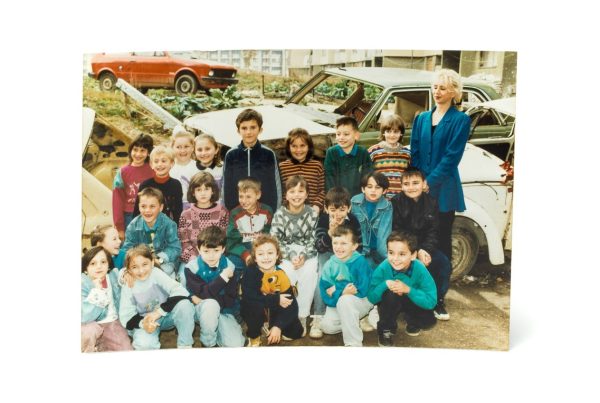
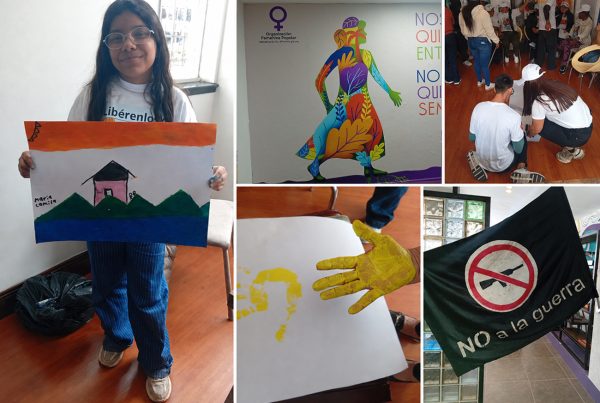
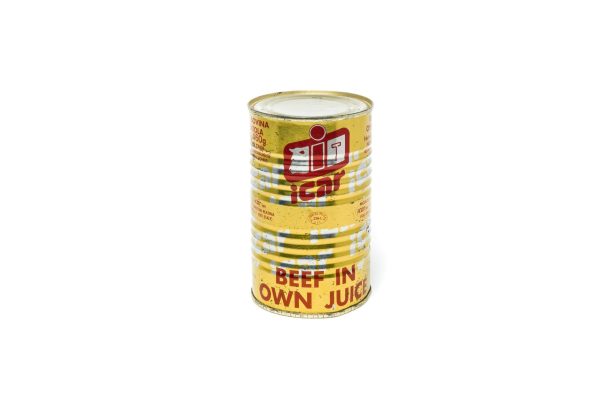
The International Day of Friendship, celebrated each year on July 30, reminds us of the importance of the relationships that shape our lives. In the War Childhood Museum’s collection, friendships appear in many forms: as sources of comfort and joy, as acts of solidarity in difficult times, and as bonds interrupted by displacement, separation, and loss. This selection of personal stories reflects the many ways war transforms childhood friendships.
Red Cross Letters
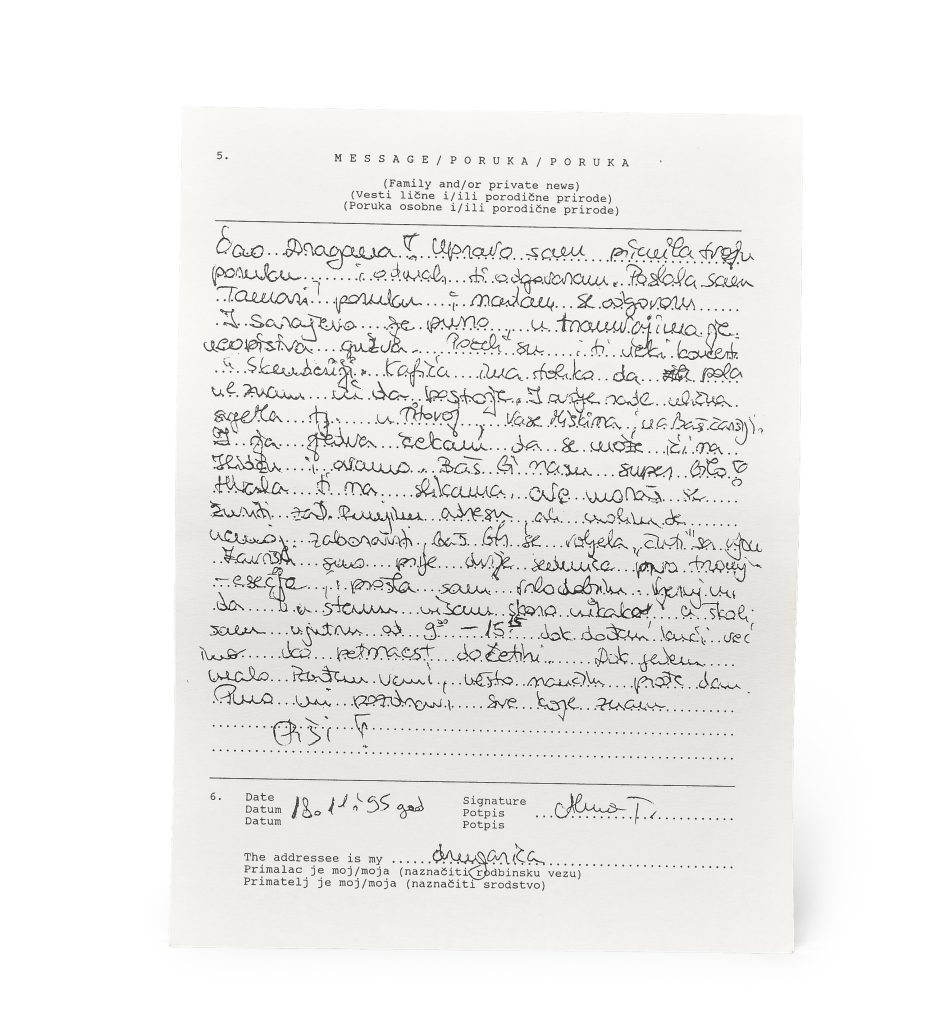 When I was in seventh grade, I was forced to leave behind my neighborhood, Ilidža, my school, and my friends—they stayed “on the other side,” and I longed to get in touch with them again. By chance, I learned that it was possible to exchange messages through the Red Cross and that those messages really did reach their intended recipients.
I wrote the first of these at the end of 1993. I wasn’t entirely convinced that the letters would reach their intended recipients, so when I got the replies, I jumped for joy! Today, the content of these letters always brings a smile to my face and makes me laugh. We mostly talked to each other about our everyday lives—what we looked like, what we listened to, what we ate. Although the war was a part of that everyday life, we rarely mentioned it.
Alma, born 1978
Bosnia and Herzegovina
Food Without Flavor
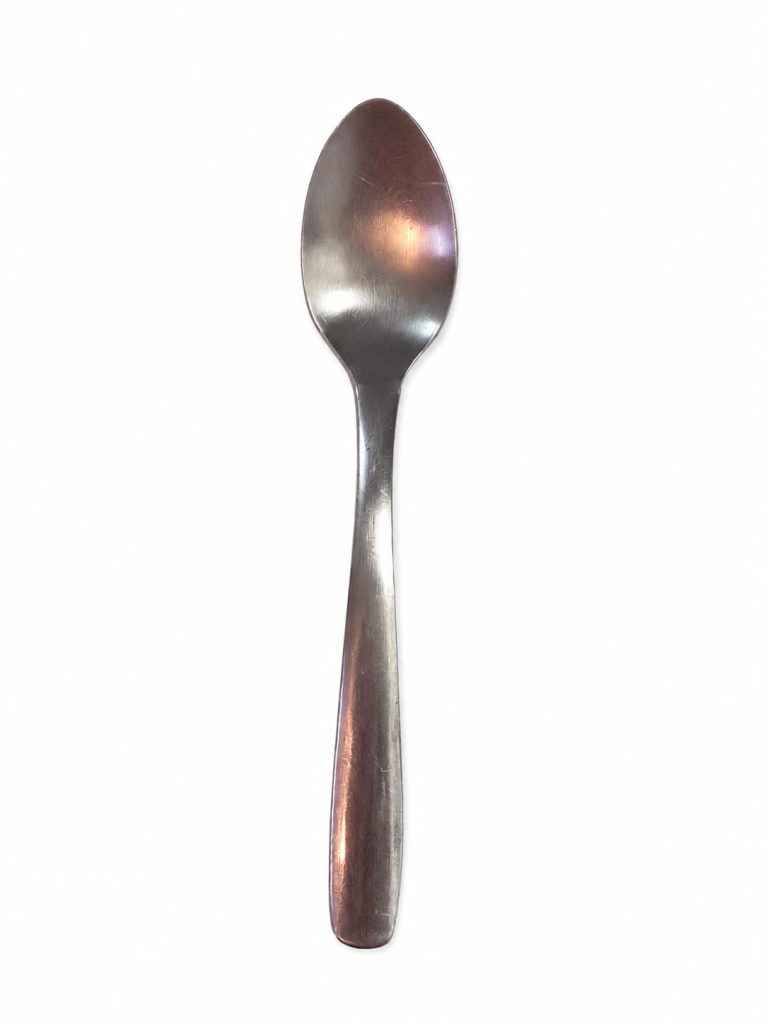
My friends Ziyad, Mousa, and I grew up together in the same neighborhood in Gaza. After school, we were always at each other’s houses, sharing meals and laughter. Food was at the heart of our friendship.
When the war began, I fled to Egypt. Ziyad and Mousa stayed behind. I learned through social media that they were killed.
Now, whenever I eat, I remember Gaza. I remember my friends. I feel as if I can no longer taste my food without feeling grief.
Khalid, born 2014
Gaza, Palestine
“The First Orange, After Eleven Months”
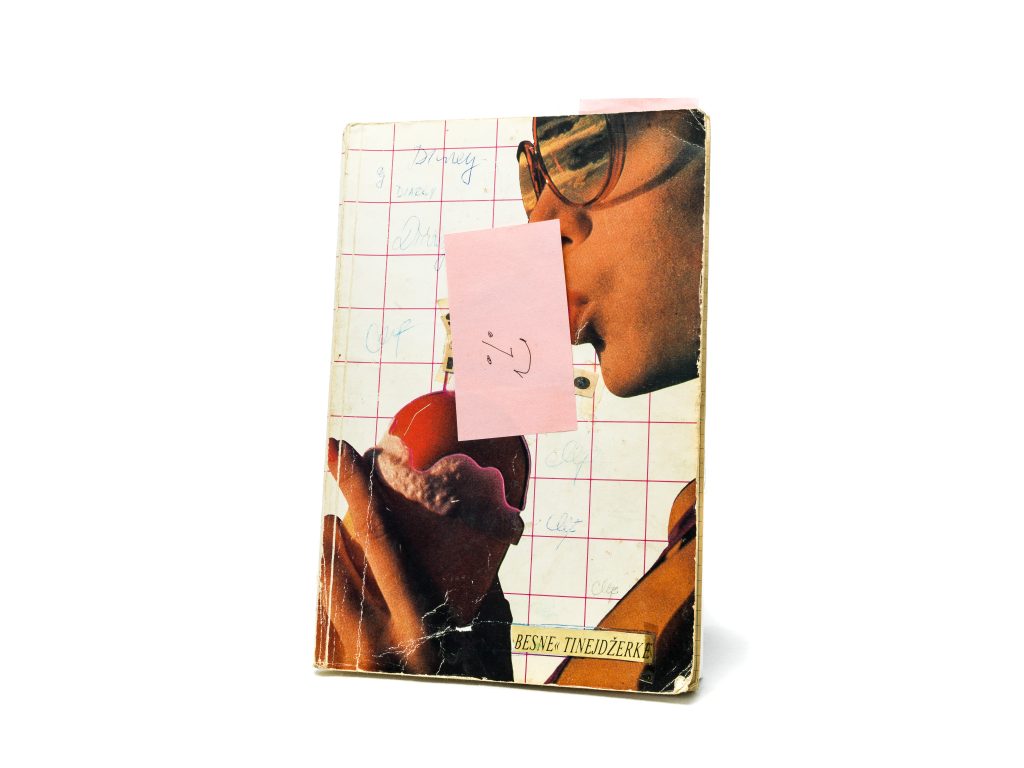
A friend of mine got a hold of some oranges, which he shared with us. Of course, we got an orange each.
I brought my orange home so that I could share it between the five of us. I still remember that happiness because it was the first orange I’d seen in eleven months. Don’t even get me started on the taste!
The orange was so important to me that I glued a piece of it to my journal and wrote, in all capital letters: “THE FIRST ORANGE, AFTER ELEVEN MONTHS.” I remember its taste to this day.
Medina, born 1977
Bosnia and Herzegovina
Seashells from Gaza
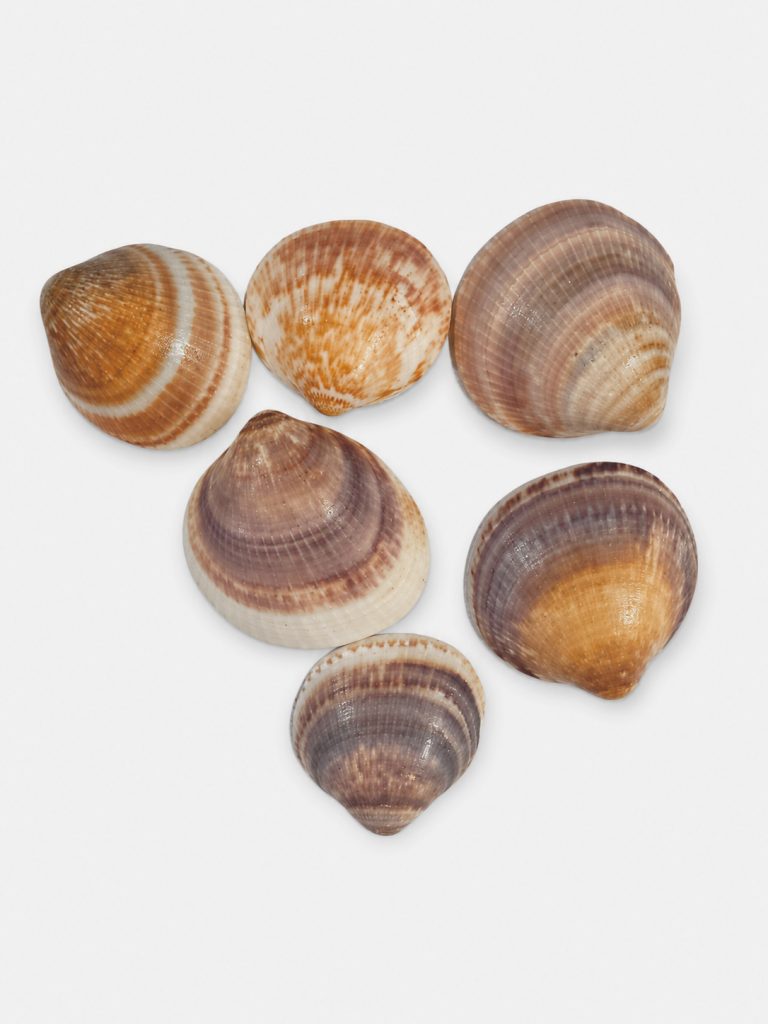
Before the war in Gaza, the sea was my favorite place. I spent all my free time there with my friends.
Then the war began. We had to leave our home and move to our relatives’ house in a safer area. We lived crowded together with no privacy and nowhere comfortable to sleep.
Life there was hard. Whenever I could, I escaped to the sea for a moment of calm. The other girls and I would stay there until we saw the military boats. Then we would run back.
Eventually, I fled to Egypt with my parents. My extended family and many of my friends are still in Gaza. I think about them and their safety every day.
Before leaving, I went to the sea one last time. A big wave came and left many seashells on the shore. My friends and I collected as many as we could. These are some of them.
Lilian, born 2011
Gaza, Palestina
My Favorite Napkin
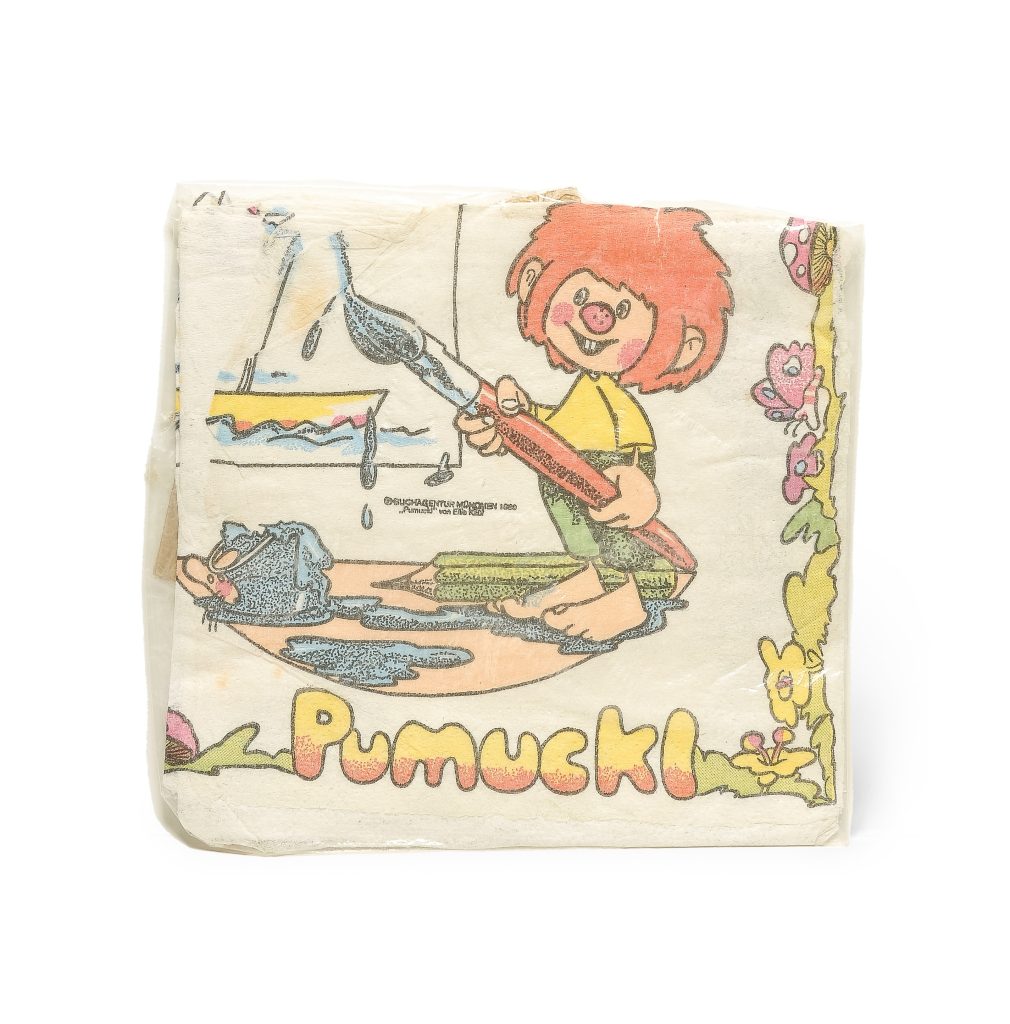
My friends and I used to collect paper napkins. We kept them, very carefully, in cardboard boxes, and traded them regularly. The most valuable were the so-called “Japanese napkins”, which were prettily patterned and made with fine paper. My favorite, however, was the “Pamucki” napkin, which I treated with the utmost care and wouldn’t trade for any other, not even a Japanese one. Even though it became pretty decrepit by the end, I decided to keep it as a memento of those hours spent with my neighborhood friends, in cold basements and building entryways.
Emina, born 1985
Bosnia and Herzegovina