October 5 marks World Teachers’ Day, a day to recognize the teachers who shape children’s lives in ways that often reach far beyond the classroom.
For children growing up during war and conflict, memories of school are often intertwined with uncertainty and disruption. Yet within these memories are also teachers who offered encouragement, created moments of normalcy, shared knowledge under extraordinary circumstances, or simply remained present when so much else was changing.
Across the War Childhood Museum’s collection are stories in which teachers appear in different ways — sometimes at the center of a memory, sometimes in a seemingly small moment that stayed with a child for years.
On World Teachers’ Day, we share some of these stories and remember the teachers who became part of childhoods shaped by war.
A Send-off
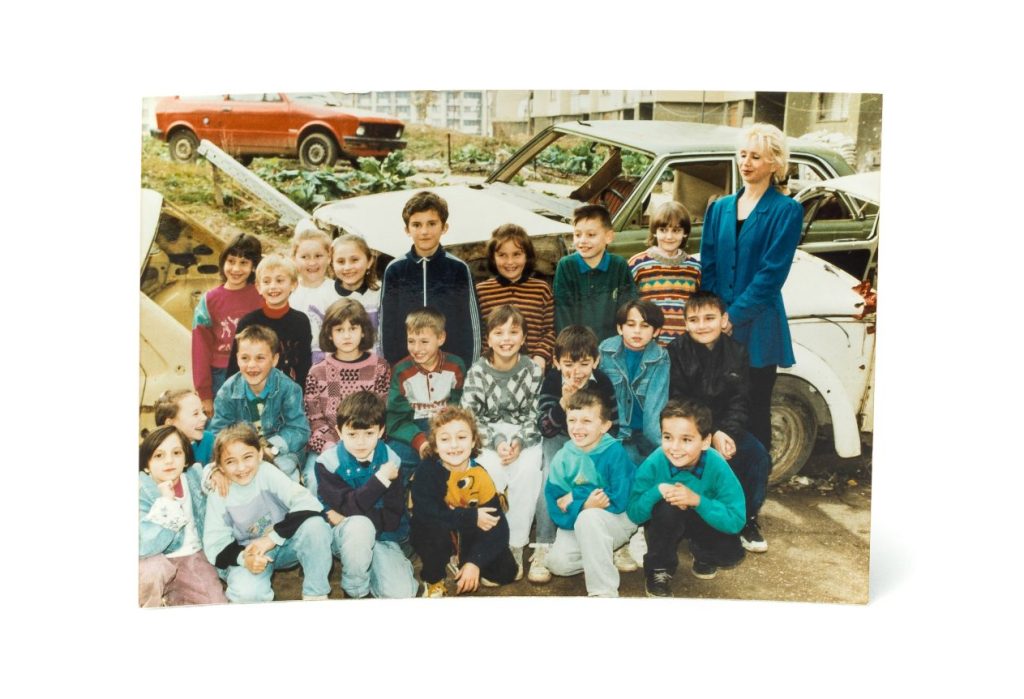
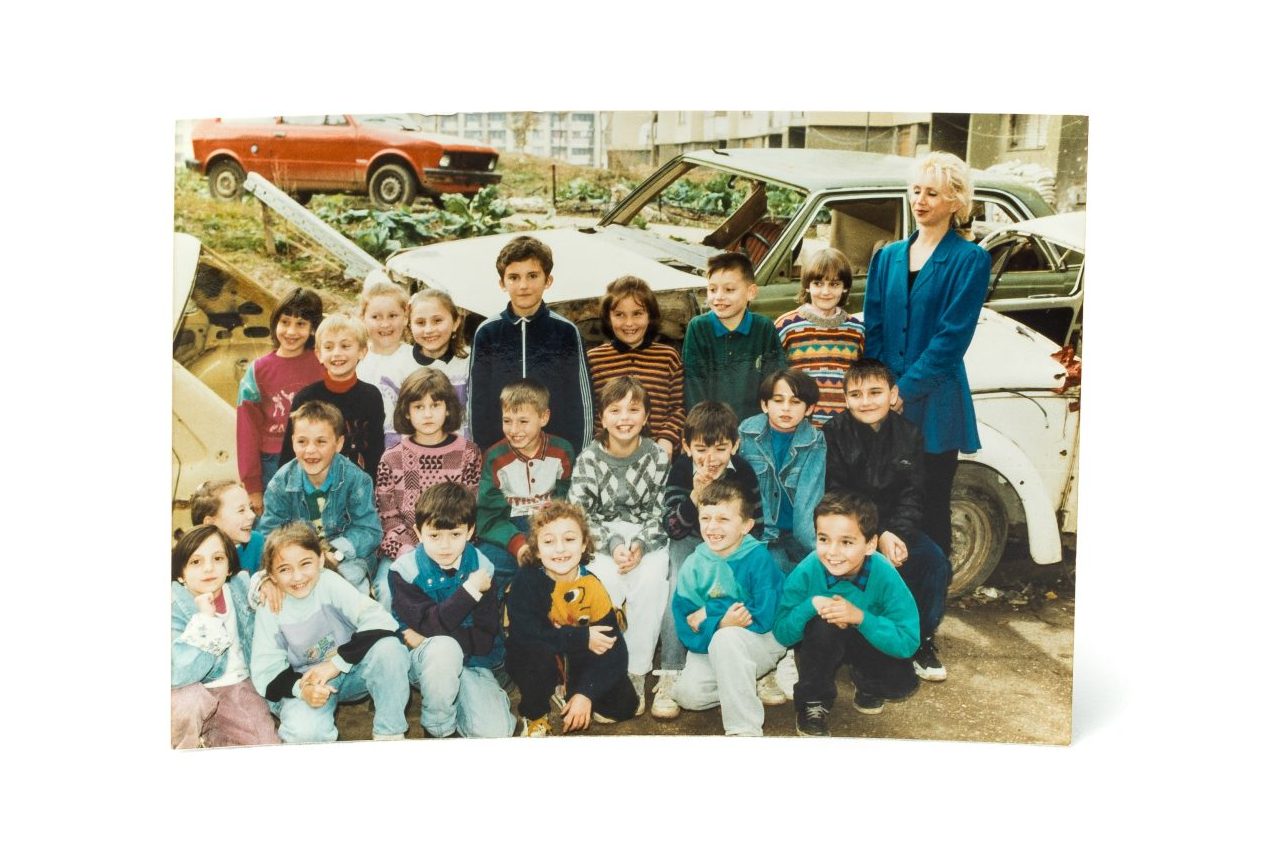
The classes in the “Skender Kulenović” primary school, where I attended second grade, were held in poor conditions. They took place in an apartment building, which our teacher Elvedina Fazlić, with great effort, had turned into the most beautiful classroom we could imagine.
This photograph was taken in 1995, in front of the entryway to the building where the classes were held. My teacher and my friends from class gave me this photo, along with a letter, as a parting gift when I left for a different school in another part of the city.
Azra, born 1987
Bosnia and Herzegovina
My First, Red Report Card
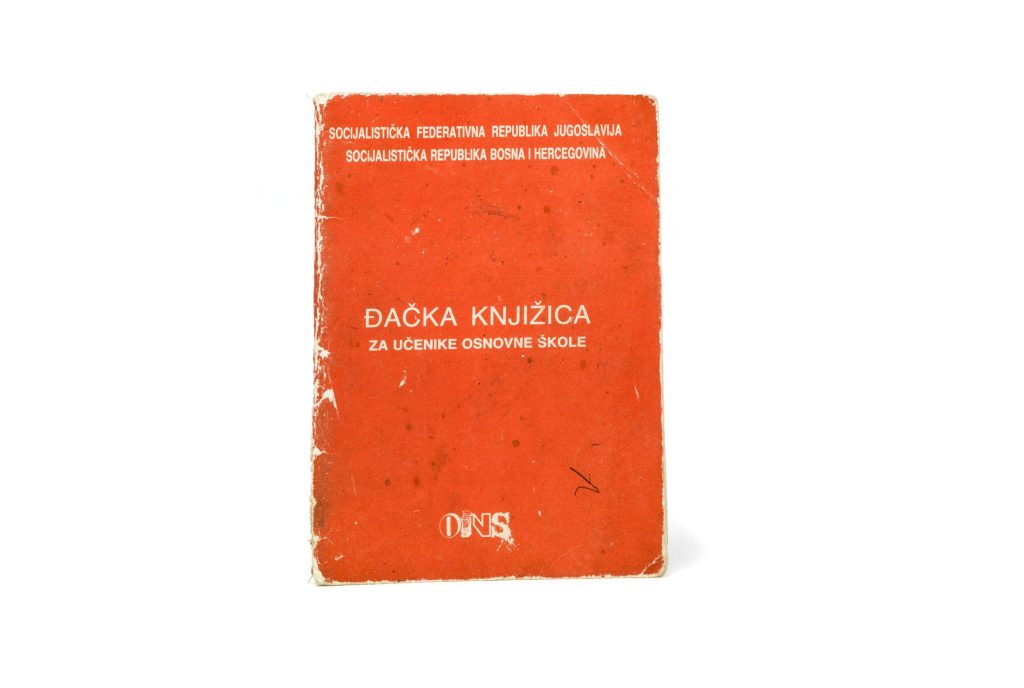
The war’s beginning “forced” me to hurry up and finish the first grade. As a real geek, of course, I had all A’s and positive reviews from the teachers’ council written into my beautiful red report card. Vacation had ended, but the war was still raging. I started second grade in a makeshift classroom in a former billiard club. Improvised schools, classrooms—and report cards. At the end of the year, I begged my teachers to write my grades into my beautiful red report card— but they would not do it! We got small, sad looking, paper report cards that looked like pages that had been pulled out of our usual report cards! And that continued into third, fourth, and fifth grades. Although the school had its “official” paper report card, I continued to scribble my grades into my red report card so that they would all be in one place. I kept doing this until fourth grade. I lost my second-grade report card in the intermittent years. Now, this red one is my only reminder of the one subject in my eight years of schooling that I did not finish with an A. It was in second grade, in a makeshift classroom, and the teacher was testing my times tables: “How much is 9×9?” “89,” I said. Then I corrected my answer to “87,” and finally to “81.” It was already too late—“Sit, B!”
Merima, born 1984
Bosnia and Herzegovina
The Miraculous Medal
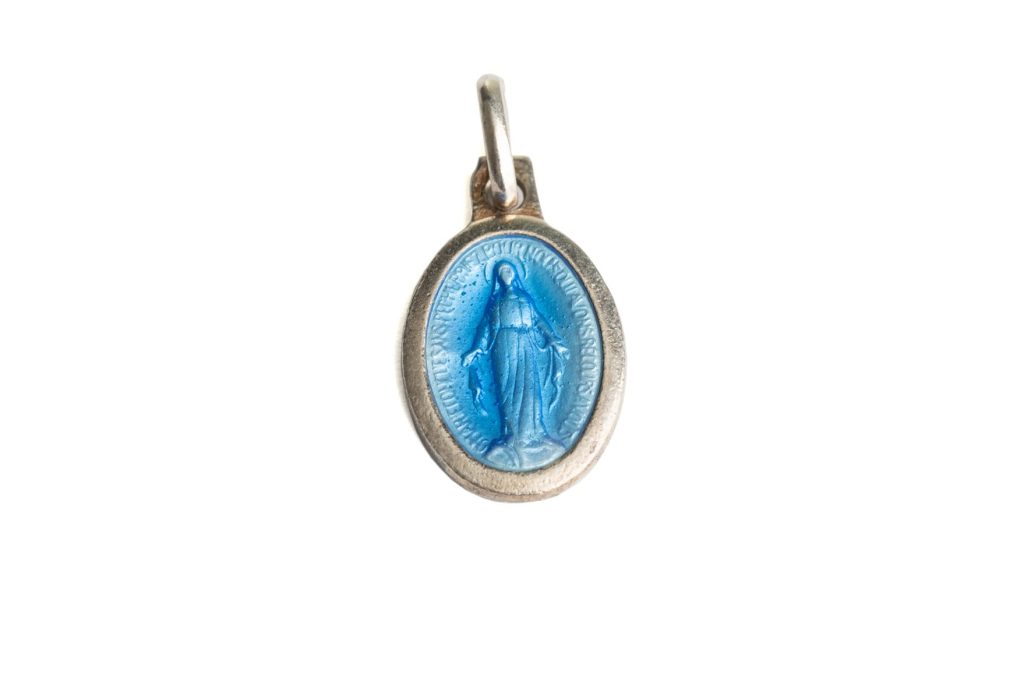
In sixth grade, my history teacher told us the story of the Virgin Mary’s apparition to Sister Catherine Labouré in Paris. The Virgin gave Catherine clear instructions on how to mint the medal and told her that whoever wore it around their neck would be protected. At that time, my home city, Beirut, was gripped by civil war.
Believing in the medal’s protective power, I went home and asked my mom for one. She eventually found this silver version and gifted it to me. I have worn it ever since. It has been with me through countless escapes to the shelter, days of missed school, and the loss of many typical teenage experiences.
Over the years, I have gifted many more Miraculous Medals to my friends and family, but this first medal stayed with me as a symbol of faith, hope, and resilience. Now, it finds a new home at the War Childhood Museum.
Lina, born 1976
Lebanon
Certificate of Appreciation
When the shelling was heavy, our neighbour took us to his house. We stayed there for two days. Then, we joined my grandfather in a camp in Lebanon. Now, we live in a tent.
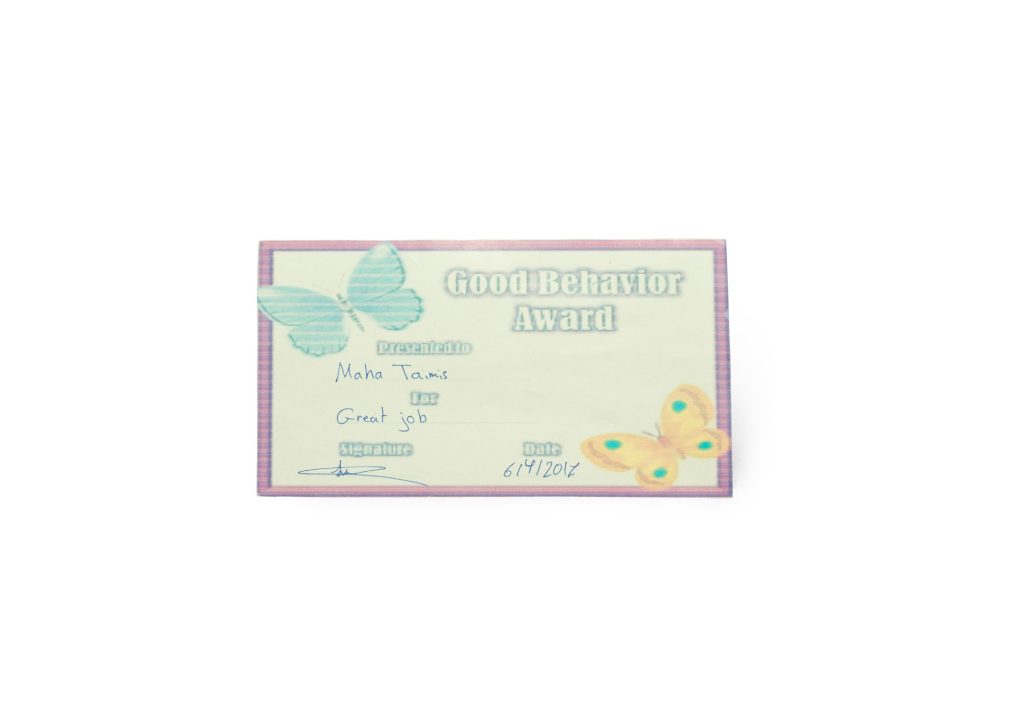
This is the first Certificate of Appreciation that I have ever received. I got it after midterms because I had good grades. It’s such an important thing to me. My little brother ripped it. When I told my teacher about what happened, she gave me a new certificate. I like the teachers in my school because they are nice, and the school is very colourful.
Whenever I needed to feel proud or to encourage myself to do something difficult, I would just take the certificate out of my drawer and look at it. It gave me strength.
Maha, born 2004
Syria
The Youngest Student
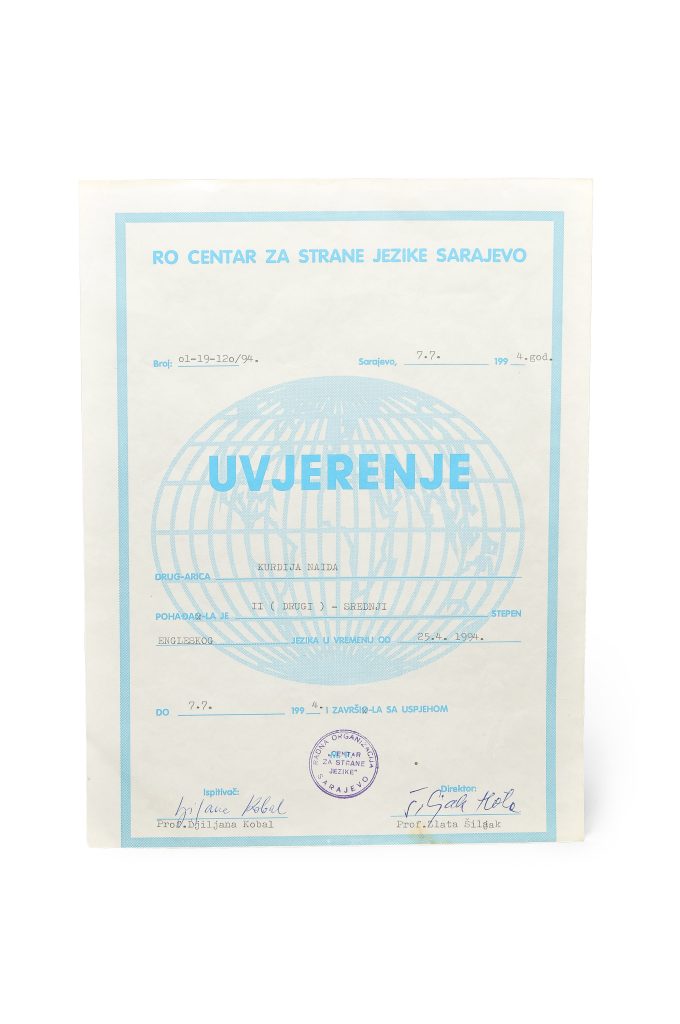
Even during wartime, we attended school. One day, a shell fell near our classroom. The shrapnel shattered the windows but the glass fragments were stopped by the curtains. The blackboard was pierced by shrapnel. We, the children, ducked for cover and waited, motionless. When the dust settled, the teacher said simply: “It’s over, we are moving on!” Then she picked up the chalk, wiped the shrapnel-ridden blackboard, and continued with the lesson.
Besides school, we participated in extracurricular activities. That is how I, at 12 years of age, became the youngest student of the Sarajevan Foreign Language Center at Obala. It was the city’s oldest foreign language center, and had continued operating even during the war. Thanks to that course, and my great affinity for languages, I now work as a freelance English language translator.
Naida, born 1981
Bosnia and Herzegovina