The War Childhood Museum’s collection is rooted in personal stories and objects entrusted to the Museum for safekeeping. Through interviews with contributors, we explore what the Museum means to them and what inspired them to share their testimony or entrust an object to our care.
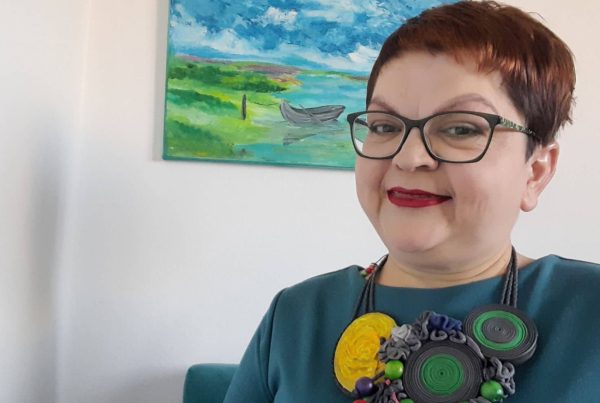
Hatidža Hadžimuhamedović shared her story with the War Childhood Museum in its early days, back in 2018. She spent the war in Sarajevo and entrusted us with parts of that experience. Today, Hatidža is an accomplished designer still living in the city that holds her wartime memories. In a recent conversation, she reflected on what it meant to share her story with the Museum.

How did you become involved with the War Childhood Museum, and what led you to agree to record your testimony?
From the very first moment I heard about the idea of the War Childhood Museum, I felt it as something deeply personal—my story, my project. I had been following the work of its founder even before the Museum came to life, and when it finally did, it felt as though a part of my childhood, my experience, had finally been given space to be told and understood.
My childhood was marked by war. Even today, I often wonder what my life would have been like if the war hadn’t happened. How would it have shaped me as a person? Would I make the same decisions I make today—especially as a mother? How much does what I had—or didn’t have—back then influence the way I raise my own children now? These questions have always stayed with me, and in that sense, the War Childhood Museum is not just a place of remembrance—it’s a living reminder of what shapes us.
Recording the testimony was my wish to share a small part of myself and weave it into that collective memory.
It’s also the story of my brother, Safet, who was my best friend and safe haven during the war. Even today, every story told in the Museum is, in some way, also my story—the story of my friends, my neighbors, the story of a childhood I understand best. That’s why I feel such a deep connection to the children living through war today, especially in Palestine. That feeling of not fully grasping reality, the helplessness of a child facing the brutality of the adult world—that is a universal wound.
How do you think your story can help children currently living through war and conflict? What are your hopes for their future?
Honestly, I’m not sure how much my story can help. But maybe, for one child somewhere, it can offer the feeling that they are not alone. That moment of recognition—“aha, someone went through the same thing I did”—can bring a sense of comfort, maybe even healing. Sometimes, you don’t need a big message, just the feeling that someone understands.
Maybe my story can confirm that it’s okay to be a child, even in war. That you don’t have to understand everything, that you don’t always have to be brave. That it’s okay to be confused, sad, quiet… and that play—no matter how fragile—is still possible, even in the darkest of times.
Childhood in war doesn’t have to mean the end of childhood, but rather its resistance, its defiance. And perhaps in that defiance lies the strength to survive and to build something new.
What does the War Childhood Museum—and similar initiatives—mean to you?
For me, the War Childhood Museum is a mirror. It’s a space where I found both myself and my voice from that time.
I believe the perspective of a child in war is extremely important, because it is unlike any other experience. It’s a parallel world, where children try to remain children, while at the same time being forced to grow up quickly, to be stronger, braver, to understand things even adults struggle to comprehend.
That abrupt loss of the child within us leaves a lasting emptiness. We are left yearning for a version of ourselves that never got to just be carefree. That’s why initiatives like this are so vital—they give children affected by war what was taken from them: a space to be seen, heard, and remembered.
The Museum is not just a collection of objects and stories. It is a living testimony to the strength, tenderness, and fragility of childhood in the most difficult of circumstances. And that is why—it is my museum too.